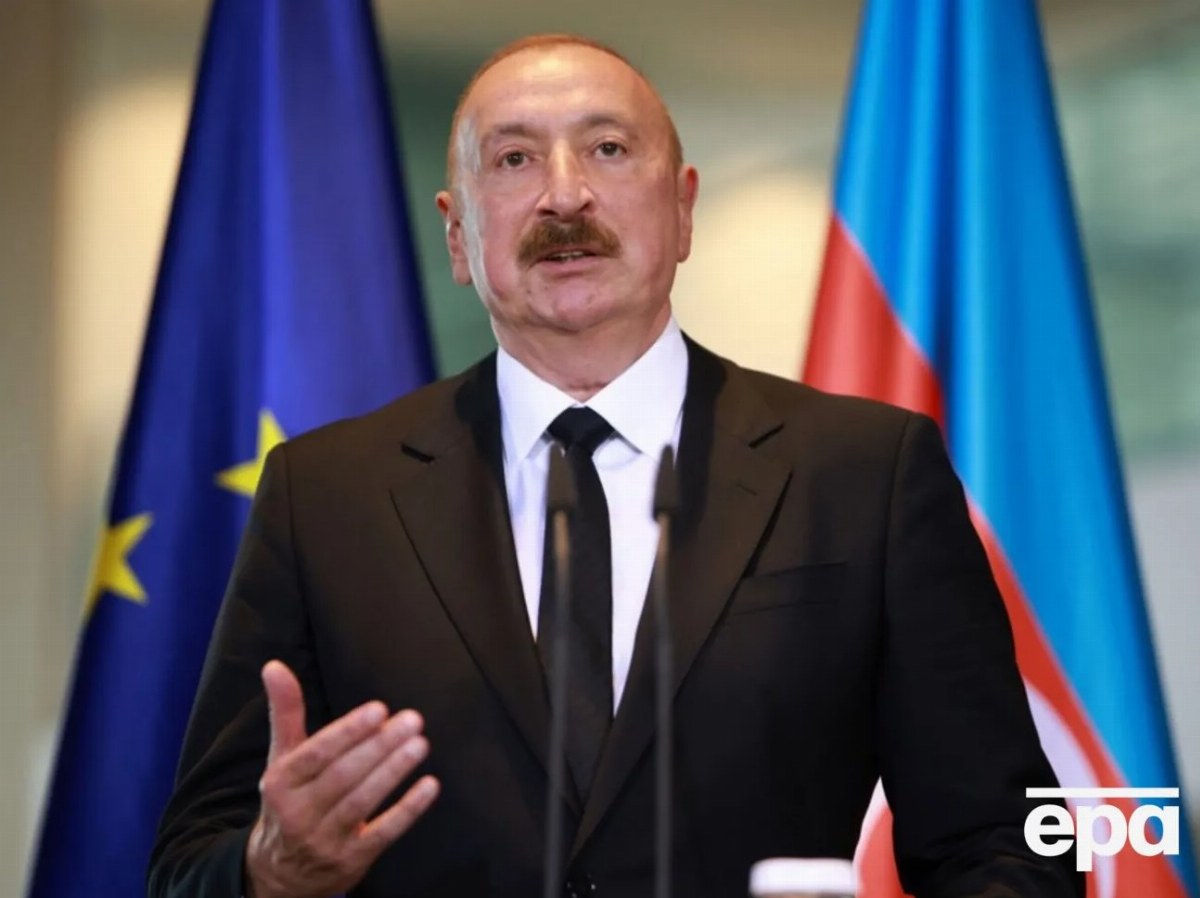
Azerbaijan’s President Ilham Aliyev disclosed that a clandestine meeting took place in Baku on July 12, involving members of a Russian-German informal network claiming to be successors of the “Petersburg Dialogue.” Aliyev stated he learned of this gathering through an article in The Times, which reported that a group of German lobbyists had established an unofficial communication channel with the Kremlin.
The meeting reportedly included close associates of Russian President Vladimir Putin, such as Valery Fadeev, head of the Human Rights Council, and Viktor Zubkov, former Prime Minister and chairman of Gazprom’s board.
Aliyev mentioned that following the publication of the article, Azerbaijani authorities verified the entries of individuals presumed to be at the negotiations. According to Azerbaijani border officials, Ronald Pofalla, former head of Angela Merkel’s chancellery, and Matthias Platzeck, former Prime Minister of Brandenburg, arrived in Baku on the same flight from Berlin. Zubkov and Fadeev also flew in from Moscow that day.
“We received no notifications from either Germany or Russia. Essentially, our territory was used without our knowledge. I cannot definitively say whether such a meeting occurred, as we did not witness it. However, the flight statistics I provided suggest that a secret meeting likely took place in Baku. If this meeting leads to the end of the Russo-Ukrainian war, we would certainly welcome it,” Aliyev stated.
In response to inquiries, German Chancellor Olaf Scholz highlighted that efforts to engage President Putin in dialogue have been ongoing for months. “We have repeatedly proposed dialogue options at the European level together with Ukraine. President Putin refuses to engage in such discussions,” he noted.
Aliyev emphasized that if interactions like those held in Baku genuinely contribute to resolving the Russian-Ukrainian conflict, Azerbaijan would fully support such initiatives.
The Times reported that this informal Russian-German network of contacts has persisted since the onset of Russia’s full-scale invasion of Ukraine, conducting closed meetings with Kremlin officials. The Baku meeting marked at least the fifth for this group since 2022, having reportedly held discussions in hotels in Baku and Abu Dhabi. Participants present themselves as private contacts, not part of Germany’s official government policy, yet experts view them as valuable to Moscow for transmitting signals to influential circles in Germany, especially within the SPD and CDU, who might be more receptive to compromises with the Kremlin.
The report also indicated that these contacts have raised concerns among Germany’s European allies. Diplomats fear they could extend beyond ordinary private meetings and evolve into a form of shadow diplomacy, aiding the Kremlin in reducing international isolation and maintaining unofficial influence over European political elites. Meanwhile, the German government distances itself from such initiatives, emphasizing that Russia has yet to show willingness for substantive negotiations to end the war.