President Donald Trump has reimposed a naval blockade on all Iranian ports and warned of potential strikes on electric plants and bridges next week unless Tehran resumes negotiations. This marks a significant escalation in U.S.-Iran tensions, as reported by Reuters.
Additionally, U.S. forces have commenced a new wave of attacks aimed at degrading Iranian capabilities used to target commercial vessels in the Strait of Hormuz, according to the U.S. military.
In response to escalating conflict, Iran has claimed to have closed the strait following renewed hostilities last week, jeopardizing a fragile ceasefire that was established in June after several months of fighting that resulted in thousands of deaths.
“I will leave the energy sector targets for later, but ultimately, we will strike them,” Trump stated in an interview with Trey Yingst from Fox News. “Next week, electric plants will be targeted, next week, bridges will follow,” he added, should Iran not come to the negotiating table.
The 1949 Geneva Conventions prohibit attacks on essential civilian infrastructure, a point of contention in these escalating threats.
American negotiators have been in contact with their Iranian counterparts, advising them, “It would be wise to reach an agreement,” the White House leader noted.
Iranian Attacks on U.S. Targets in the Gulf
The Iranian military announced Wednesday that it had conducted drone strikes against U.S. positions at the Azraq base in Jordan. The Pentagon has not confirmed this information.
The Iranian Revolutionary Guard claimed responsibility for targeting weapon depots and storage facilities in Bahrain and Kuwait.
Kuwait’s military reported that its air defense systems faced Iranian drone attacks, with state news confirming that a fire had been extinguished. Reuters noted that it could not immediately verify this information.
The recent surge in tensions has cast doubt on the viability of a memorandum of understanding signed last month that aimed to bring a definitive end to the conflict, which has impacted neighboring countries and disrupted global energy supplies.
“They Are Mistaken”
American missiles struck a location near Bandar Abbas, an Iranian city situated along the Strait, according to the Iranian governor’s office for state media. Meanwhile, the Iranian state news agency IRNA reported that U.S. missiles hit an area near Sirik in southern Iran.
“If the U.S. thinks that by tightening measures against us, through military actions and economic blockade, it will force us back to negotiations, they are mistaken,” stated Iran’s deputy foreign minister, Kazem Gharibabadi, on state television.
Following the closure of maritime traffic through the Strait of Hormuz, Iran has signaled its consideration of employing Houthi allies from Yemen to block the Bab el-Mandeb gateway to the Red Sea, escalating the conflict with Washington and threatening two of the world’s most critical energy routes, according to Reuters.
Attacks on Vessels in the Strait of Hormuz
The United States accused Iran on Tuesday evening of attacking seven commercial vessels in the past week, leading to the deaths, disappearances, or injuries of approximately 12 crew members.
The United Arab Emirates previously reported that an Indian crew member was killed and eight others injured when two Emirati tankers were struck by Iranian cruise missiles in the Strait of Hormuz.
The Iranian Revolutionary Guard (IRGC) claimed responsibility for targeting two “guilty” supertankers, rendering them inoperable in the strait after they disregarded repeated warnings, although the vessels involved were not identified.
In light of the rising tensions, Trump proposed a 20% tax on maritime traffic through the strait on Monday, which drew sharp criticism from the UN shipping agency and other parties. However, the next day he abandoned the idea, stating he would instead seek investment agreements with Gulf states.
American Blockade Reinstated
The naval blockade against vessels transiting to and from Iranian ports and coastal areas was reinstated on Tuesday afternoon after having been lifted in June.
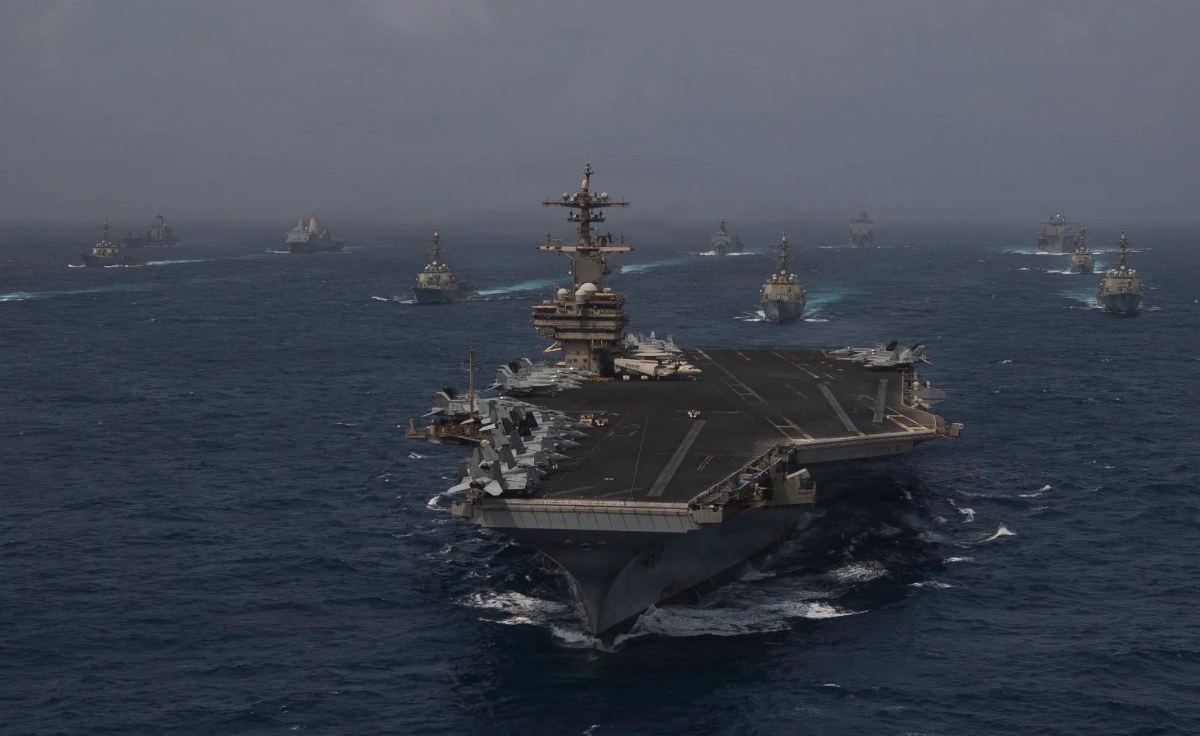
Trump declared that the strait remains open to all maritime traffic except that from Iran. Currently, over 20 U.S. Navy ships and hundreds of military aircraft are conducting operations in the region, according to the U.S. military.
The ongoing conflict has proven unpopular in the U.S., where gasoline prices have risen as Congressional elections approach in November.
The price of Brent crude oil has surged by 15% over the past seven days, reaching $85 per barrel, the highest level since mid-June.