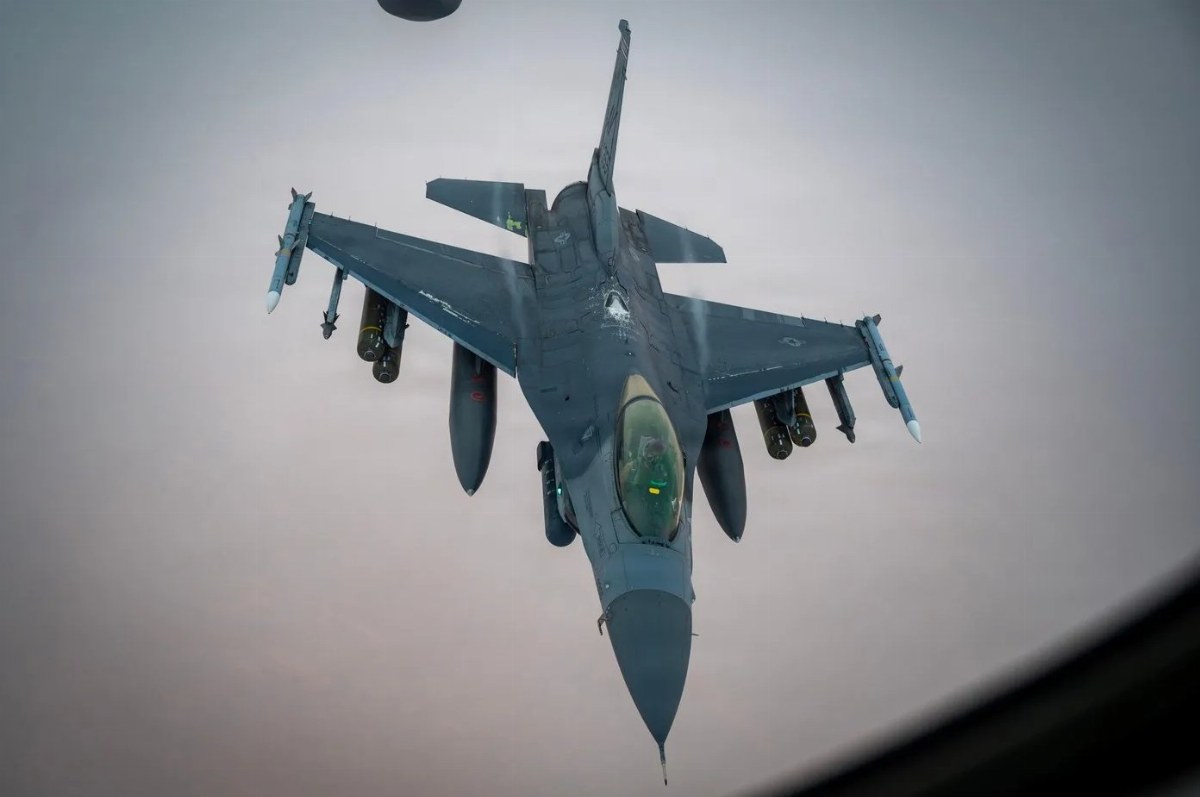
The United States military announced that it executed a series of significant strikes against Iran late Tuesday into Wednesday, simultaneously revoking the license that allowed Iran to sell crude oil. This action follows attacks on three commercial tankers in the Strait of Hormuz, further straining an already fragile ceasefire, according to reports from Reuters and AFP.
In the wake of massive public mourning for Iran’s Supreme Leader Ayatollah Ali Khamenei in the holy city of Qom, US Central Command (CENTCOM) declared the initiation of these attacks intended to impose “heavy costs” on Iran.
"The forces of CENTCOM have begun launching a series of powerful strikes against Iran in response to the targeting and attack of commercial vessels manned by innocent civilian crews on an international waterway. The US strikes serve as a response to the Iranian assaults on three commercial ships transiting the Strait of Hormuz. Iran’s demonstrated aggression is unjustified, dangerous, and a clear violation of the ceasefire," CENTCOM stated.
Iranian media reported multiple explosions on Wednesday morning local time in the port city of Sirik, on Qeshm Island, and in Bandar Abbas, although immediate details regarding the cause of the explosions, casualties, or damages were not provided.
These incidents are part of ongoing tensions that threaten the ceasefire established last month between the US and Iran, which had temporarily halted hostilities following US and Israeli attacks within the Islamic Republic since February.
In a significant blow to this agreement, Washington decided on Tuesday to retract a key concession allowing Tehran to sell oil on international markets, thus reinstating sanctions on Iranian oil exports.
Following the US announcement to withdraw the Iranian oil sale license, crude oil prices surged over 3%.
An American official had previously stated that negotiators were continuing to work in good faith toward a final agreement with Iran. However, control over the strategic strait has provided Tehran with tremendous leverage, effectively allowing it to create a stalemate against the world’s most powerful military. Analysts indicate that Iran is using attacks on vessels to underscore this leverage while negotiating a long-term peace agreement with the US.
Under the temporary agreement reached between the US and Iran last month, the US Treasury issued a general license on June 22 permitting the sale of crude oil, petrochemical products, and other Iranian petroleum products until August 21. By revoking this license on Tuesday, the Treasury has given Iran until July 17 to conclude all transactions.
The Iranian Foreign Ministry condemned the US Treasury’s move, stating that the decision violates the framework agreement intended to end the war and warning that Washington would be held accountable for the consequences.
The ministry stated on Wednesday that Iran would take any measures it deemed necessary to protect its interests and national security.
Qatar accused Iran of attacking vessels, including the large Qatari liquefied natural gas tanker “Al Rekayyat,” which reported being struck by a drone during the night, resulting in a fire in its engine room. The crew was reported safe and evacuated.
A Saudi-flagged tanker, believed to be the supertanker “Wedyan,” was also damaged off the coast of Oman, according to maritime security sources. The cause of the incident has not been immediately clarified.
The Qatari Foreign Ministry announced that it had summoned the Iranian deputy ambassador and delivered a note of protest following the attack on the tanker.
The Iranian Foreign Ministry claimed that Qatar’s accusations are confusing and emphasized that Tehran diligently fulfills its commitments, while highlighting that commercial vessels expose themselves to risks when using routes not coordinated with Iran.
A second American official, speaking on condition of anonymity, indicated that preliminary evidence suggests Iran fired upon three commercial vessels.
Hundreds of Thousands Take to the Streets in Qom
The clerical leaders of Iran seek to establish a permanent tax collection system, which could signify a significant shift in the balance of power in a region where Washington has long acted as a guarantor of security.
Domestically, the leadership has exploited the mourning period for Khamenei, which began last week, to assert control after the ayatollah was killed alongside his daughter, niece, son-in-law, and daughter-in-law on the conflict’s first day.
On Tuesday, the coffins of the slain leader and his family were paraded through the streets of the theological city of Qom, where hundreds of thousands waved flags and banners comparing Khamenei to revered Shiite martyrs.
Chanting crowds vowed to avenge Khamenei, with some holding placards demanding “KILL TRUMP.”
Later that day, Iranian state media broadcast what was claimed to be footage showing a plane transporting Khamenei’s coffin to the airport in the neighboring Iraqi holy Shiite city of Najaf.
Trump: “Make a Deal or We Will Finish the Job”
The conflict has been suspended under the temporary peace agreement established last month, which aims to provide a 60-day window for negotiations toward a permanent deal. A round of indirect discussions held in Qatar concluded last week without any signs of progress toward lasting peace.
US President Donald Trump has repeatedly threatened to resume bombings, most recently stating on Monday in the Oval Office: “Either we make a deal, or we finish the job… We can destroy their bridges in an hour, we can cut off their energy supply.”
Iran’s Foreign Minister Abbas Araqchi stated that according to the terms of the ceasefire memorandum, negotiations for a final agreement “will not begin if threats continue.”
Since the outbreak of the conflict four months ago, Trump has asserted that his objectives were to destroy Iran’s nuclear and missile programs, eliminate its capacity to threaten neighbors, and create conditions for Iranians to overturn their leaders.
None of these objectives have been achieved, although Washington claims that a permanent agreement will end what it describes as Iran’s program that could lead to the development of a nuclear bomb, a claim Tehran insists it has never pursued.