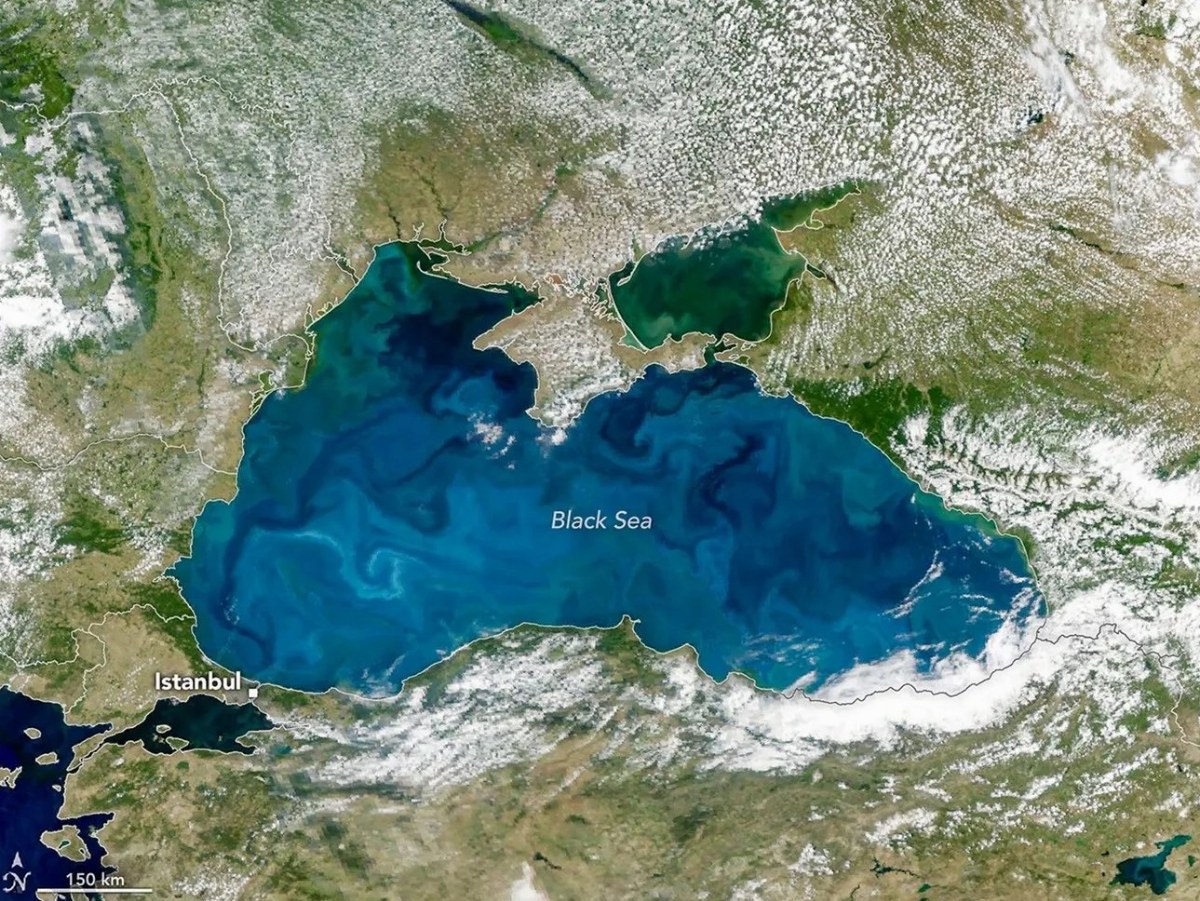
NASA has reported that the striking turquoise color of the Black Sea is likely due to coccolithophores, a type of phytoplankton covered in calcium carbonate plates, which can give surface waters a milky-blue appearance.
This phenomenon can be observed at the end of spring and into early summer. During other times of the year, diatoms, which are microscopic algae that do not lighten the water, dominate the sea, resulting in darker hues.
In a separate image taken on May 27 by an astronaut aboard the International Space Station, satellites captured water of the same color in the Bosphorus Strait in Istanbul, which connects the Black Sea to the Sea of Marmara.
Context
- The Black Sea is situated between Europe and Asia, connected to the Mediterranean Sea through a system of natural waterways.