The United States military conducted strikes on Iran on Friday in retaliation for a drone attack by Tehran on a commercial vessel in the Strait of Hormuz. Both nations are accusing each other of breaching the terms of a ceasefire that had been agreed upon just a week prior, according to reports.
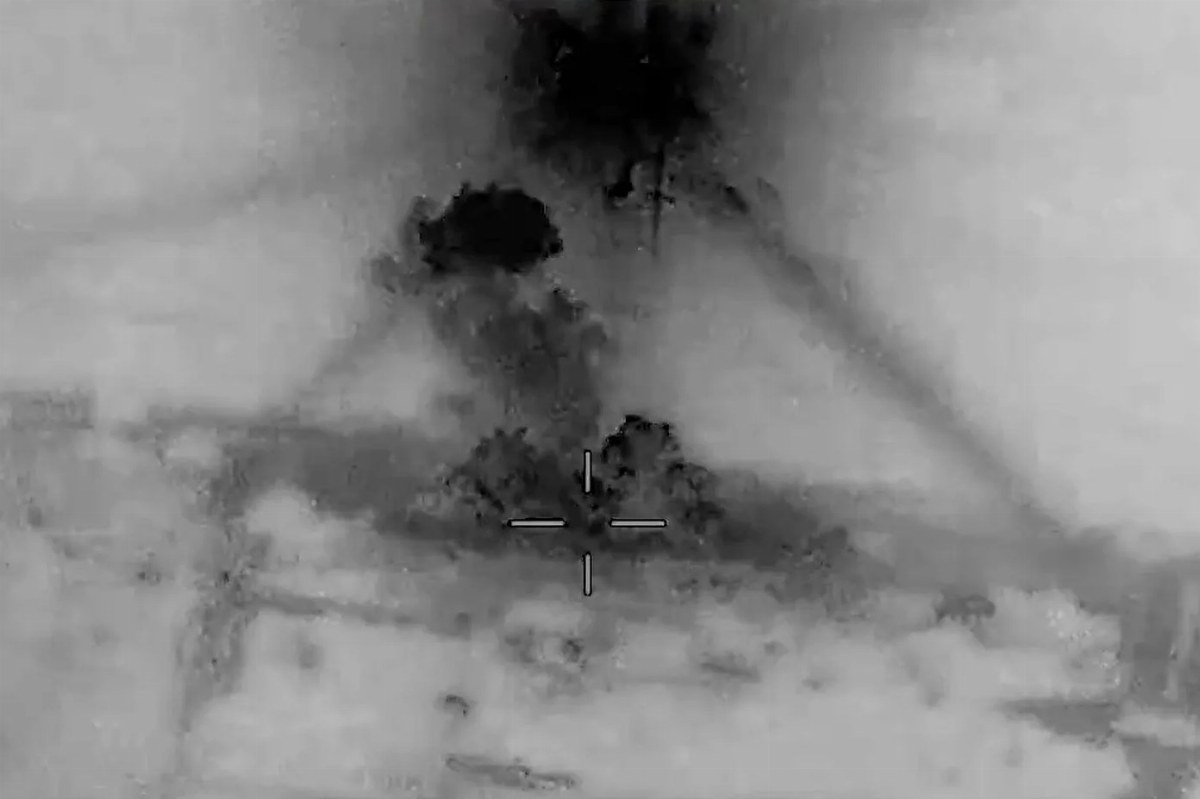
The US Central Command stated that its aircraft targeted missile and drone storage facilities as well as coastal radar stations, later releasing a low-quality black-and-white video of an explosion that was labeled “unclassified.” An official confirmed the operation had concluded.
In response, Iran reported that a projectile struck the vicinity of a dock in Sirik, southern Iran, and claimed that its naval forces retaliated by hitting American military targets in the region. However, Tehran did not provide specifics about what had been struck.
Despite the ongoing tensions, there have been signs of progress in resolving the four-month conflict, as Israel and Lebanon reached an agreement to end hostilities between Israel and Hezbollah, which is backed by Iran.
Both sides presented the agreement as a first step toward disarming Hezbollah and withdrawing Israeli troops from Lebanon, although it remains unclear how this will be implemented, with Hezbollah stating it will not cooperate.
US Response and Accusations
Tehran asserted its control over the Strait of Hormuz and warned Gulf states against siding with Washington after Thursday’s drone attack on a cargo ship near the coast of Oman. President Donald Trump attributed the attack to Iran, claiming it violated the provisional agreement reached the previous week.
“The unjustified aggression against commercial vessels by Iranian forces clearly violated the ceasefire,” stated the US Central Command in its announcement of the strikes, which it referred to as “a strong response to the attack on the commercial vessel transiting the Strait of Hormuz.”
The US military emphasized its commitment to providing “coordination and support for the safe passage” of commercial ships navigating the strait.
Vice President JD Vance, historically a skeptic of US intervention in Iran, currently serving as the Trump administration’s point of contact in this conflict, stated that Americans have upheld the ceasefire agreement.
“Iran signed a ceasefire agreement. We have honored it. If they have disagreements regarding the application of the memorandum of understanding, they can pick up the phone. But violence will be met with violence,” Vance remarked on X.
Iranian Media Coverage
Iranian state media, citing an anonymous military source, reported on the attack on the port of Sirik following an explosion. The source claimed that several warning shots had been fired from Sirik towards vessels violating regulations in the Strait of Hormuz, adding that two warning rockets had also been launched from the nearby Karpan area towards this strategic waterway.
On Saturday, the Iranian news agency Mehr quoted the head of the ports in eastern Hormozgan province, stating that the Sirik port had not sustained damage from the US attack. The official noted that the port continues to operate normally, with no damage reported to facilities or equipment.
The Islamic Revolutionary Guards Corps stated that in response, their navy “struck the locations where American terrorist forces are stationed in the region” and warned that any further US attacks would be met with a broader response, according to statements released by state media.
The ceasefire agreement reportedly grants Iran control over naval traffic in the strait, according to the Guards.
“However, the United States, by provoking conflicts on various fronts, has attempted to violate this commitment, and the necessary response was given and will continue to be given. If aggression recurs, our response will be broader than this,” stated the Revolutionary Guard.