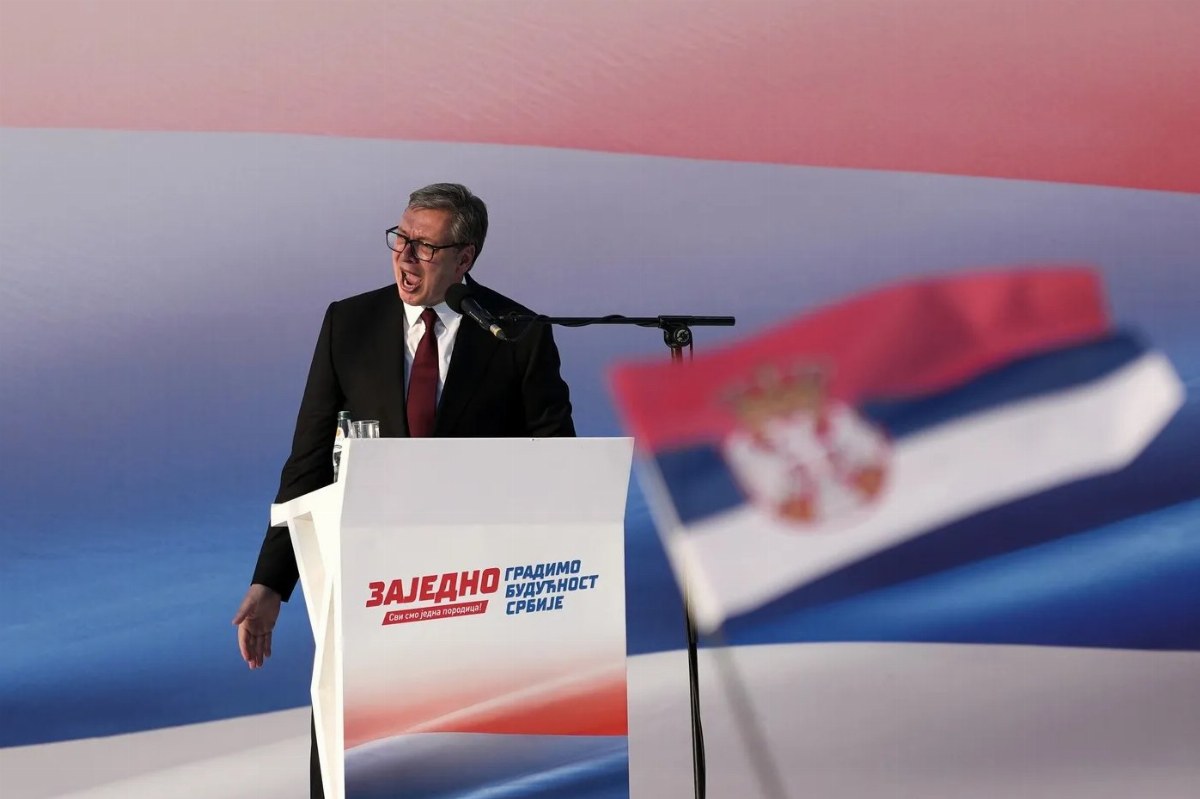
President Aleksandar Vucic of Serbia announced to his supporters on Saturday that he will resign soon, with plans for early presidential and parliamentary elections in the country, according to reports.
This announcement comes after Vucic, who has been in power for 13 years, faced approximately 18 months of anti-corruption protests led by students. The demonstrations, some of which turned violent, erupted following a tragedy in Novi Sad in November 2024, where part of a train station canopy collapsed, resulting in 16 deaths.
Just days ago, students gathered in Novi Sad to commemorate the victims of the tragedy and called for early elections. Another student protest is scheduled for Sunday in Kraljevo.
“I will serve as president for just a few weeks before resigning,” Vucic told his supporters during a pro-government rally in Belgrade.
His current term was set to run until mid-2027, with the second and final mandate ending then. Vucic stated that he aims to assist the Serbian Progressive Party in winning the upcoming presidential and parliamentary elections, which were originally scheduled for 2027.
Vucic did not specify the exact timing of his resignation or when he would dissolve parliament, a prerequisite for triggering early elections.
“Vucic Tries to Avert His Inevitable Fall”
Savo Manojlovic, leader of the opposition initiative Change-Movement, claimed that “Vucic is trying to prevent his inevitable fall due to protests and the student movement, which has garnered more support than he has.”
Protesters, opposition groups, and human rights organizations assert that the tragedy in Novi Sad was indicative of corruption and mismanagement by the government in construction projects. They accuse Vucic and his allies of political violence, corruption, ties to organized crime, and suppressing press freedom. Vucic and his associates have denied these allegations.
Serbia holds candidate status for EU membership, but Belgrade must first address issues related to the rule of law, anti-corruption measures, and organized crime. Additionally, Serbia is required to align its foreign policies with those of the EU, including imposing sanctions on Russia in response to the conflict in Ukraine.