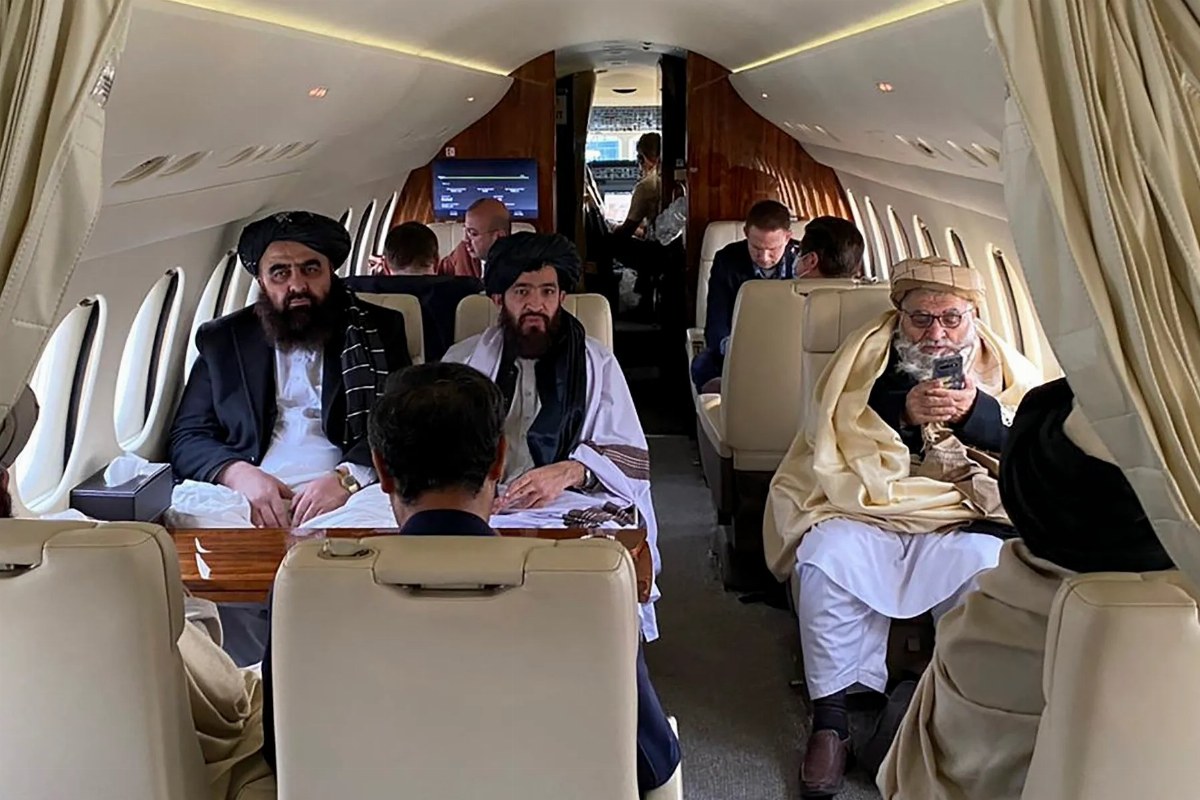
A delegation from the Taliban met with European Union officials in Brussels on Tuesday, marking the first official engagement since the group’s return to power in August 2021. This meeting has faced backlash from human rights organizations, which argue that it legitimizes the Islamist group. In defense, the EU stated that these discussions are essential for facilitating the repatriation of rejected asylum seekers, as reported by Reuters.
Since the Taliban regained control after two decades of conflict, leading to the fall of a NATO-supported government, the EU and its member states have not recognized the Taliban government. However, Brussels defended its decision to hold limited discussions with the “de facto authorities” in Afghanistan, highlighting the need to address the return of asylum seekers who have committed crimes or are deemed dangerous.
EU’s Stance on Engaging with the Taliban
A spokesperson from the European Commission stated that the Brussels meeting included representatives from 15 EU member states and was a continuation of a prior meeting held in Kabul earlier this year. “The Commission’s services and Sweden co-chaired a technical meeting with technical representatives of the de facto authorities from Afghanistan responsible for return and readmission,” the spokesperson said on Tuesday evening.
Taliban Claims Broader Discussion Agenda
A spokesperson for the Afghan Ministry of Foreign Affairs described the agenda as broader, mentioning the possibility of establishing consular presence in the EU and resuming consular services for Afghans in Europe, as well as the “necessity for confidence-building measures.” Abdul Qahar Balkhi, the Taliban spokesperson, expressed hope that the discussions would create a positive momentum for safeguarding the consular rights of Afghans living abroad.
A letter from the Commission to Balkhi, reviewed by Reuters, indicated that the talks were focused on the “return and readmission of Afghan citizens who do not have the right to remain in the EU.” Several EU countries, including Germany, have already initiated such repatriations despite warnings from human rights organizations that returnees face danger and that such expulsions contradict the EU’s fundamental values.
A Controversial Visit
This visit has been sharply criticized by human rights organizations and several European politicians, who argue that Afghans returned to their country will face peril, and that the move contradicts the core values of the European Union. Nobel Peace Prize laureate Malala Yousafzai condemned the meeting, stating that “Europe must not legitimize a regime responsible for one of the world’s most severe human rights crises,” in a message posted on X.
Beyond providing legitimacy to the Taliban, the meeting is controversial due to its potential implications.
Afghanistan Recognized as Most Repressive Country for Women
Human rights advocate Jeff Crisp, a former head at UNHCR and a researcher at Oxford University, noted, “The most evident and dangerous consequence is that Afghans will be returned from the EU and will face persecution from the Taliban upon their arrival.” The Belgian Foreign Ministry issued a visa allowing Afghan representatives to enter the country for only one day, restricting their movement within Belgium and not granting them the usual free movement within the Schengen Area.
Since taking power, the Taliban have continuously curtailed the rights of Afghans, limiting women’s freedom of movement, banning education for girls beyond primary school, and imposing moral laws that restrict freedom of expression and access to employment. The United Nations has declared Afghanistan the most repressive country in the world for women, accusing the Taliban regime of turning women into “faceless and voiceless shadows.”