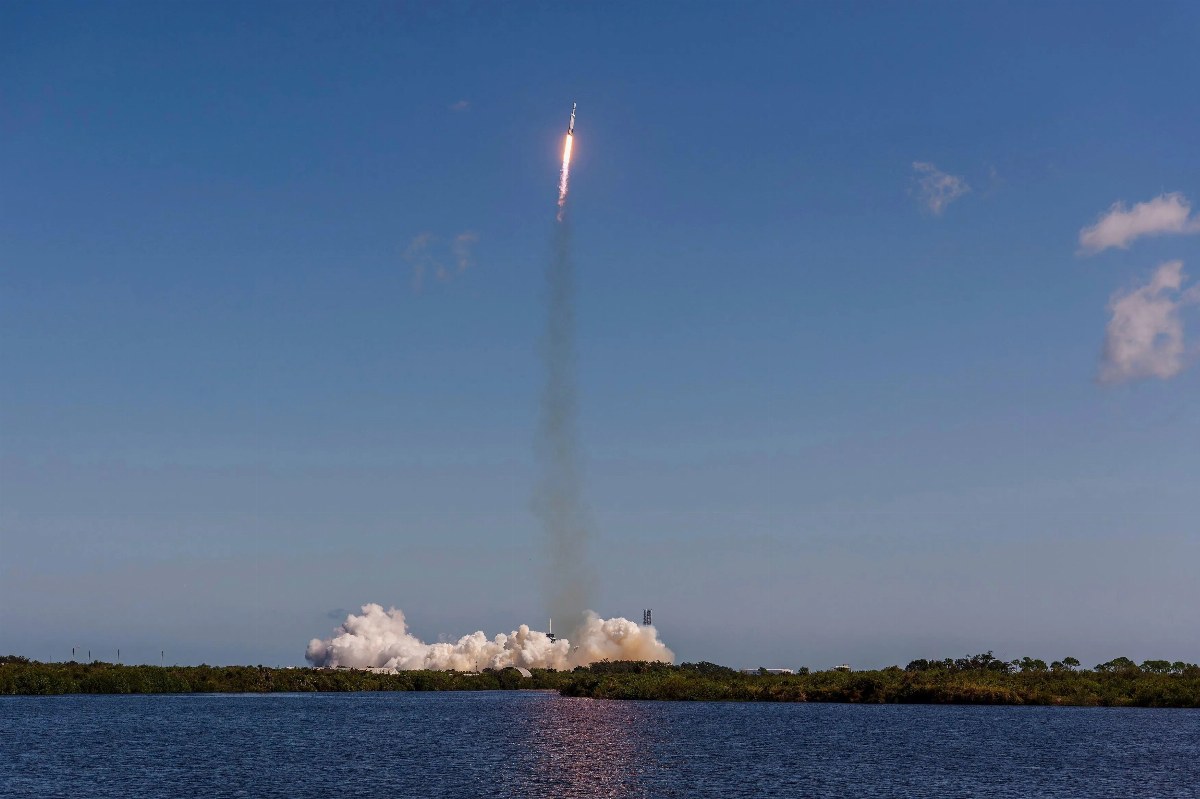
Rocket Lab successfully launched a small satellite from New Zealand last week as part of a military exercise aimed at assessing the United States Space Force’s ability to respond quickly to potential threats in low Earth orbit, according to reports from Ars Technica.
The launch, which was largely kept under wraps, only drew attention through pilot and navigator warnings advising them to avoid the rocket’s flight zone.
Unlike most of its missions, Rocket Lab did not livestream the launch, and by Monday morning, neither Rocket Lab nor US Space Force had officially confirmed the event.
However, the US military’s catalog of space objects was updated over the weekend to reflect the new satellite, named Victus Haze Puma, which was launched from Rocket Lab’s private spaceport on the Māhia Peninsula in New Zealand.
A Simulation of Space Threats
Victus Haze is the latest rapid response mission from the US military in space. The Space Force announced plans for this mission in 2024 after selecting Rocket Lab and True Anomaly to build and launch two satellites into low Earth orbit.
The plan involved True Anomaly launching a small satellite first, intended to mimic a device belonging to a potential adversary like China or Russia.
Rocket Lab was responsible for preparing a second satellite that could be launched quickly to inspect the True Anomaly device once ordered by the military.
The objective of the Victus Haze mission is to demonstrate the military’s and its commercial partners’ ability to rapidly assess potential threats in orbit.
This scenario appears to have unfolded last week. Rocket Lab had another launch scheduled for a commercial client but announced on Tuesday that it was postponed for “further checks” without providing additional details. Just hours before the launch window for Victus Haze, safety notifications began appearing for air and maritime traffic.
The launch, estimated to have occurred at approximately 10:20 GMT on Friday, was timed to coincide with the passage over New Zealand of one of True Anomaly’s satellites. The Jackal-0004 satellite had been launched on May 3 from California as part of a SpaceX rideshare mission.
Publicly available orbital data indicates that the Puma satellite, launched by Rocket Lab for the Victus Haze mission, came within about 100 kilometers of the Jackal satellite just eight hours post-launch, according to astrophysicist Jonathan McDowell, known for tracking space activities using available data.
Based on prior statements from involved officials, the Victus Haze mission will continue with additional maneuvers to bring the Puma satellite closer to the Jackal. Eventually, their roles will reverse: Jackal will become the inspecting satellite while Puma will act as the target.
True Anomaly, based in Colorado and focused on developing highly maneuverable satellites for national security missions, announced last Thursday that its newest satellite, Jackal, has completed all testing objectives since entering orbit earlier this month. According to the company, tests demonstrated the satellite’s capabilities for proximity operations and orbital rendezvous with other spacecraft.
“Jackal is fully operational and ready for the next phase of the mission,” True Anomaly stated, without providing details about what this new phase will entail.
Testing of the Jackal satellite platform and True Anomaly’s software package has included monitoring other orbiting objects using wide and narrow field cameras.
Part of a US Rapid Launch Strategy
These objectives align with those of the Victus Haze mission, following the success of the Victus Nox mission conducted by the US Space Force in 2023. In Victus Nox, the US military collaborated with Millennium Space Systems to build and test a small satellite in less than a year. The satellite was then handed over to Firefly Aerospace, which integrated it onto the Alpha rocket and launched it just 27 hours after receiving the order from the Space Force.
However, Victus Haze represents a much more complex demonstration, involving multiple satellites, rockets, and launch sites. Initially, the satellite provided by True Anomaly for this mission was set to be launched using a Firefly Alpha rocket, but a launch failure grounded this type of rocket for nearly a year. Ultimately, the satellite was launched using a SpaceX Falcon 9 rocket.
US Space Force officials have been pursuing the development of rapid launch capabilities for several years, aiming to reduce the time required to operationalize new satellites from years to weeks, days, or even hours. The estimated cost of the Victus Haze mission is approximately $92 million, funded through a combination of government and private investments.
“This demonstration will ultimately prepare the United States Space Force to provide military commands with capabilities for launching quick operations in response to potential aggressive actions by adversaries in orbit,” stated the Space Systems Command upon announcing the Victus Haze mission in 2024.