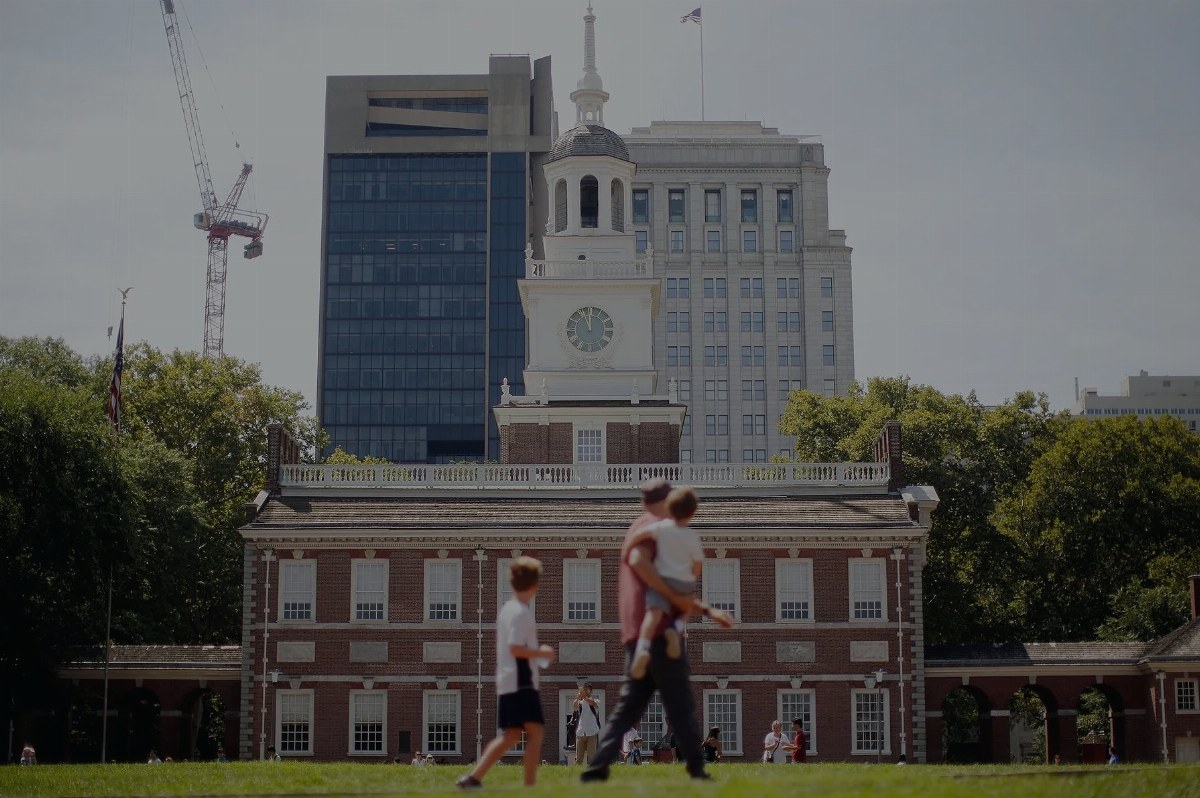
The United States is set to bury a time capsule in Philadelphia, which will be opened in 2276, coinciding with the 500th anniversary of its declaration of independence from the British Empire.
To commemorate the 250th anniversary of the signing of the Declaration of Independence, the capsule will be buried during this year’s celebrations. Weighing approximately 400 kilograms, this substantial capsule is designed to maintain a humidity level of 35% for the next quarter of a millennium—the aim being to prevent items from either disintegrating due to excessive dryness or being damaged by moisture.
In addition to being waterproof, the capsule will be insulated by the earth surrounding it at a depth of three meters, ensuring a stable temperature.
Each U.S. State Invited to Contribute to the Capsule
Despite the lengthy span of 250 years for preserving artifacts, the organizing team is optimistic that both the capsule and its contents will endure. “For the capsule to be inundated, Philadelphia would need to be covered by nearly two meters of water,” said Michael Berilla, the project coordinator. “If Philadelphia is under nearly two meters of water, then the world has far greater problems.”
What’s included in this time capsule to represent America over the next 250 years? The committee tasked with the project invited each state to submit items, resulting in a fascinating and eclectic collection.
Future Americans will likely be interested in the current political voices, as nearly 30 states opted to include letters from their governors.
A Chatbot Predicts U.S. Existence in 250 Years
However, the capsule also contains intriguing items. California contributed a nuclear fusion superconductor, a topological map of the state from NASA, and a prediction generated by the chatbot Claude regarding California’s future. This AI model suggested that the state might declare independence and unite with Oregon, Washington, and British Columbia to form a “Pacific Federation.” Notably, a recent Reuters/Ipsos poll revealed that 40% of Americans doubt the U.S. will still exist in 250 years.
Meanwhile, Michigan took a more pragmatic approach, sending Petoskey stones—fossilized coral that has existed for 350 million years—as well as a large piece of copper ore, underscoring the indigenous peoples’ mining practices in the region over 8,000 years ago.
Nevada, home to Las Vegas, contributed a set of gaming chips and a commemorative coin.
Coca-Cola Donates an Empty Bottle to the Capsule
Alongside state contributions, project organizers also requested items from various companies and institutions. Among the more innovative contributions is the Library of Congress’s molecular data storage device, a small metal container the size of a pencil eraser, which holds synthetic DNA encoding digital copies of select materials from the library’s collections.
This advanced device includes digitized versions of historical documents, such as Thomas Jefferson’s first draft of the Declaration of Independence, handwritten lyrics of “The Star-Spangled Banner” by Francis Scott Key, an 1898 audio recording of the anthem performed by John Philip Sousa’s band, a 3D representation of President Abraham Lincoln’s hand, the L’Enfant Plan from 1791 for Washington, D.C., and other rare digitized materials from the library’s archives.
Some items may hold less cultural significance 250 years from now. For instance, Coca-Cola has donated an empty bottle along with the slogan lyrics from a famous 1971 advertisement, “I’d Like to Buy the World a Coke.” The Professional Golfers’ Association of America contributed a tool for repairing grass divots and a photograph of the 2026 PGA champion accompanied by their caddy.
This time capsule, which also includes a significant amount of poetry submitted by various states, is scheduled to be buried on July 4th, Independence Day.