
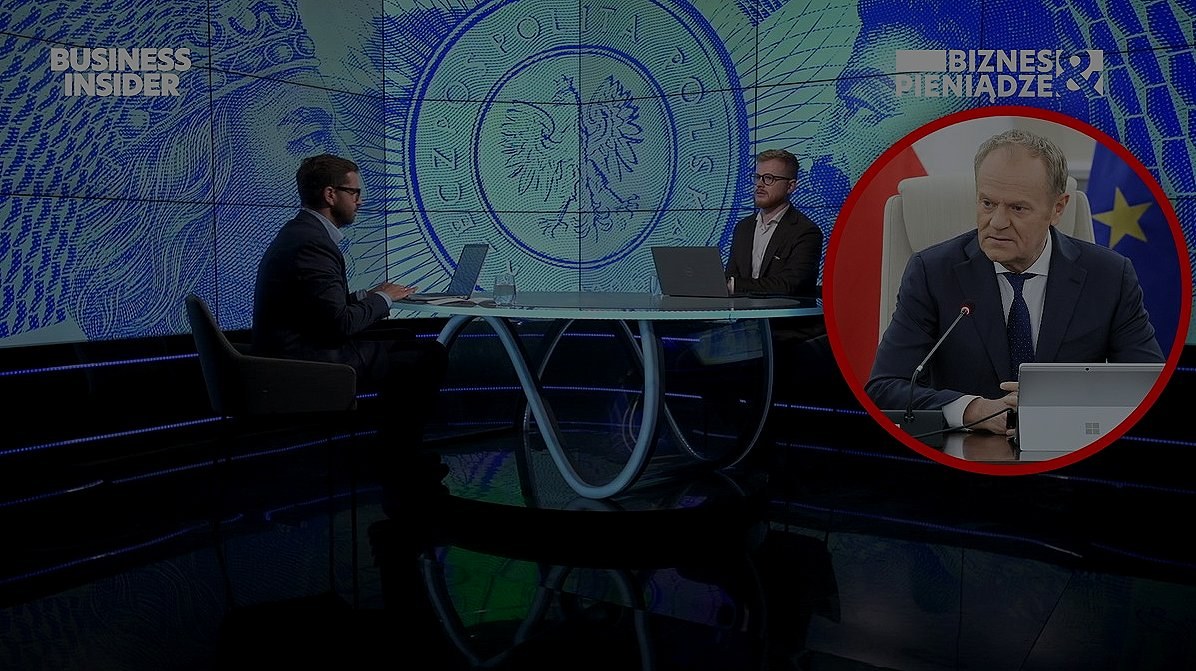
The Polish government is taking significant risks by scrapping the CPN program while tensions in the Hormuz Strait remain unresolved, analysts Bartek Godusławski and Grzegorz Kowalczyk discussed in the “Biznes i Pieniądze” podcast. A misstep during the summer could have costly repercussions for Donald Tusk.
Godusławski pointed out that the government’s optimistic stance reflects a broader mindset, noting, “This optimism was first revealed when the government delayed implementing the package for a month, likely hoping the conflict in Iran would end quickly. Now, this optimism suggests that a lasting agreement between the U.S. and Iran might soon unblock the Hormuz Strait, a crucial global energy transport route.”
The podcast highlights that the legislation’s design allows for rapid and flexible decision-making, a benefit that could appear superficial. As interventions can be quickly reinstated or withdrawn, this creates significant volatility for both the market and consumers.
Kowalczyk emphasized that this timing—summer travel season combined with energy market uncertainties—makes the retreat from subsidies particularly risky and socially unpopular. Even if oil prices do not spike drastically, drivers may quickly feel the impact at the pumps.
Political and Budgetary Costs
The shift away from full subsidies is largely driven by financial constraints. The protective package costs approximately 1.6 billion PLN monthly, necessitating the government to identify funding sources. A key component will be a windfall tax targeting major fuel companies, including Orlen and Unimot.
Godusławski explained, “The government intends to offset these costs with a tax on extraordinary profits, known as a windfall tax, which will tax the excess profits these fuel companies earn from selling their products. The legislation, which the government approved this week, aims to collect 4 billion PLN primarily from Orlen, as well as other firms.”
However, this tax can only finance the program for a few months.
Ad Hoc Decisions and Chaos Risk
A hallmark of the current intervention model is its reversibility. Tax decreases and increases, price caps, and actions implemented through decrees provide the state with tools for swift responses, but they may also provoke market anxiety.
Godusławski noted, “The price cap remains in effect as long as the VAT is lowered. These regulations can be issued with a minister’s signature, bypassing the legislative process. One signature, and prices can be adjusted instantly.”
This approach is administratively convenient, but it can create instability in the market. Kowalczyk pointed out that spreading changes over time is vital to prevent panic reactions, such as mass fueling or sudden supply disruptions.
Godusławski and Kowalczyk stressed that the fuel market involves more than just wholesale and retail prices; logistics, supply management, and inventory planning play crucial roles. Even if fuel supply is physically sufficient, local shortages may arise if the system cannot quickly respond to sudden demand spikes.
Higher Stakes Than Pump Prices
Both analysts emphasized that fuel prices significantly influence the broader economy.
Godusławski remarked, “High or falling fuel prices substantially affect the overall inflation rate. Experts have noted that elevated fuel prices can easily ripple through the entire economy.”
A rise in fueling costs due to the withdrawal of subsidies could have far-reaching consequences beyond individual motorists. Increased transportation costs would elevate expenses for services, food, logistics, production, and trade, potentially reigniting inflationary pressures that Poland has only recently begun to manage.
Godusławski recalled the significant challenges faced in combating the previous inflation wave, stating, “We have just overcome post-pandemic inflation, which exceeded 18%. It was painful to tackle, as the primary weapon against inflation involved high-interest rates, which are never painless for households.”
Market Instability and Private Station Pressures
The public debate primarily focuses on consumer perspectives, but government interventions also affect business owners, particularly private station operators. In a system of price caps and abrupt tax modifications, their business models become unpredictable.
Kowalczyk highlighted this often-overlooked aspect, saying, “When you speak with private station owners, they indicate that the market is already unstable. They feel the impact of these changes, especially with price caps that affect costlier stations along highways, pushing them to the brink of profitability.”
Godusławski warned of the potential for greater market instability if the government reverses its CPN phase-out and returns to the program within weeks.
Where Are the Savings?
The podcast also touched on a more profound structural issue: whether Poland has permanently entered a model where the government continually intervenes in response to every shock. The pandemic, energy crisis, war in Ukraine, and now tensions surrounding Iran and the Hormuz Strait have each fueled societal expectations for immediate governmental relief from market upheavals.
Godusławski argued, “The issue is that these actions do not incentivize reduced consumption. When facing energy challenges, we are not introducing conservation incentives. Instead, we have subsidies and protective measures, but there is no reward for savings—only governmental solutions creating new problems.”
Kowalczyk drew a historical parallel, recalling, “The oil crisis of the 1970s led many to switch to smaller cars.”
Psychological Barriers and Possible Return of Subsidies
Where lies the threshold that would prompt the government to reinstate support? Both commentators suggested that such a threshold exists, albeit implicitly.
Kowalczyk stated, “I have no doubt that if fuel prices exceeded a psychological barrier, we would revert to subsidies.”
Godusławski added, “The question is where that psychological limit lies, and whether the government would consider reinstating subsidies if market factors were to push wholesale fuel prices upward again.”
New episodes of the “Biznes i Pieniądze” videocast are available every Friday on Onet Audio, YouTube, Spotify, and Apple Podcasts.


