Ivo Daalder is a former US ambassador to NATO, currently a senior research fellow at the Belfer Center at Harvard University.
When news broke that the Pentagon would not sell long-range Tomahawk missiles to Germany, many people interpreted it as Washington fearing that Moscow would consider Europe having such a capability as a dangerous escalation.
The decision came on the heels of a series of other signs of US withdrawal from Europe that had been emerging for weeks. This includes, for example, the withdrawal of 5,000 American soldiers from Germany, the suspension of the planned deployment of an American battalion equipped with Tomahawk missiles in that country, and a significant reduction in the planned US contribution to NATO defense – in the form of bombers, fighters, destroyers, submarines and other forces necessary to strengthen the alliance in the event of a crisis or attack.
The Pentagon says these steps are necessary to restore the balance between Europe's and the United States' contributions to the continent's defense. In fact, however, the decision was to suspend the sale of Tomahawk missiles points to a much more disturbing aspect.
Washington not only no longer deploys long-range precision strike systems in Europe. It also denies its European allies the opportunity to arm themselves with these systems for fear of Russia's reaction.
In other words, The United States actively seeks to decouple its security from that of Europe.
A gap in NATO's deterrence strategy
This is not the first time this has become an issue in transatlantic relations. Concerns about the discord between the US and Europe on defense issues first emerged in the late 1950s, when the Soviet Union developed the ability to directly attack US territory. They then returned in the mid-1970s, after the Soviet Union deployed SS-20 nuclear ballistic missiles that could reach all of Europe — but not the United States.
After then-German Chancellor Helmut Schmidt called on NATO to respond to the situation, the alliance countries agreed in 1979 to deploy long-range nuclear missiles that could reach the Soviet Union, while also offering to negotiate limits on such missiles.
By 1987, NATO had deployed hundreds of US nuclear missiles in Europe, prompting Washington and Moscow to agree to ban all intermediate-range nuclear forces with ranges between 500 and 5,000 km – including the Soviet SS-20s and NATO's ground-launched cruise missiles and Pershing II missiles.
The article continues below the video
The Intermediate-Range Nuclear Forces Treaty, signed that year, was in force for over 30 years – until 2019, when the first administration of US President Donald Trump decided to withdraw from the agreement due to clear violations of its terms by Russia. Since then, NATO countries have been discussing the need to deploy long-range missiles that can reach targets located in Russia.
The deployment and sale of Tomahawk missiles to Berlin were intended to fill this gap until Germany and other NATO countries develop and deploy their own long-range missile systems. Work on European missile systems is ongoing, but their expected deployment is still many years away. Washington's decision to halt the sale reopens a serious gap in NATO's deterrence strategy.
US distancing itself
Moreover, while concerns about U.S. distancing are deeply rooted in NATO's history, there is a fundamental difference between the concerns expressed by Schmidt in the 1970s and those we experience today. Back then, it was the result of the Soviet Union's actions. Today it is the result of the actions of the United States. In fact, the Pentagon appears to be influenced more by Russia's concerns than by NATO's deterrence requirements.
50 years ago, Europe feared that the United States would withdraw. Today, as Washington shifts its attention and capabilities to other theaters, disengagement has become explicit U.S. policy. And while it may be appropriate to end what Supreme Allied Commander Europe Alexus G. Grynkewich called “unhealthy interdependence” with the United States, depriving European allies of the ability to defend themselves is a completely different matter.
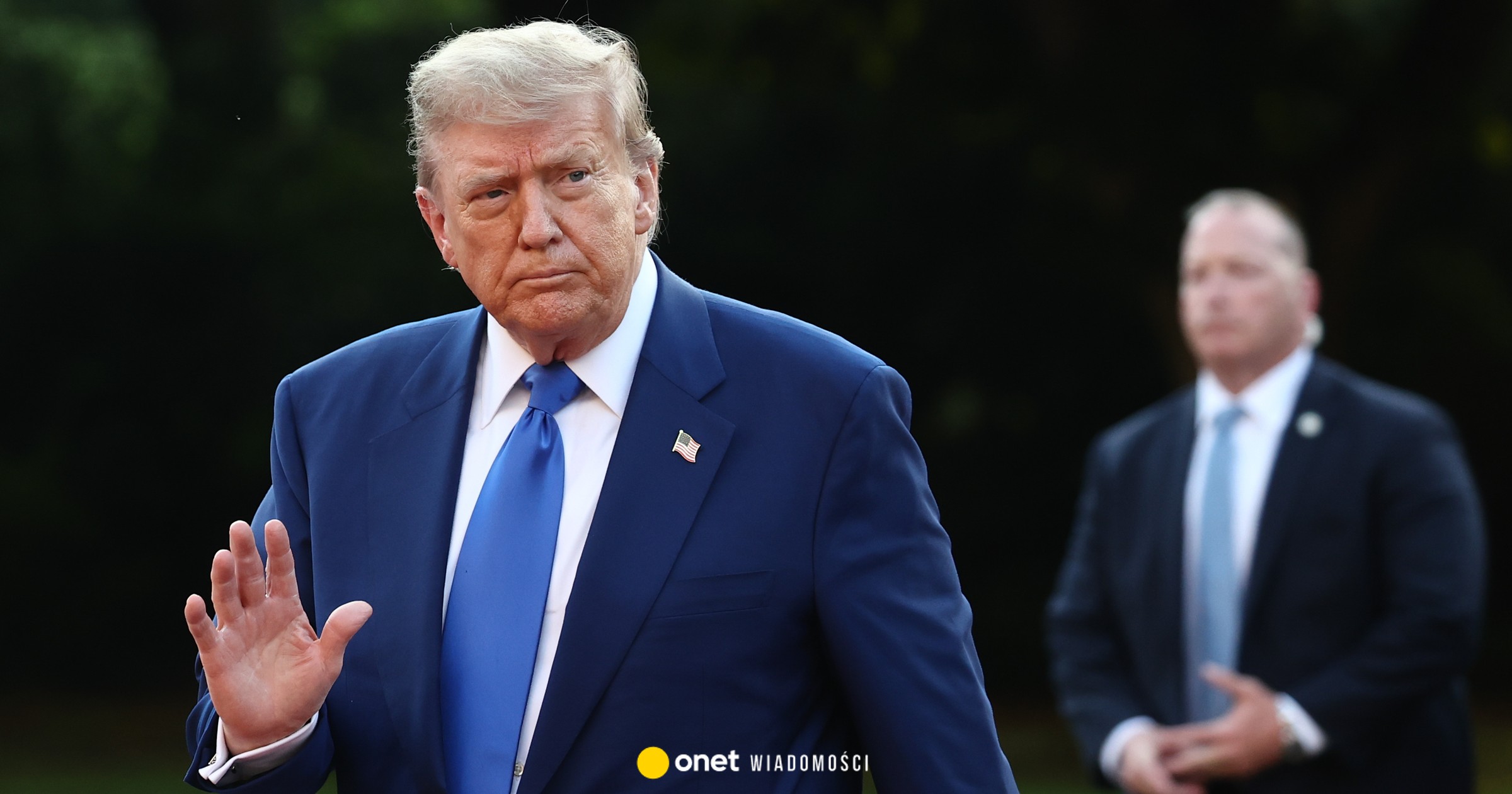
The timing of these decisions by the United States is particularly ironic. Secretary of State Marco Rubio, after weeks of complaints from the Trump administration that NATO had not done enough to support the US and Israel's war against Iran, said the alliance had become “a one-way street where America is simply in a position to defend Europe” but allies are not reciprocating.
But when Europe takes action to defend itself — even asking to buy American equipment for that purpose — the answer is no. This negative reaction is not just a temporary problem either. It goes to the very heart of what makes a security alliance work.
Classic alliance theory distinguishes between two types of fears: abandonment, when an ally does not come to your aid, and being trapped, when an ally drags you into war. Trump and his advisers have long complained about Europe's abandonment of the US. Europeans now fear abandonment by the US. Both sides are right – and both sides respond by driving further apart.
As the United States withdraws, Europe is increasing defense spending and building a variety of long-range strike capabilities—some with dual conventional and nuclear capabilities. These are sovereign systems. The United States will have no say in when or how it will be used. As a result, Washington will have even greater incentive to try to secede from Europe and avoid becoming embroiled in a war with Russia.
Separation does not mean that Europe will be left undefended. It means that the security of Europe and America is no longer seen as interconnected. Washington may no longer automatically treat a crisis threatening Warsaw or Tallinn as a threat to the security of the United States. And this means the end of the integrated deterrence system that has ensured peace for the last 80 years.
Schmidt understood that the security of Europe was inseparable from the security of the United States. Trump thinks otherwise. We will soon find out who was right.
I’m Ashley Davis as an editor, I’m committed to upholding the highest standards of integrity and accuracy in every piece we publish. My work is driven by curiosity, a passion for truth, and a belief that journalism plays a crucial role in shaping public discourse. I strive to tell stories that not only inform but also inspire action and conversation.