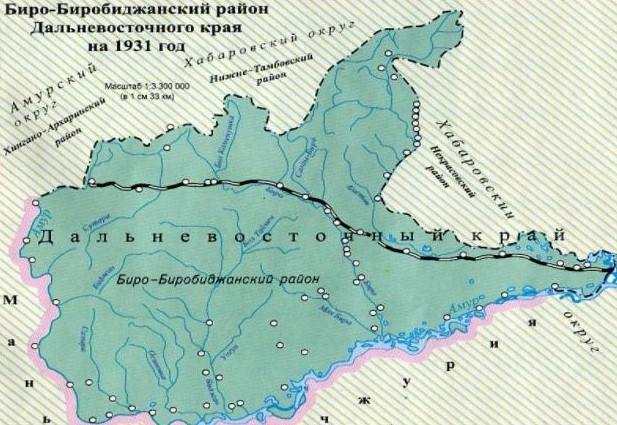
Map of Biro-Bidzhansky district
Photo: Heritage JAO
June 12, 1928
In the book “The Jewish Autonomous Region: History of the Administrative-Territorial Structure” (0+) it is written that a meeting of the Commission at the Regional Land Administration was held with the participation of representatives of the District Resettlement Administration, KomZET and the Amur District Executive Committee to agree on the boundaries of the lands of the Biro-Bidzhansky district, transferred to KomZET for settlement by working Jews. These proposals on June 12, 1928 were approved by the decision of the Presidium of the Far Eastern Regional Executive Committee of the Councils of Workers' and Peasants' Cossacks and Red Army Deputies of the 2nd convocation.
The boundaries of the Biro-Bidzhan region have been determined. Photo: Photo: Regional Library
An extract from Protocol No. 95 of the meeting of the Presidium of the Far Eastern Regional Executive Committee of the Councils of Workers' and Peasants' Cossack and Red Army Deputies of the 2nd convocation has been published, in which it decided:
“The eastern border of the Birsko-Bidzhansky district assigned to KomZET is tentatively set along the Amur River so that, after land management of the old-time population in the part of the region adjacent to the city of Khabarovsk, this border is clarified; from the eastern border of the Birsko-Bidzhansky region established as a result of land management, the external southern and western borders are recognized as the Amur River to the mouth of the Khingan River, which will also be the north-western border of the region until the right peak of the Udurchukan River crosses the railway line; the northern border is determined along the line of the railway until it crosses the pass of the Small Khingan ridge, then along the middle watershed line of the named ridge to the source of the right peak of the right tributary Urmi-Kosmun to its confluence with the Urmi River, to its confluence with the Kur River and, finally, along the Tunguska River.
June 12, 1951
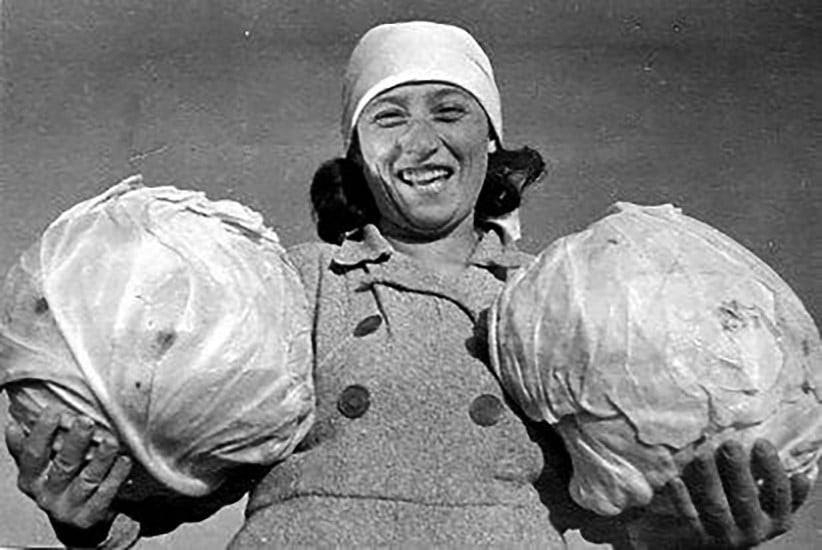
Collection of vegetables. Photo: Photo: State Archive of the Jewish Autonomous Region
The Bureau of the Regional Committee of the All-Union Communist Party of Bolsheviks heard a question about the work of the regional department of agriculture. Attention is drawn to the need to strengthen work on studying and summarizing the experience of leaders in agricultural production in training machine operators and agricultural specialists, in developing and increasing the productivity of livestock farming.
June 12, 1966
The next elections to the Supreme Soviet of the USSR took place. Among the elected deputies to the highest body of state power from the Jewish Autonomous Region are the communists: G.E. Podgaev – first secretary of the regional committee of the CPSU, A. K. Cherny – chairman of the executive committee of the Khabarovsk Regional Council of Workers' Deputy, F. E. Vatutin – chairman of the Trudovaya Niva collective farm in the Leninsky district, R. Kh. Khersonsky – turner at the Dalselkhozmash plant, non-party L. D. Trunova – foreman of vegetable growers of the first department of Smidovich state farm.
June 12, 1979
The Bureau of the Regional Party Committee considered the issue of the organizational work of the administration and the party organization of the Khinganolovo plant to ensure the rhythmic implementation of plans by each workshop, section, and brigade.
It was noted that the administration and party organization of the Khinganolovo plant, following the initiative of the Rostovites to “Work without lagging behind,” are carrying out significant work to ensure the rhythmic implementation of plans by each workshop, section, and brigade.
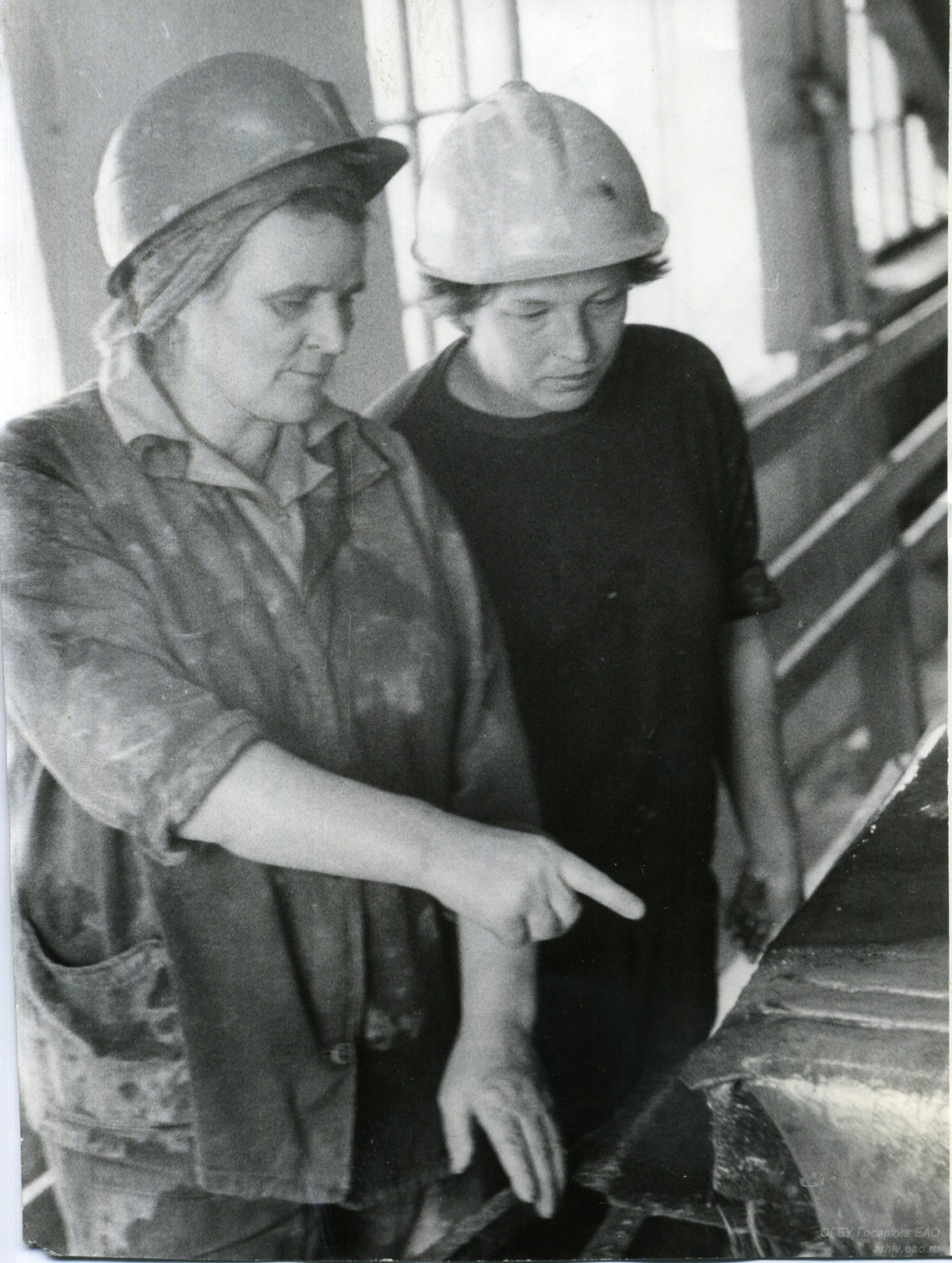
Leading workers of the Khinganolovo plant Brovok and Lyubimova. 1978. Photo: Photo: State Archives of the Jewish Autonomous Region
At the plant, over 98% of workers participate in individual socialist competition. More than half of the sites, shifts, and brigades bear the title of communist labor collectives; over 60% of the workers are shock workers of communist labor. During 1977-1978 and five months of 1979, all teams, shifts, sections and workshops of the plant work rhythmically and successfully cope with planned tasks. The bureau of the regional committee proposed that the administration, the party bureau, and the Komsomol committee of the plant pay attention to the further development of the Rostovites movement “Work without lagging behind,” to strengthen educational work in the team and the struggle to strengthen labor discipline and public order.
June 12, 1963
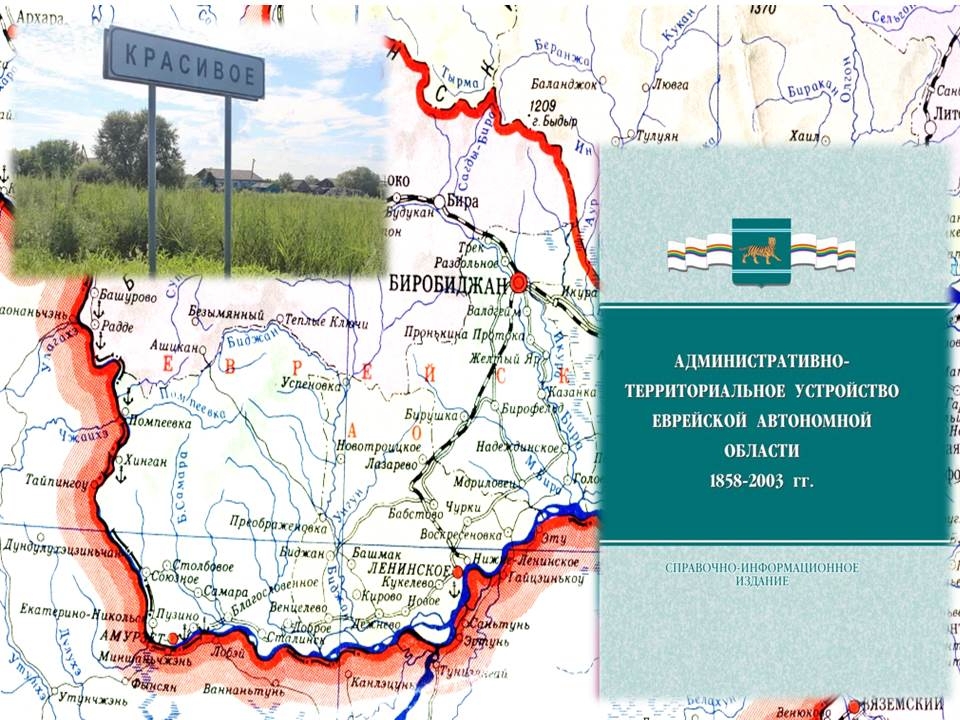
Map of the village of Krasivoe. Photo: Photo: Heritage EAO
In the reference and information publication “Administrative-territorial structure of the Jewish Autonomous Region 1858-2003.” (0+) information has been published that, on the basis of the resolution of the bureau of the regional committee of the CPSU and the regional executive committee of the Jewish Autonomous Okrug dated June 12, 1963, No. 182, the fourth department (the village of Krasivoye) of the Bobrikhinsky state farm of the Birobidzhan region was transferred to the Ungunsky state farm of the Leninsky region. The village of Krasivoye is included in the Lazarevsky Village Council of the Leninsky District.
Information: the village of Krasivoe was founded in the late 30s of the twentieth century during the construction of the Birobidzhan-Leninskoye railway line. The name was given after the Krasivoe junction, and for its favorable landscape. The village has a couple of shops, a club, a school and a kindergarten.
The regional highway Birofeld – Amurzet and the railway line Birobidzhan I – Nizhneleninskoye pass through the village of Krasivoye.
June 12, 1983
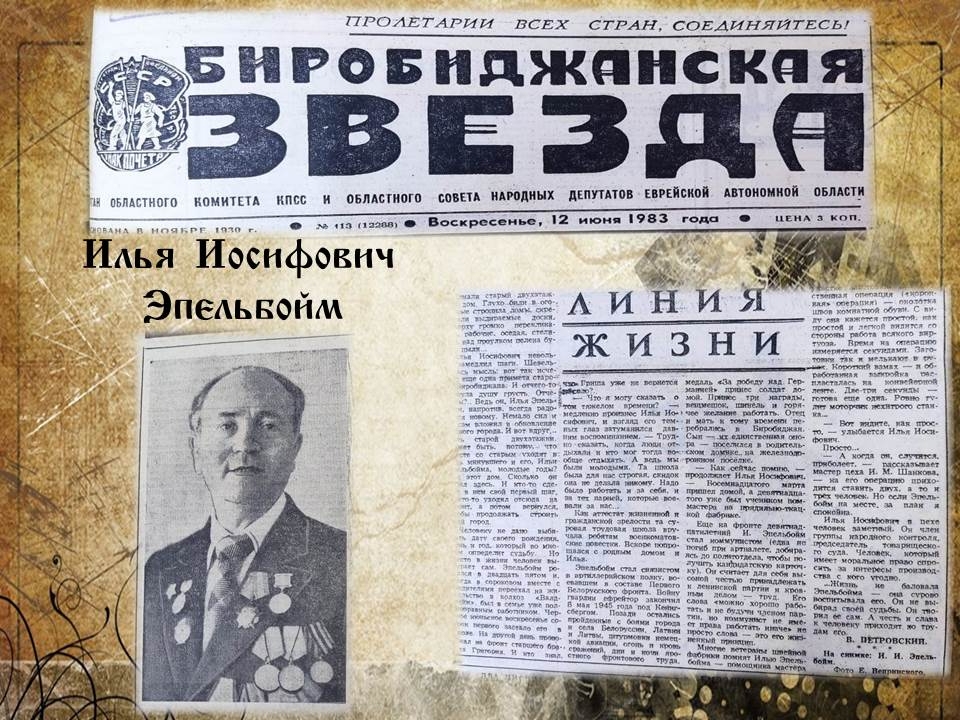
Clippings from the newspaper “Birobidzhan Star”. Photo: Photo: Regional Library
The newspaper “Birobidzhan Star” (12+) June 12, 1983 wrote about a participant in the Great Patriotic War, a worker at the Birobidzhan shoe factory, Ilya Iosifovich Epelboim.
I. I. Epelboim was born in 1925, and in the forties he and his parents moved to live on the Valdheim collective farm.
When the Great Patriotic War began, Ilya Iosifovich received a certificate of maturity, the military registration and enlistment office handed him a summons. Epelboim became a signalman in an artillery regiment that fought as part of the First Belorussian Front. The guard corporal ended the war on May 8, 1945 near Königsberg. At the front, Ilya joined the ranks of the Communist Party. Ilya Epelboim was awarded two medals “For Courage” and a medal “For Victory over Germany.” Immediately after demobilization, I. I. Epelboim came to work as an apprentice assistant foreman at a spinning and weaving factory.
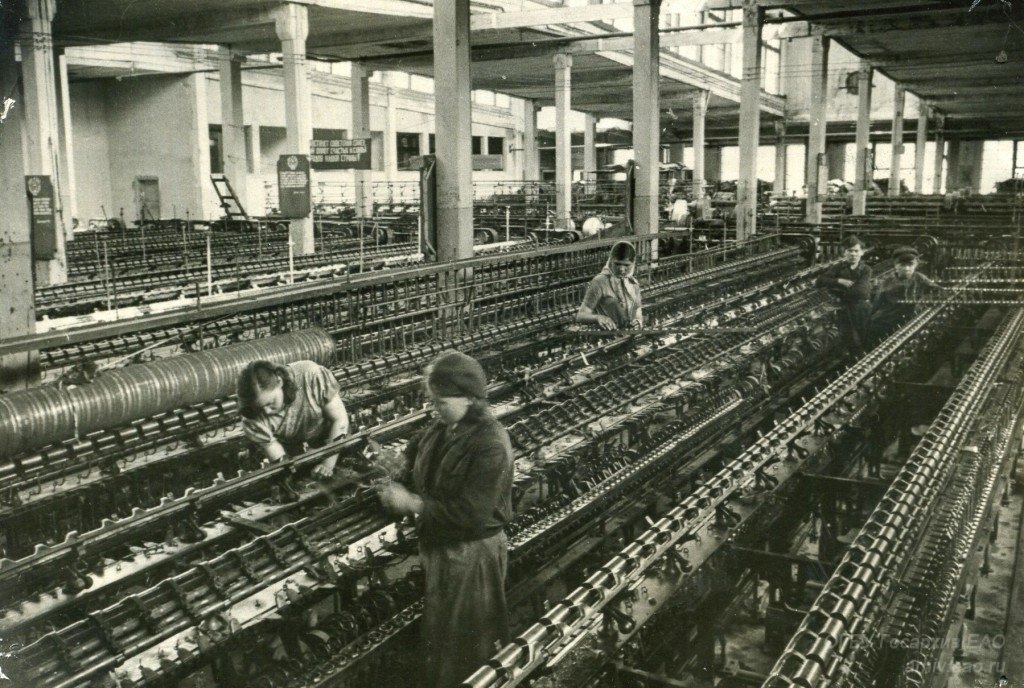
Birobidzhan Spinning and Weaving Factory is a new building in the textile industry. General view of the water workshop. 1946 Photo: Photo: State Archive of the Jewish Autonomous Region
Ilya Iosifovich was an innovator at the factory, an active social activist; he took part in the foundation of a thermal power plant and planted trees. Before the start of his shift, he came to the factory to take part in repair work.
In 1970, a labor medal was added to his military medals – “For valiant labor. In commemoration of the 100th anniversary of the birth of V.I. Lenin,” and in 1971 he was awarded the Order of the October Revolution.
When weaving production at the factory was closed, he went to work at a shoe factory. In the workshop, he headed the team at the procurement site, Ilya Iosifovich was a member of the people's control group, the chairman of the comrades' court.