INTERVIEW The German doctor who gave people the green light to end their lives and the director who told his story. “I refused to film the final accompaniments”

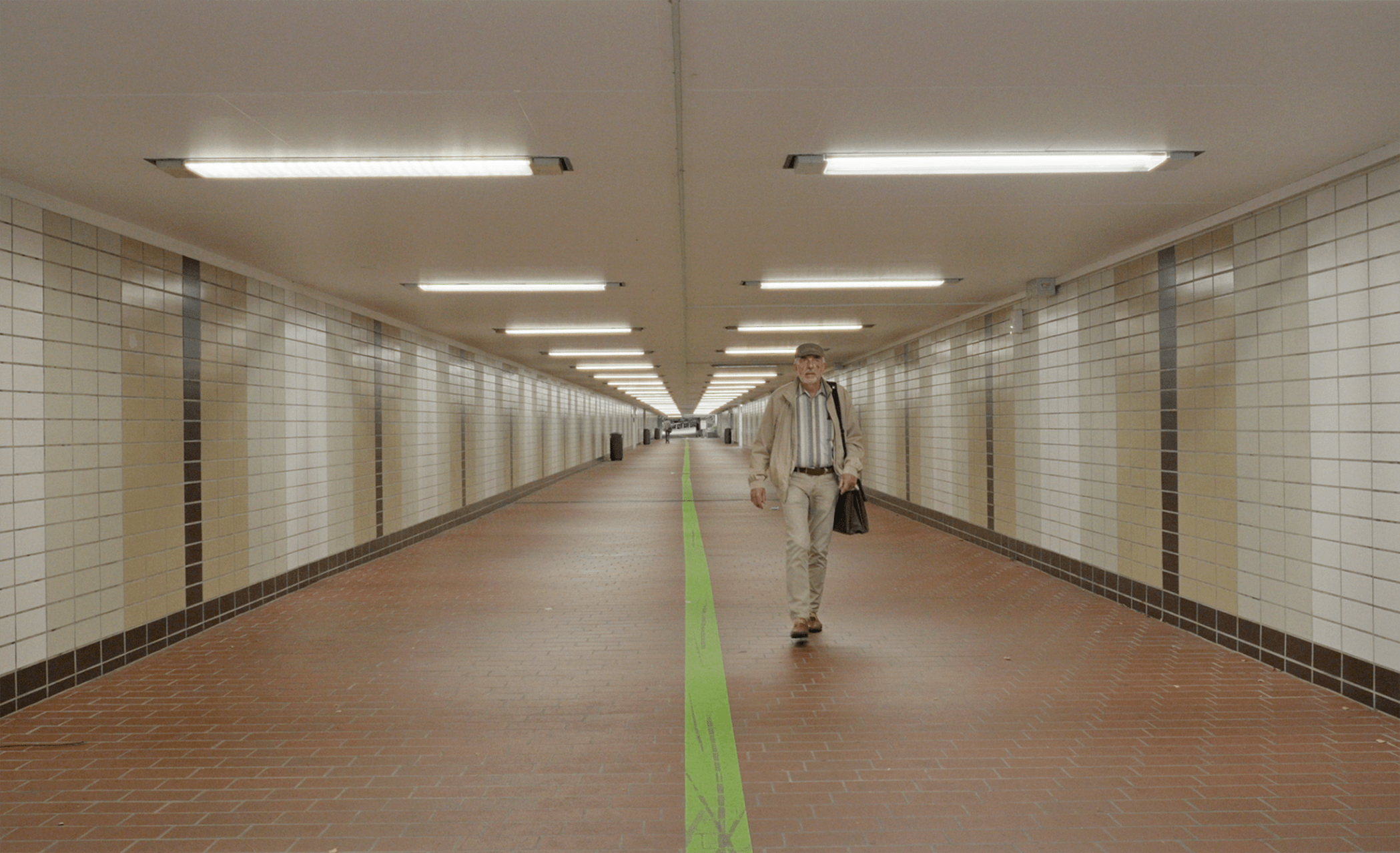
In the documentary “Green Light”, the director Pavel Cuzuioc approaches a controversial topic, that of assisted suicide, and presents the doctor who, for two decades, gave approvals for more than 700 people to end their lives on request and legally. Until he was arrested and convicted of manslaughter. “I explained to him that I do not want to take a position, that I will not judge. That I am interested in the person, not the moral verdict”, says Pavel Cuzuioc in an interview for HotNews.
That “green wave”, which gives the title of the documentary filmed by Pavel Cuzuioc, refers to the agreement that the German neuropsychiatrist Johann Spittler (84 years old) gave, following an evaluation, so that some of his patients could end their lives in a legal way, through assisted suicide.
Until his conviction in 2024, Dr. Spittler was one of the few specialists qualified to assess the decision-making capacity of people requesting assisted suicide. For more than two decades, he has examined people suffering from terminal illnesses, mental disorders, or both, giving the green light in more than 700 cases. Not all requests were accepted, for example, we see in the film how the doctor tells one of the men who calls on his services that “it would break his heart to help him leave” and that he “would like nothing more than to simply give up on his case”.
“Is it ok for a man's life to be weighed like this?”
Dr. Spittler has personally assisted a significant number of patients in their final act, people who, as someone in the documentary says, feel like they “only exist, not that they live.”
In fact, Pavel Cuzuioc's documentary makes its viewers participants in this process, in the interviews that Dr. Spittler takes with several patients. He puts us in the room with them, in an oppressive silence and tension, making us constantly wonder if it is ok for a human life to be weighed like this or if it is ok for someone to be responsible for this “green wave” which is actually the end, death.
Sentenced to over four years in prison
Unlike Romania, assisted suicide is legal in Germany, but that does not mean that the procedure is clear, without legal obstacles or, in some cases, repercussions. Dr. Johann Spittler is currently serving a sentence of 4 years and 4 months in prison for allegedly giving the “green light” to two patients who, following another examination, would not have had the capacity to freely exercise their will.
“Green Light”, which was included in the official selection of the 78th edition of the Locarno Film Festival (August 6-16, 2025), and since then entered a festival circuit and was in the program of the first film festival in Romania dedicated to mental health – Romanian Mental Health Film Festival, which took place in May in Iași. On June 13 and 16, the film will be screened at TIFF in the “No Limits” section.
“It seems to me that the audience of a mental health festival is exactly the right audience for this film, people who understand the complexity of suffering and the importance of empathy”says the director Pavel Cuzuioc in the interview given to HotNews.ro.
Born in Chisinau, Pavel Cuzuioc (48 years old) is a Moldavian-Austrian-Romanian director, known for his documentaries that address more intimate themes or explore less visible communities. He studied law in Bucharest and film direction at the University of Music and Performing Arts in Vienna. Among his works are the documentaries “Digging for Life (Doina groparilor)” (2011), “Secondo Me” (2016), “Please Hold the Line” (2020) and “Cosmosapiens” (2023), as well as the award-winning short film “Raisa” (2015), presented at major international festivals.
“Someone who calmly and methodically considers whether another person has the right to end their life”
HotNews: – Mr. Pavel Cuzuioc, what initially attracted you to the story of Dr. Johann Spittler and to this extremely sensitive subject?
Pavel Cuzuioc: – It was on a podcast that I first heard of Dr. Spittler and was fascinated, not by the subject, but by the man himself. Someone who calmly and methodically considers whether another person has the right to end their life with the indirect help of another. I contacted him, explained my cinematic approach and he said yes.
“Suicide remains for him 'a terrible road'”
– What intrigued you the most about the huge responsibility that this doctor carries?
– The fact that he never gives a “green wave”, a “green light” easily. Suicide remains for him “a terrible path”. And yet he feels he cannot leave these people alone. This inner tension fascinated me deeply.
– Was it difficult to gain the trust of such a discreet but also controversial character?
– I explained to him that I do not want to take a position, that I will not judge. That I'm interested in the man, not the moral verdict. I think it was precisely this lack of agenda that convinced him. I tried to stick to this principle until the end.
“The camera sometimes works as a weapon, sometimes as a therapeutic device”
– How difficult was the access to the patients and to the evaluation process itself?
– Dr. Spittler mediated everything. Some people accepted immediately, others refused. Others wanted me to explain more about the film or to see my previous films. Of those he asked, almost half agreed to be filmed. They did it consciously and freely. The filming process followed his pace, slow, careful, without artificial urgency.
– What was the most disturbing or difficult moment you experienced during filming?
– I cannot point to a single moment. The difficulty was constantly present, to film real suffering, to remain present and not intervene. The camera sometimes functions as a weapon, at other times as a therapeutic device. Some people run away from it, others see in it an opportunity to reveal themselves.
“I refused to film the final accompaniments”
– How did you manage the ethical dilemmas during filming, especially in the moments close to death? Are there scenes you chose not to include for moral reasons?
– Yes. I refused to film the final accompaniments, the actual moments of death. I wanted to accompany the process, not the end. If I had gone beyond that limit, it would have been voyeurism. I'm not looking for effects for shock's sake. There is a limit that I clearly felt and respected.
“An absolute dedication to what he does”
– Did your perception of Dr. Spittler change during the filming, especially since at the end, even while filming, he is sentenced to 3 years in prison for manslaughter, in the assisted suicide of a 42-year-old man (no After the making of the documentary, on March 24, 2026, the Essen Regional Court sentenced Dr. Spittler again, increasing the total sentence to four years and four months in prison, in a the second case involving a 42-year-old man)?
– My perception of him has not changed. After finishing the film, I understood that few people work like him, with absolute dedication to what they do. His conviction shows a fundamental contradiction: a man who has dedicated decades to this work is punished by legislation that can leave room for interpretation. Many in the field of assisted suicide, and more, call him a martyr. I think Dr. Spittler always wanted more precise, less interpretable legislation. By testing the limits, he believed he could help clarify it. It happened to be different.
– How did you personally position yourself in relation to the legal framework while filming, given this conviction?
– I did not intend to take a legal position. I'm a director, not a lawyer. But the film makes it clear that legislation often fails to keep pace with human reality. This can be seen in the film, without me having to say it explicitly.
“Freedom without responsibility does not exist”
– And yet, your documentary raises questions about individual freedom. Do you think there are limits to this freedom?
– Yes, obviously. And Dr. Spittler himself looks for them in every case. That's why sometimes he says no. That is why there is a long and careful evaluation process. Freedom without responsibility does not exist.
– Did the making of this documentary affect you personally? Has it changed your perspective on your own mortality in any way?
– I left with more questions than answers. And I think that's good. It made me more attentive to the suffering around me, less quick to judge. The perspective on one's own mortality, yes, something has changed. Not dramatic, but real.
“The conversation has to start somewhere”
– How do you think the film will be perceived in countries where assisted suicide is not legal, such as Romania?
– With interest, but also with resistance, which is natural. Each taboo has its own dynamics. Assisted suicide is one of the most difficult to approach, because it touches both faith, law and personal suffering. But that's exactly why I think it's important to have movies like this. The conversation has to start somewhere.
– And can “Green Light” influence the public debate on this subject?
– I don't think that a film alone changes laws. But it can change something in the mind of a man who sees it. And if after each screening people stay to discuss, as happened in Locarno, Kassel, Vienna, Chisinau and other cinema halls, then the film has achieved something real.