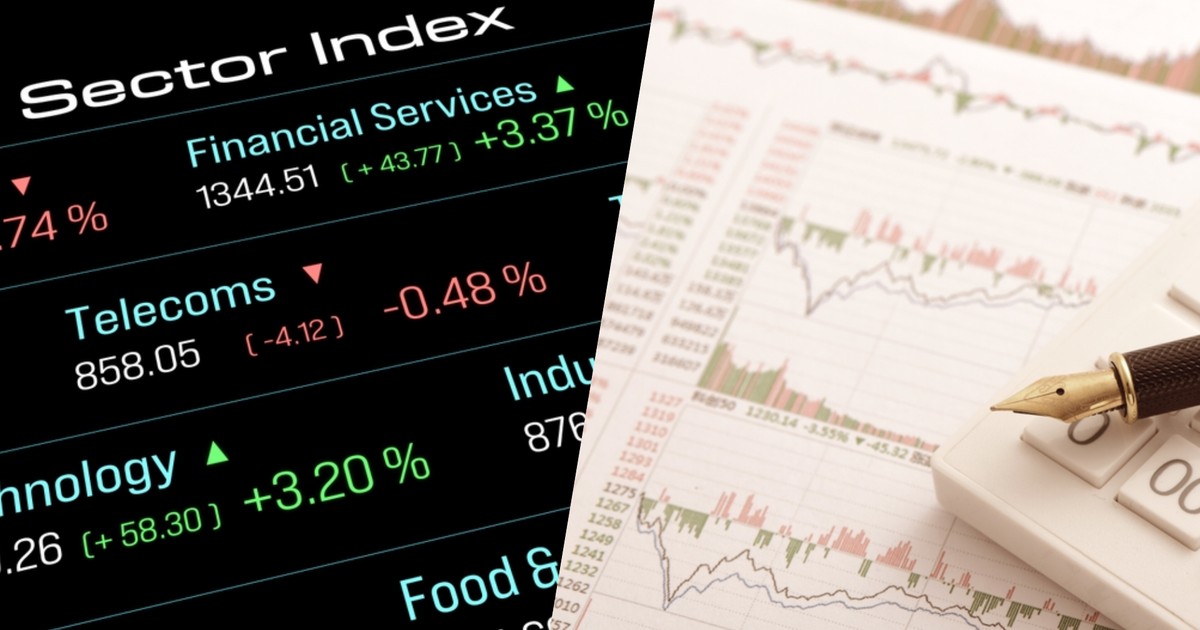
The first half of 2026 did not bring boredom for investors. Financial markets entered the new year with high valuations, only to be hit by geopolitics, expensive energy and interest rate uncertainty. Therefore, the answer to the question – what to invest in in 2026 – is not a simple choice of the “best” asset class, but rather a decision about what set of opportunities and risks the investor is willing to accept.
Important: The company and valuations contained in the text are for informational purposes only and do not constitute a recommendation or any other form of suggestion for the purchase or sale of financial products. Investment decisions should be preceded by your own analysis of risk and financial situation.
What to invest in in 2026? Game status
International Monetary Fund in April's “World Economic Outlook” lowered the global GDP growth forecast for 2026 to 3.1% and raised inflation to 4.4%.pointing out that the war in the Middle East has driven up commodity prices and increased uncertainty for financial markets.
The European Central Bank kept interest rates unchanged, but at the same time admitted that risks for inflation have increased and the prospects for economic growth have worsened. In turn, at the Fed, a more hawkish tone of some decision-makers is clearly visible.
See also: Investing for years – how can you earn the most? We compared methods
At the end of the first quarter, concerns about the effects of the war with Iran, higher oil prices and rising bond yields dominated, and there was more and more talk about the rotation from expensive technology companies to the value sector, small companies and dividend stocks. However, as sentiment improved in the second quarter, global indices started climbing again: The FTSE All-World was close to 12% at the beginning of June. in positive territory since the beginning of the year. Developed markets gained approximately 5 percent and emerging markets 10 percent, helped by, among others, AI topic.
Special offer
On the bond market, the first half of the year was psychologically much more difficult than the results themselves might suggest. In the first quarter, yields first fell and then moved up significantly, as higher energy prices and persistent inflation reduced the chances of quick rate cuts. At the beginning of June, the yield on 10-year US bonds was around 4.48%, Germany's 3.01% and Japan's 2.65%, which clearly shows that the debt still priced in the scenario of “higher rates for longer” or even the risk of another tightening.
Real estate was the most selective. In the listed segment, i.e. REITs and real estate companies, the picture was mixed. However, activity in commercial real estate is improving.
What to invest in in 2026? Market expectations
A common opinion in analyst reports is that the outlook for stocks for the second half of the year remains moderately good, but increasingly dependent on company performance, and not only on liquidity and the AI narrative. The strength of shares on the largest stock exchanges is constantly growing profits and the possibility of further expanding the bull market beyond a handful of technology mega-companies. The weak point remains high valuations, the risk of disappointment on the topic of artificial intelligence and the fact that another rise in oil prices could again drive up inflation and hit valuations.
Bonds may be most interesting for those looking for a more predictable return profile. Their chance is still relatively attractive starting yields and the possibility of price increases if inflation starts to slow down again. However, the greatest risk remains the scenario in which central banks will not only not return to cuts, but will have to maintain a hawkish tone even longer.
See also: Is it worth investing in crude oil? These are the rules you need to know – practical tips
Real estate, on the other hand, may be an asset class that will improve more slowly but steadily in the second half of the year. Their advantage remains the physical nature of the asset, rental income and the fact that in some segments – from apartments for rent to data centers – structural demand looks very solid. However, the risks are obvious: high financing costs, expensive construction and the fact that not every property is equally attractive today.
Application? If the second half of 2026 brings calmer geopolitics and a decline in inflationary pressure, shares may still offer the most. However, if the world remains in a “slower growth and higher rates” mode, bonds will be the strongest candidate to be the foundation of the portfolio. Today, real estate looks like an asset for the patient: with less potential for a sharp rally than shares, but also with a chance for a more stable return, especially in selected segments. So this is not a year of “either/or” answers, but rather a year of sensible diversification.
Note: The information contained in the text is for informational purposes only and does not constitute an investment recommendation, information recommending or suggesting an investment strategy within the meaning of applicable regulations, or any other form of advice regarding the purchase or sale of financial products.