How a 57-year-old farmer turned into a manhunter. The tragedy that completely changed his life and turned him into a beast

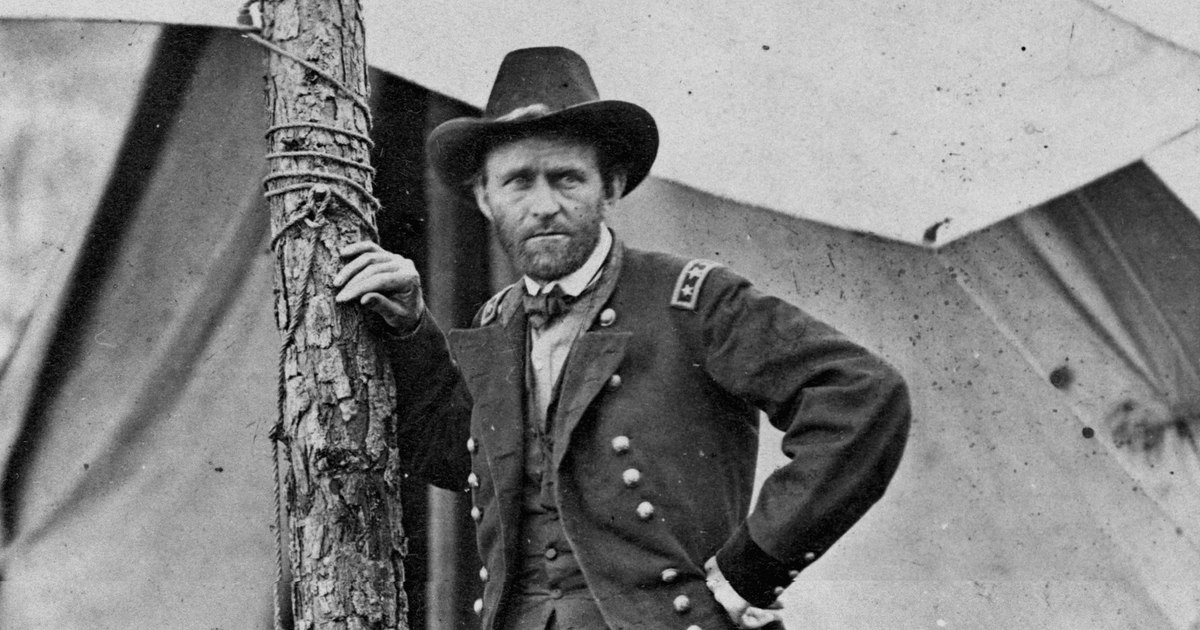
Paternal grief can turn a simple man into a cold-blooded killer who brings hell to Earth. And the best example is the story of Jack Hinson, a 57-year-old farmer who saw his boys killed and maimed for no fault of their own. He became an apostle of vengeance.
Jack Hinson an elite shooter PHOTO abevilleinstitute.org
They say there is no greater pain than experiencing the loss of your own child. Let alone when you know he was massacred, and see his body mutilated, torn and mocked, through no fault of his own. It's a shock that can easily make you lose your mind. It seems like an extreme scenario, rather taken from books or movies, but a 57-year-old man from the United States experienced this terrible feeling on his own skin.
His name was Jack Hinson, he lived in the middle of the 19th century and he was a quiet farmer from Tennessee, in the United States. He ended up living in troubled times, of civil war and unreconciled hatred. Although he stayed out of the Civil War, which ravaged America for four years, Jack Hinson was dragged into the maelstrom of events against his will. After a group of soldiers killed his two sons, the most beloved children of Jack, the farmer from Tennessee, reached the threshold of the age of three, turned into a real animal of prey. Driven by vengeance, armed with a custom-made .50 caliber rifle, Hinson single-handedly waged a veritable war of extermination against those who killed his innocent children.
An idyllic life on the farm and a war that would change destinies
Jack Hinson, or “Old Jack,” as he was known in Stewart County, Tennessee, was a prosperous American farmer in the mid-19th century. He owned a tobacco plantation called “Bubbling Springs” as well as numerous farmlands. Like all great Southern landowners, “Old Jack” owned slaves and worked his plantation with their help. He was also known as a peaceful and family man. Together with his wife, he had 10 children, most of them boys. The youngest was 17 and Jack's favorite. The farmer also had a reputation as a good hunter. He knew how to follow prey only by tracks, and besides, he was a very good marksman.
On April 12, 1861, however, the Civil War broke out in the United States. The Confederate States of the South, dominated by large landowners and slave owners, seceded from the Union, represented by the Northern states, in protest of Northern laws abolishing slavery. In the northern states, heavily industrialized and with large commercial centers, slave labor was not important. Conversely, southern slaves could provide cheap labor in an increasingly industrialized society.
This war, which lasted four years, shook the peace of the Hinson family and completely changed the life of “Old Jack”. At the beginning of the war, Jack Hinson maintained his neutrality. Here things are a bit controversial. Some say that he would have been a Unionist, others that he would have had Confederate sympathies. Especially since two of his sons, the eldest, enlisted in the army of the South. It is certain, however, that Jack Hinson maintained his neutrality and did not want to take sides with anyone, but at the same time he did not want to get into trouble with either camp.
It is said that Hinson voted to secede from the Union, which is recorded in various documents and confirmed by the testimony of his neighbors, precisely so as not to upset his people in the land. At the same time, he also welcomed Unionist General Ulysses S. Grant into his home when he was in the area during the Union attack on Fort Henry and Fort Donelson in February 1862.
Jack Hinson's attitude was understandable. He was a farmer and a businessman, he didn't want to lose by taking one side or the other in an obvious way. In fact, some Southern stories say, “Old Jack,” to please the Union troops roaming the area, freed his slaves and hired them on his farm. But most historians say that this story is just a legend.
A heinous crime and a terrible vow of revenge
Jack Hinson lived in a region marked by the armed conflicts of the Civil War. It was called “Tween the Rivers”, being a stretch of high ground between the Tennessee and Cumberland rivers.
“This area was particularly attractive to the Federal Army for several reasons. First, Johnsonville was an excellent place to store supplies, which could be quickly transported upriver to Union forces fighting in southern Tennessee and Georgia. Another interesting aspect was that the river flowed northward. This was of tactical importance because damaged boats—whether gunboats, troop carriers, or supplies—could float downstream to the north, thus returning to Union-held territory. After several battles with partially decisive results in this region, the Union army moved into the area and began patrolling it to convince the locals that it would be better to support the Union than share the Confederacy's fate.”says Kyle Lamb of Guns and Ammo.
The presence of northern soldiers was also justified by the fact that the dreaded “bushwhackers”, that is, southern guerrillas, were operating in the Tennessee and Georgia area. They were men who knew the wilderness well, were good marksmen, and did great damage to the northern armies. And these partisans were hunted by the northern troops. In addition, many residents felt the devastating effects of the presence of Union troops on their crops, supplies, servants, and households. As resources became scarce, Union soldiers and their commanders took what they deemed necessary for their cause. This included not only goods and supplies but also labor. Many freed African Americans, as well as slaves who had not yet received their freedom, were used by Union forces in this region as cheap labor.
Elite sniper who killed Bin Laden: “Politicians are morons. Biden has blood on his hands”
“Old Jack” was unconcerned, neutral, and had been hospitable to the Northern generals. This did not matter much to a few Northern patrols searching for partisans through the woods near Hinson's farm. Northern soldiers captured two of Jack Hinson's sons, George (age 22) and Jack (youngest son, age 17), while they were deer hunting. The two were unjustly accused of being part of the partisan groups that attacked Fort Donelson in the fall of 1862.
The explanations and pleas of the two young men did not sway the northern soldiers. Hinson's boys were treated with extraordinary cruelty. They were tied to trees and shot like horse thieves. They were later beheaded with a cavalry sword. Northern soldiers dragged the mutilated bodies downtown, and the severed heads were taken and nailed to Hinson's farm gate. “Old Jack” was not at home at the time, but the servants, who watched the scene in astonishment, told him who had done it and what.
Jack Hinson is said to have become speechless at this gruesome scene. He watched silently, for almost 24 hours, still as a stone, the faces of his favorite children. After that, without a word, at first sight, he went to the gunsmith in town.
A ghost of vengeance and a beast that hunted people
At the gunsmith, Jack Hinson ordered a special rifle, powerful and at the same time accurate. “It was a heavy-barreled, .50-caliber percussion shotgun. The gun was completely blacked out to reflect no light, except for the German silver bead on the front sight. This Kentucky rifle had a 41-inch rifled barrel that allowed it to fire at distances of nearly half a mile against unsuspecting enemies. Jack could use the Minie for increased accuracy and greater impact efficiency. The Minie bullet was superior to the traditional lead ball in almost every way.”say Guns and Ammo. It should be noted that the originally ordered weapon was a modified Whitworth rifle, an English shotgun. He later used a long-barreled Kentucky shotgun.
He then went home, leaving the farm in the care of his wife and children. “Old Jack” strapped a large hunting knife to his belt, shouldered his rifle, and disappeared into the thickets of the forest. He went hunting, but not for wild animals, but for people. Jack knew the forest well, he knew how to guide himself by the sunlight, by the moss of the trees and many other signs. First of all he wanted to make those who killed his children suffer. With extraordinary patience, he identified where the soldiers were patrolling, the lieutenant, but also the sergeant who had mutilated the boys.
After a few weeks of observation, he timed it well to kill them. Hit him from a short distance, one at a time. It is said that he shot them mostly in the abdomen and legs, so that they would bleed profusely and suffer excruciating pain. In addition, they were unable to move. He left them lying in an area where they could not call for help. They died in agony, after hours of bleeding and pain, guarded by their executioner, hidden in the bushes. Then he disappeared like a ghost. “Old Jack” finally chose his side. He became a “bushwhacker” in turn, a partisan in the service of the South. Too old to be drafted, he waged a single-handed war with Union troops.
An enemy nightmare and an elite shooter
Although he was only one man, and the enemy had numerous troops and horses, Jack Hinson was a true demon who killed with terrifying precision and then disappeared. He hit precisely and murderously. He planned his every move meticulously. He didn't do anything randomly. He was preparing some incredible ambushes, in which he managed to kill several people, one by one, without them knowing who and where they were getting them. He could kill quickly and silently, up close, but also from considerable distances. He is said to have killed around 100 Union soldiers. On his rifle it marked only the officers killed; there were 36 notches, so he had killed that many Union officers.
A young Israeli sniper died a week after being wounded on the border with the Gaza Strip
One of Jack Hinson's most legendary fights was when the Union troops sent against him were mowed down before they could reach the shore. In short order, Hinson rose to the top of the list of most wanted enemies of the Union troops. A troop of cavalry was sent after him. Hinson hid his family several miles away. He took shelter on a hill. Northern troops were coming in boats on the river. From that position, Hinson killed them all, one by one. After the war, “Old Jack” retired to his farm. It was destroyed by the war, but he rebuilt it with his remaining boys. He died in 1874, aged 67, probably of meningitis.
A controversial personality
Jack Hinson wasn't exactly a hero, historians say. And this despite the fact that his actions were controversial, especially during the war. Some say that the grief of losing the boys took her out of her mind, or that she went wild, lurking alone in the thickets of the forest. On December 31, 1862, Hinson killed his neighbor Albert Rougemont, a Swiss immigrant, with whom he had a years-long conflict that began before the war. The dispute had begun after Rougemont had testified against Hinson in a Circuit Court trial in which “Old Jack” had been accused of altering the route of a road in the area.
Rougemont was not a combatant, so his killing was effectively a murder of personal revenge. In addition, his neighbors testified that since his youth Hinson may have had a penchant for violence, especially when he wanted to impose his point of view or justice. There are also those who testify that, deep down, Hinson was a secessionist.