The fuel crisis may hit with a vengeance. Industry warns Trump

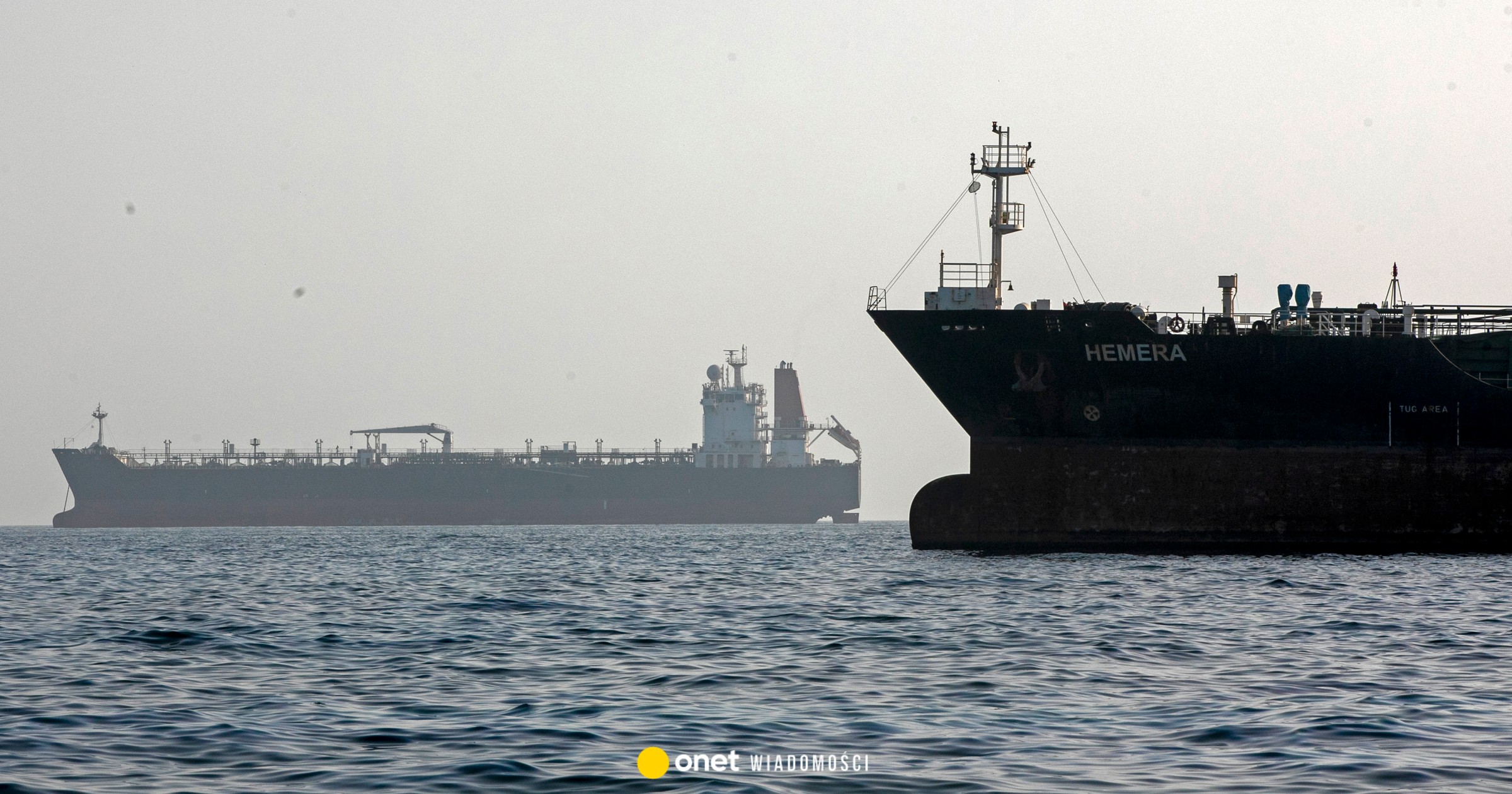
Industry officials have brought the issue to the attention of senior White House officials and Cabinet members in recent weeks as part of the administration's ongoing dialogue with the U.S. energy industry, the sources said.
The warnings emerged late last month as data from the U.S. Energy Information Administration (EIA) and other sources began to show that fuel producers are increasingly relying on crude oil and fuels from their storage tanks to replace products that are no longer arriving from the Middle East.
— We are already at a dangerously low level – warns one industry representative who asked to remain anonymous.
— We have expressed to the highest levels of government our concerns about what awaits us in mid- and late June. I hope they're paying attention to wrestling now. We are approaching the bottom of the reservoirs – he adds.
Some of the calls were general warnings, while others focused on low stocks of specific fuels in specific locations, such as jet fuel on the West Coast, said a second person involved.
The industry is sounding the alarm
A White House official denies that any senior staff member was privately warned by industry officials about the stockpile. — POLITICO's anonymous sources are wrong, official says.
An Energy Department official adds that while the agency is in regular contact with energy industry leaders, there have been no such discussions about the stockpile.
Executives at Exxon Mobil, Chevron and other oil companies are also publicly sounding the alarm. Last week it warned that fuel prices could soar if stock levels continue to fall rapidly.
Neil Chapman, a senior vice president at Exxon, told an investor conference last week that in such a scenario, the price of Brent crude oil – the benchmark for physical oil prices – could soon reach $150 or $160. (PLN 546 or 582) per barrel.
“It's debatable whether these really low levels will be reached in two or three weeks. When it gets to this point, prices will skyrocket Chapman said.
“The administration has already been informed of this,” another oil company executive told POLITICO, referring to Chapman's comments. Recent public statements by industry representatives are, in his opinion, “a message to consumers.” — Don't think that opening the strait means your gas bill won't be higher on July 4 than it is today. It will be there, he adds.
The White House is keeping a close eye on oil and fuel stockpile levels, according to another source who is in contact with the administration on energy policy.
“If I were in the White House, I would analyze this very carefully.”
The Trump administration has pointed to record high U.S. oil production as protecting American drivers from soaring prices. She promised that the eventual opening of the Strait of Hormuz would bring prices back to February levels — or even lower.
“President Trump and his energy team anticipated near-term market disruptions, communicated them openly to the American people and implemented an aggressive plan to mitigate any impacts,” White House spokeswoman Taylor Rogers said in a statement. — President Trump will never allow Iran to have nuclear weapons and will continue to advance America's core national security interests.
Kent Nishimura / AFP / AFP
US President Donald Trump, May 27, 2026
The United States “is in an excellent position, we are in a strong position” when it comes to Iran, Jarrod Agen, executive director of the White House Council on Energy Dominance, told Widehall on Wednesday. — Of course, we have no problem with deliveries.
Rich Goldberg, a former senior adviser to the National Council for Energy Dominance, says the White House is “aware that there is ongoing discussion” about the stockpile issue and should carefully examine whether global stockpiles can outlast Iran's ability to deal with the ongoing U.S. blockade of oil exports.
“The whole strategy is based on who has more time, who has more headroom, and so if I were in the White House, I would be looking at it very carefully,” adds Goldberg, who currently serves as a senior adviser at the Foundation for Defense of Democracies.
Goldberg notes that some in the industry disagree that a price shock will occur soon and expect markets will be able to adjust through a combination of alternative supplies and reduced demand. “Personally, I don't know what the White House's position is on this,” he says.
Market uncertainty
Many market analysts express surprise that oil prices have not yet reached higher levels due to three months of shipping disruptions. At the beginning of the conflict, some forecasters predicted that prices would rise to as much as $200. (PLN 728) per barrel, taking into account that 20 percent world's oil flow passes through the Strait of Hormuz. Iran's attacks on ships in the strait have slowed the flow to a trickle, although some oil is diverted out of the region via pipelines.
“It's surprising that prices haven't gone up yet, and the main reason for that is global inventories,” says Jim Burkhard, vice president and global head of oil research at S&P Global Energy. – But this can't last forever.
The interruption of supplies had other effects on American markets: not only did global oil prices increase, but countries are increasingly buying American oil and fuelto compensate for losses.
According to EIA data, gasoline stocks are 5 percent lower. lower than the average of the last five years, and stocks of diesel and jet fuel are 3%. below this level. Total U.S. commercial crude oil supplies—including crude oil and finished fuels—have fallen by 52 million barrels since the beginning of the war.
The release of the US Strategic Stockpile (SPR) is part of a 400 million barrel plan by members of the International Energy Agency (IEA). The aim is to prevent sharp price increases. Even with those barrels on the market, Burkhard says, global oil supplies are falling by about 5.8 million barrels a day.
World stocks now stand at about 7.5 billion barrels – a decline of about 500 million barrels since the beginning of the war. However, most of this oil already has buyers and is not held in reserves, Burkhard notes, and inventories in some regions may be reaching operational minimums. -I've never seen supplies drop so quickly. It's stunning, adds the expert.
Oil markets are sensitive to President Donald Trump's comments. They fell last week after he said a peace deal with Tehran was imminent that would restore ship traffic to pre-war levels. But his comments Wednesday that the U.S. blockade of the Strait of Hormuz could continue raised questions about whether tanker traffic from the Middle East will approach near-normal levels this summer.
“Empty storage tanks are like an iceberg underwater,” Helima Croft, global head of commodities strategy at RBC Capital Markets, said on Wednesday.
“You may not immediately see the real economic challenges that are coming on the horizon because you look at a stable price and say, 'OK, we'll manage, and Iran will eventually agree,'” Croft said. — But if we find ourselves in a situation where the strait is effectively closed or the status quo remains, and we are already in September or October, then we will be dealing with shortages in the industry.