Decline or evolution in the automotive industry? Large manufacturers are closing factories and making layoffs

The automotive industry is going through an extensive process of transformations generated not only by the need for cost optimization and automatic modernization, but also by the adjustment of production spaces and the decrease in demand in certain segments due to inflation and high interest rates.
All major automakers have announced layoffs. Photo by Shutterstock
The layoffs and restructuring measures in the auto industry do not have a single cause, but result from a combination of overlapping economic, technological and geopolitical pressures.
First, the industry is undergoing a major structural shift towards electric vehicles. This transition does not mean only the replacement of classic engines, but a complete reorganization of production processes. Electric cars have fewer components, which reduces the need for labor in certain traditional areas of the industry, such as heat engines, transmission or certain assembly lines. At the same time, companies must invest heavily in software, batteries and new technologies, which shifts resources away from traditional manufacturing and into more specialized areas.
A second important factor is cost pressure in Europe, particularly in Germany, France and other industrial centers. Energy costs have increased significantly in recent years, and the automotive industry is an energy-intensive one. In parallel, labor costs, strict regulations and environmental taxes make production in Europe more expensive compared to other regions of the world.
Thirdly, the industry is affected by the decrease in demand in certain segments. After post-pandemic peaks, car sales in Europe have not rebounded evenly, and consumers are more cautious due to inflation and high interest rates. At the same time, the Chinese market — one of the most important globally — has become much more competitive, with strong local manufacturers, especially in the electric segment.
Another key element is competition from Chinese electric vehicle manufacturers, who have lower costs and integrated production chains. They managed to gain market share quickly, including in Europe, putting pressure on the margins of traditional manufacturers.
In addition, there is also an industrial overcapacity component. Many factories in Europe were built for a higher production volume than the current one, and capacity adjustment becomes inevitable to avoid losses.
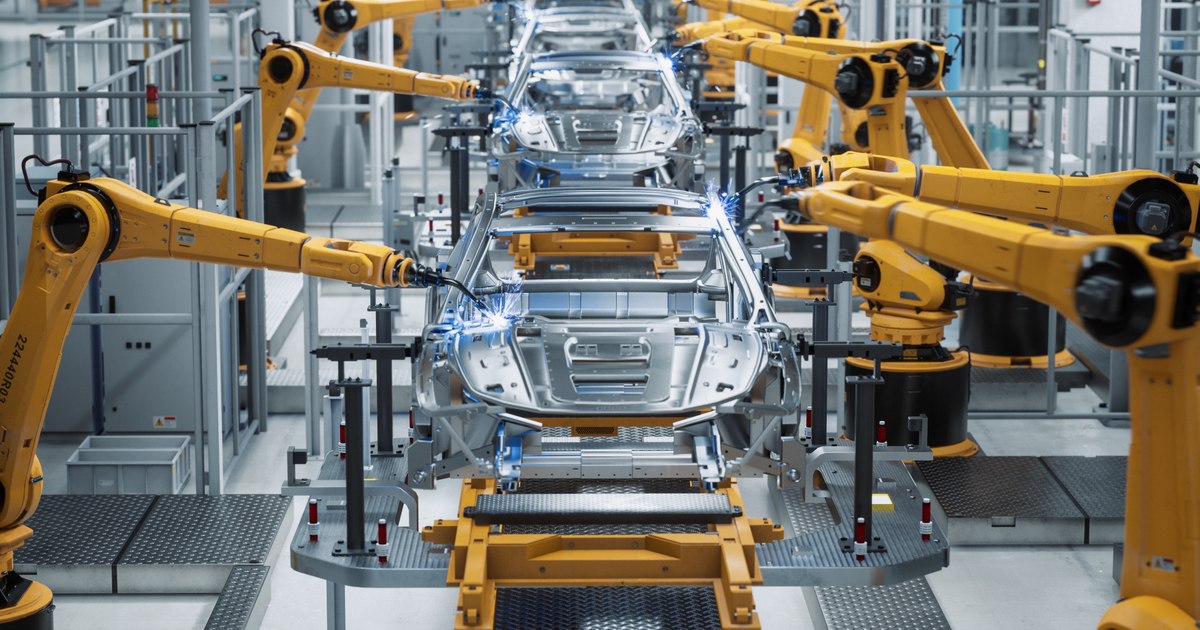
Last but not least, it should be mentioned that the automotive industry is in a process of accelerated digitization and automation. Some of the traditional activities are replaced by robotic processes and software systems, which reduces the need for personnel in certain segments, even as new jobs appear in technology areas.
In short, these measures are not the result of a single crisis, but a simultaneous transformation of the way automobiles are designed, manufactured and sold. The industry is reconfiguring itself for a completely different model, and personnel adjustments are one of the direct consequences of this transition.
Which major automakers have announced layoffs
Since January and until today, the auto industry is going through one of the most intense waves of restructuring in recent decades, marked by successive announcements of layoffs, reorganizations and even factory closings, both among automakers and major component suppliers. The phenomenon is not a one-off, but reflects a structural transformation of the entire sector, determined by the accelerated transition to electric vehicles, the pressure of production costs in Europe, the decrease in demand in certain segments and the increasingly strong competition from Asian manufacturers, especially from China.
- Volkswagen will lay off 50,000 employees by 2030
One of the biggest restructuring programs comes from Volkswagen, which has announced an extensive plan to cut around 50,000 jobs in Germany by 2030. This measure is part of a wider process to streamline the group, in the context of falling profits and the need to adapt to the transition to electric mobility. The reorganization includes the optimization of production capacities and the reduction of operational costs, with a major impact on the German automotive industry.
- Stellantis is drastically reducing the number of engineers
Stellantis, another major player in the industry, continued the process of adjusting its personnel structure and operations in Europe during the same period. The company announced layoffs in several centers, including the engineering and development area, where recently recruited employees were also affected. These decisions are part of a wider strategy to scale activities according to market demand and accelerate the transition to electric vehicles, but also to optimize costs globally.
Earthquake at the owner of Dacia: 2,400 jobs disappear in the next two years, and Romania enters the risk zone
Stellantis will cut 650 engineering jobs at Opel's headquarters in Russelsheim, Germany – nearly 40 percent of the plant's engineering workforce – as the automaker restructures its European development operations.
The staff cuts reduce the number of employees at the German engineering center from about 1,650 to 1,000, transforming what was once one of Germany's largest automotive development centers into a smaller, specialized technology unit focused on advanced driver assistance systems, battery development and artificial intelligence.
The overhaul further reduces Germany's strategic role within Stellantis, even as the automaker expands its global research and development network.
Stellantis is in advanced talks with its Chinese partner Leapmotor to jointly develop an Opel-branded electric SUV that would use Leapmotor technology and be produced at Stellantis' plant in Zaragoza, Spain, Reuters reported.
- Renault is cutting 2,400 jobs
In Renault's case, while no single layoff plan on the scale of Volkswagen or Stellantis was announced during this period, the company continued to make spot-on adjustments in Europe, optimizing production and supply chains. These measures are part of a wider process of adapting to the new market conditions, characterized by volatility and structural changes in the demand for cars.
The French group plans to cut up to 2,400 jobs out of an estimated 11,000-12,000 engineers globally in an attempt to respond more effectively to pressure from Chinese automakers, which are increasingly dominating the electric vehicle segment through low costs and significantly shorter development times.
Auto component manufacturers also have big problems
However, the strongest impact of restructuring is felt among suppliers of automotive components, where cost pressure and technological transformation are even more pronounced. Bosch, the largest global auto supplier, has announced a plan to cut around 13,000 jobs by 2030 in its automotive and software divisions, mainly in Germany and other European markets. For its part, Schaeffler announced the reduction of approximately 4,700 jobs and possible closures of production units, amid the reorganization of activities in Europe.
Other major suppliers have also announced similar measures. Valeo has decided to cut around 1,000 jobs and close two factories, while Michelin has announced the closure of two production facilities in Europe, impacting around 1,250 employees. Continental, through its Aumovio division and other operational structures, has also initiated restructuring and staff reduction programs, including in the research and development area, with effects in several European countries.
Several factories closed in Europe
In addition to layoffs, an important element of this wave of restructuring is the closing or relocation of factories, especially in Western Europe. Several production facilities in Germany, France and the UK have been affected by decisions to optimize industrial capacities, and in some cases complete closures have been announced. In Eastern Europe, including Romania, the impact is felt especially in the auto components sector, where certain factories have been restructured or closed, depending on the evolution of orders and the reconfiguration of production chains.
At the industry level, aggregated data indicates that European auto suppliers have announced more than 100,000 layoffs in recent years, and the trend continues in 2026 as companies adjust their structures to cope with new economic and technological realities, according to information published by the international press.