Romanians reduce their consumption and end up buying “per hundred grams”. The decline in purchasing power is bringing back habits from the '90s

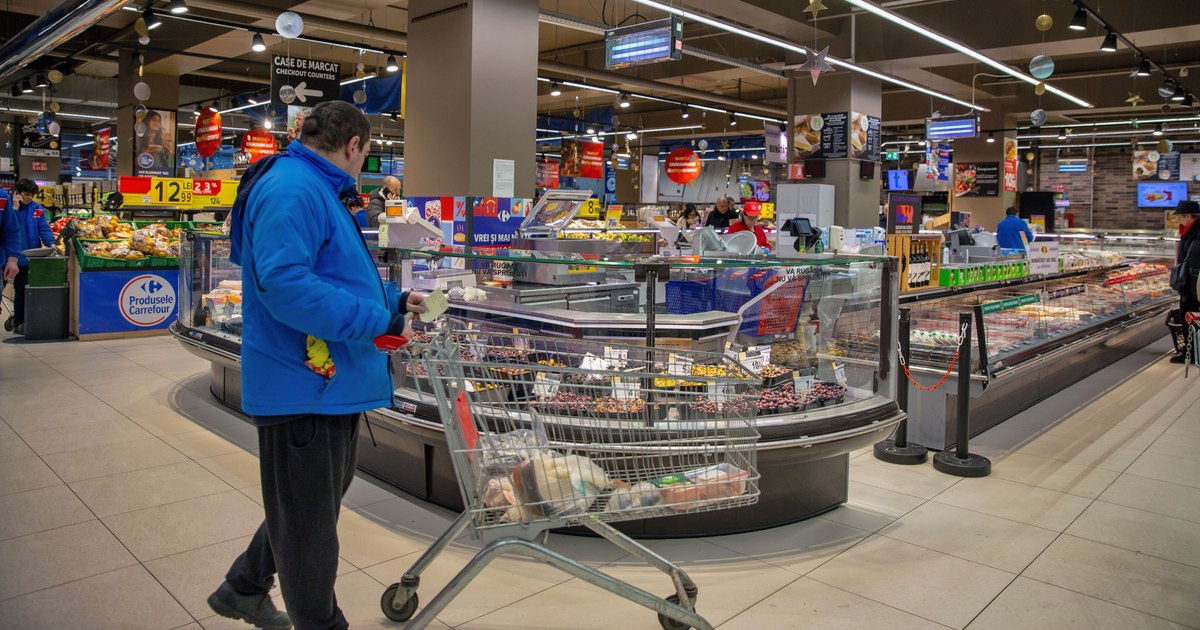
Romanians buy less and less and significantly restrict their expenses, in many cases ending up calculating their food “one hundred grams”, said the economist Adrian Negrescu, on Thursday, June 4.
Romanians are buying less and less and significantly restricting their spending. PHOTO: Shutterstock
He claims that Romania is going through a period of sharp decline in consumption, which brings back buying behaviors similar to those of the 90s.
“We have returned to the consumption habits of the '90s. Unfortunately, we buy by the hundredth gram, and for many Romanians what we estimated a few years ago on Antena 3 CNN is happening, that we will end up going to the hypermarket like a museum, to admire the products and not be able to afford them,” said Negrescu, in an intervention on Antena 3 CNN.
Decrease in consumption in official data
Data from the National Institute of Statistics (INS) show a significant reduction in consumption.
In April 2026, compared to the same period in 2025, consumption decreased overall by 6.3%. Spending was down 6.6% on alcohol, cigarettes and food, while food consumption fell 7.9%. Fuel sales also declined by 2.1%.
“Salaries no longer keep pace with prices”
Adrian Negrescu attributes this development to the decrease in purchasing power, given that the incomes of the population do not increase at the same rate as prices.
“We see a significant decrease in consumption, generated primarily by the decrease in purchasing power. Basically, wages have frozen or are not keeping up, they are no longer increasing at the same speed as prices are increasing,” he explained.
Inflation warning
The economist also warns of a possible acceleration of inflation, against the background of energy, gas and fuel prices.
“Attention, this month we may have record inflation, over 11%, maybe even 12%, generated primarily by energy, gas and fuel prices. All this puts pressure on the main engine of the economy, which, unfortunately, remains consumption.” Negrescu said.
Criticism of possible tax increases
At the same time, he criticized the idea of increasing taxes, considering that such a measure could push the economy into a crisis.
“We would go from recession to economic crisis, which I don't think anyone wants,” warned the economist.
In his opinion, the solution would be to reduce the tax burden on low wages, to allow an increase in net incomes and support consumption.
“With a net salary of 5,000 lei, you pay over 4,000 lei in taxes and fees to the state, which is aberrant. We give more than 60% of the money we earn to the state in the form of taxes and fees, which is unprecedented at the European level.” he also stated.
Negrescu also proposed possible support measures, such as reducing the VAT on basic food products or increasing the value of meal vouchers, arguing that in the absence of some interventions, consumption could continue to decrease, with effects on the economy.