A political scientist's verdict on the eventual Tomac Cabinet, in the international press: It probably won't be a long-lasting government

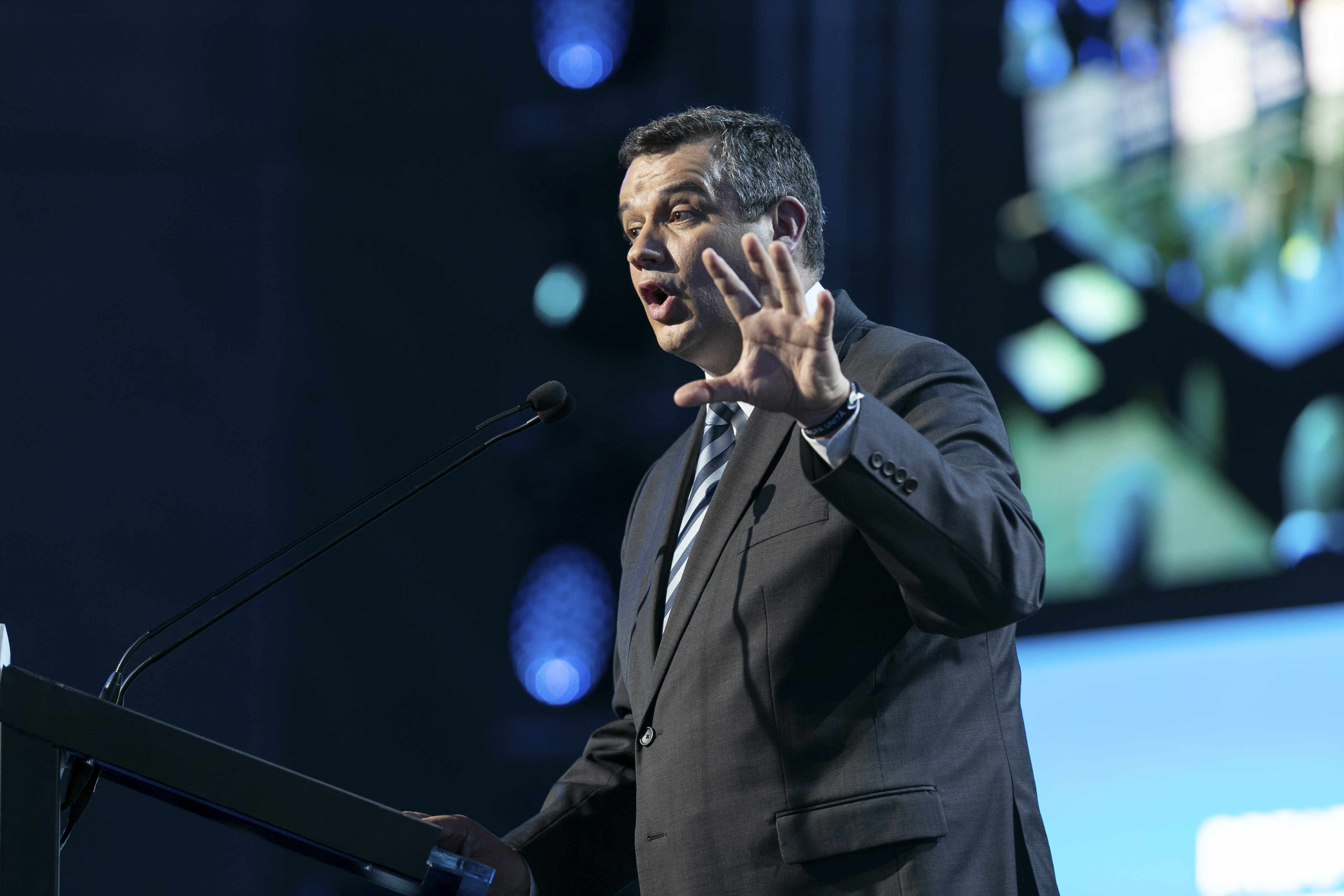
Romania's centrist president, Nicușor Dan, appointed his adviser, Eugen Tomac, as prime minister on Thursday, in an attempt to end a political crisis that blocked the decision-making process, jeopardized the country's access to EU funds and brought the leu to record levels of depreciation, writes the Reuters news agency, in the report of the decision announced at the Cotroceni Palace.
A broad pro-European coalition fell apart a month ago when its largest party, the Social Democrats (leftist party), withdrew its support for Prime Minister Ilie Bolojan and allied with the far-right opposition in a no-confidence vote, Reuters notes.
The collapse of the government less than a year after taking power has jeopardized efforts to reduce the largest budget deficit in the European Union and also jeopardized the country's sovereign rating.
Tomac, aged 44, a member of the European Parliament and leader of a party that is not part of the Romanian legislature, will have 10 days to form a government and obtain a vote of confidence in Parliament.
His cabinet will be made up of technocrats, as the parties have failed to form a new coalition capable of obtaining a parliamentary majority.
“Because the parties did not agree, the only possible solution is a prime minister independent of the parliamentary parties”, Nicușor Dan is quoted as saying.
Dan stated that the priorities of a new government should be to maintain a pro-Western stance, preserve financial stability, implement reforms to secure EU funds and clarify budget plans for 2027.
Hard decisions ahead
If confirmed, then the new government will have to quickly implement reforms to access EU recovery and resilience funds worth around 8.6 billion euros before the deadline set by Brussels in August, and ensure that deficit reduction continues beyond 2026, the prestigious international news agency comments.
But Tomac's cabinet will likely struggle to win the support of a fragmented parliament for controversial reforms, including the draft law setting the criteria for how public sector wages should be paid (the pay law).
The nomination of Eugen Tomac “is a first attempt, we have no guarantees that it will pass the parliament or that a majority was negotiated”, Sergiu Mișcoiu, political science professor at Babeș-Bolyai University in Cluj, told Reuters.
“Even if he is confirmed, it probably won't be a long-lasting government,” the political scientist said.
The next parliamentary elections in Romania are not scheduled until 2028. The country has never organized early elections, and analysts say that the probability of them taking place now is small, since the Alliance for the Union of Romanians (AUR), the far-right opposition group, leads in the opinion polls, the press agency also writes.