Article by GSP – Published on Wednesday, 03 June 2026, 17:56 / Updated on Wednesday, 03 June 2026 17:56
For many people, outdoor sports mean health, discipline and time gained for the body. Running in the park, long bike rides, soccer with friends, tennis, hiking, or outdoor training all bring real benefits. But with them comes a factor that many treat superficially: repeated exposure to the sun.
The skin does not forget the hours spent in the sun. Even if the tan fades, the effects of UV radiation can build up over time. And for active people, who are constantly out for training, competitions or long walks, skin protection should be part of the routine, just like warming up before exercise or hydrating.
Why amateur athletes may be more exposed than they think
Those who exercise outside don't necessarily stay at the beach, but they can accumulate many hours of sun exposure without realizing it. A lunchtime run, a tennis match, a bike ride or a weekend in the mountains can mean hours of direct exposure to your face, neck, ears, arms and calves.
In addition, perspiration, rubbing of clothing and infrequent reapplying of sunscreen products can reduce the effectiveness of protection. Many only apply SPF on vacation, although the skin is also exposed during everyday sports.
The sun doesn't just affect the appearance of the skin. Repeated exposure can contribute to the appearance of pigment spots, premature aging of the skin, precancerous lesions or forms of skin cancer. The risk increases especially for people with fair skin, those who have had significant sunburns or those who frequently spend time outside.
Signs on the skin that should not be ignored
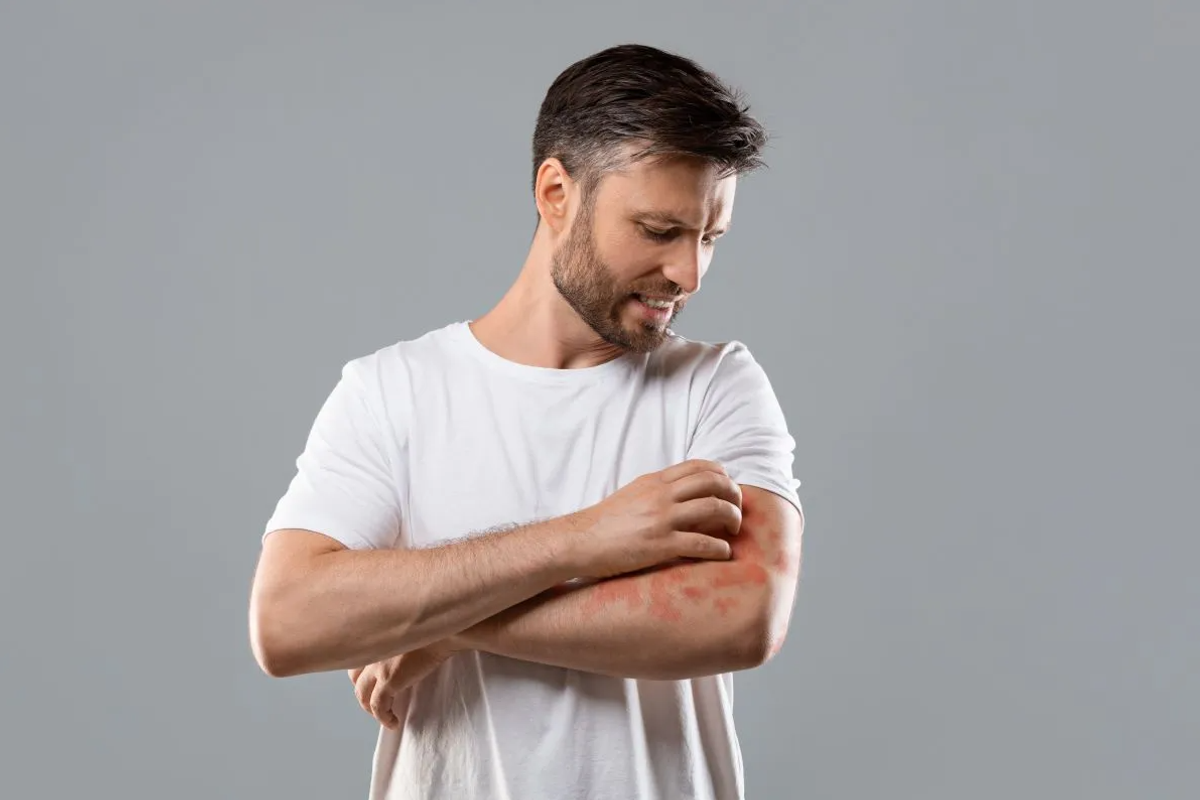
After years of sun exposure, certain skin changes deserve evaluation by a dermatologist. Not every blemish, crust, or changed mole means skin cancer, but some signs should be checked, especially if they persist.
Among the changes that should attract attention are:
-
a wound that does not heal;
-
a crust that falls off and reappears;
-
a wound that bleeds easily;
-
a reddish, rough or scaly spot;
-
a new outgrowth, which increases in size;
-
a mole that changes shape, color, or edges;
-
an area of skin that looks irritated but does not go away;
-
a lesion that appears on areas that are heavily exposed to the sun, such as the face, scalp, ears, lips, neck, shoulders or arms.
Amateur athletes are used to enduring discomfort: bruises, muscle fever, scratches, minor bumps. This is precisely why some signs on the skin can be overlooked for too long. However, a wound that does not heal should not be automatically attributed to irritation or a scratch.
Face, ears and scalp: areas often forgotten
When it comes to sun protection, many people apply SPF to their arms and face, but forget important areas: the ears, lips, nape, scalp or hairline. For those who run, cycle or play team sports, these areas can be exposed repeatedly.
Hats, sunglasses, technical shirts with UV protection and proper application of SPF cream can reduce the risk. But prevention doesn't stop there. Equally important is skin self-observation and dermatological consultation when persistent changes occur.
A dermatological check is not only necessary when an obvious problem appears. For people with a history of sunburn, many moles, fair skin, or frequent outdoor exposure, regular evaluation can help detect suspicious lesions early.
Why early detection matters
In skin cancer, time is of the essence. Many lesions can be treated more effectively when they are identified early, before they spread locally or involve larger areas of tissue.
Skin cancers, such as basal cell carcinoma and squamous cell carcinoma, frequently occur on sun-exposed areas. They may look like an irritation, pimple, scab, or sore that won't heal at first. Just this mundane appearance can delay the visit to the doctor.
When a suspicious lesion is evaluated, the dermatologist may recommend dermoscopy, monitoring, biopsy, or excision, depending on the appearance and context. The correct diagnosis is the one that determines whether it is a benign change, a precancerous lesion or a skin cancer.
In certain cases of non-melanoma skin cancer, especially when the lesion is located in sensitive areas such as the face, scalp, fingers or other areas where preservation of healthy tissue is important, it may be considered Mohs microsurgery. This technique allows the tumor to be removed and the tissues to be checked during the procedure, with the goal of removing tumor cells and preserving as much healthy tissue as possible. Dr. Leventer Centre explains this method as particularly indicated for certain skin carcinomas and for areas where precision is very important.
Sport remains healthy, but the skin needs protection
The message is not to avoid outdoor sports. On the contrary, movement remains one of the most important investments in health. But sports done outside should be accompanied by some simple habits:
-
applying an SPF product before exposure;
-
reapplying sunscreen during long workouts;
-
wearing a cap or hat;
-
avoiding periods of very strong sun when possible;
-
protecting ears, lips, neck and scalp;
-
periodic skin check;
-
scheduling a dermatological consultation if a lesion appears that does not heal.
An athlete attentive to his body does not ignore his signals. Just as persistent knee pain or a repeat injury deserves evaluation, a persistent skin change should be checked.
The sun is part of active life, but repeated exposure leaves its mark. And when the skin sends a signal, the safest step is dermatological evaluation, not delay.