The Ukrainian lesson after the Galatians chaos. How Kiev defeated Russian propaganda with little money and why Romania is an easy target

The recent incident in Galați brought back to the surface a chronic problem: the inability of the Romanian authorities to effectively manage crisis communication. Unlike Bucharest, Kiev turned public presence into a vital military component. In an interview with the “Adevărul” newspaper, Dmytro Raiskyi, PR of the Ukrainian Army, explains the mechanisms behind the information war and the huge effort to counter Russian disinformation – a strategy lesson from which Romania still has a lot to learn.
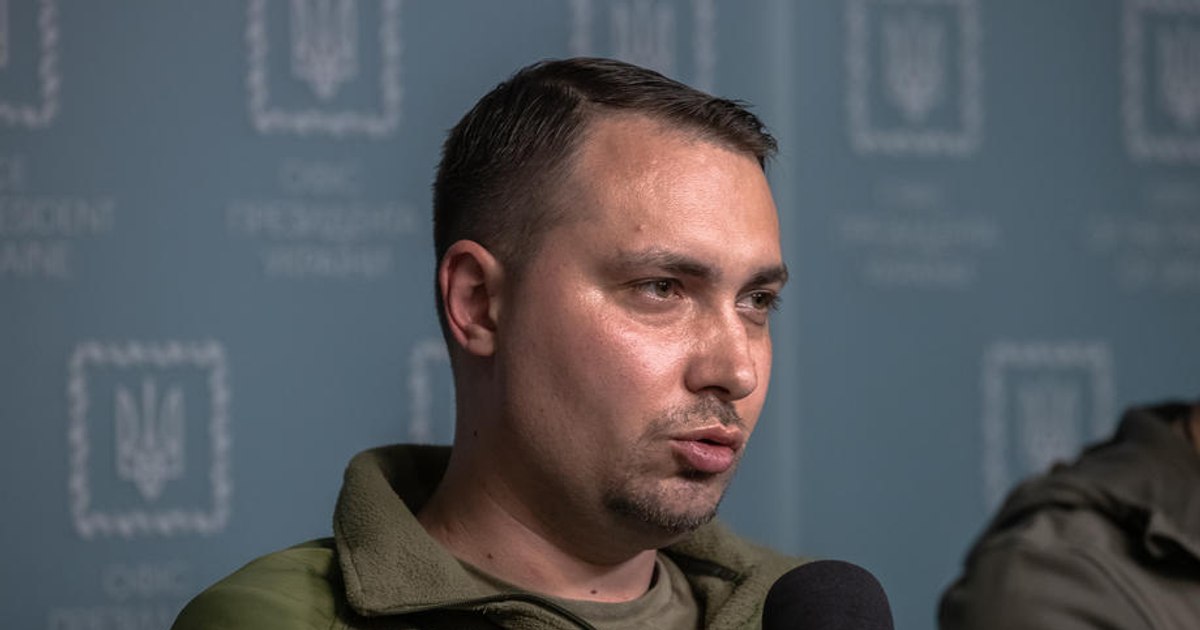
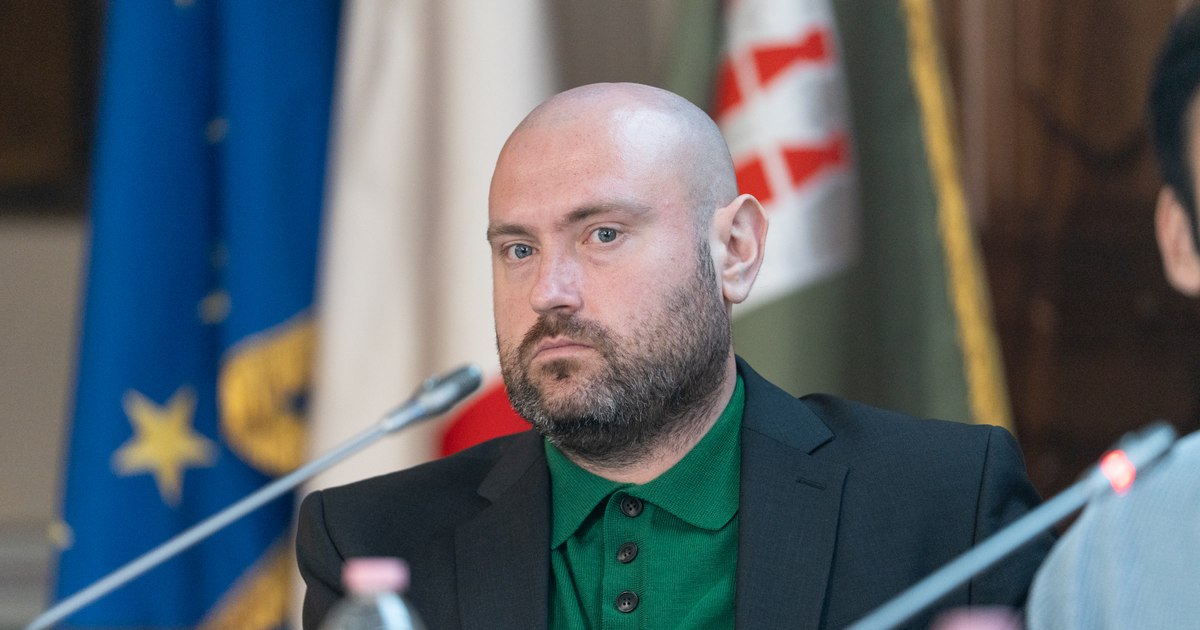
Dmytro Raiskyi, Director of Strategic Communication at PR Army Photo: jounalismfestival.com
“Adevărul” talked to Dmytro Raiskyi, Director of Strategic Communication and External Affairs within the PR of the Ukrainian Army, specialized in crisis communication and combating disinformation. He detailed how Ukraine handles strategic wartime communication, countering Russian disinformation, and the importance of working with mainstream media and international decision makers to gain military and political support.
The image of Ukraine in the international space was built through a constant effort of the authorities, civil society and Western partners, says Dmytro Raiskyi. His strategy focused on reliable sources to convey essential information.
“Well, we can't take full credit for the image of Ukraine, obviously the Ukrainian government and others who have helped, civil society, journalists and foreign governments as well, who have helped build Ukraine, promote Ukraine, our closest allies.
So it's a work in progress and we're still doing it. We still have to fight for a place on the platform when it comes to Ukraine, because the interest in Ukraine is lower and the topic does not attract much attention anymore. So yes, it's basically a 24/7 job to secure appearances on Ukraine. That's what we were doing: building relationships with journalists, organizing public events, helping to make documentary films,” the official explained.
“Discuss nuclear security, we give them experts who may even be from their own country”
Combating disinformation has become one of the main strategic directions for Ukraine, including through collaboration with international newsrooms and experts.
“That's what we were experts at, strategic communication. From the beginning of the war, the problem was Russian propaganda, but also the lack of expertise in the media. For example, obviously Russian propaganda never sleeps, but it was also, because the demand was so high in the media, Deutsche Welle, the BBC, sometimes they would invite speakers who had no real expertise on certain topics, which was also problematic. So what we've built since then is to help newsroom leaders and editors fill their time with experts that correspond to the topic they are discussing. For example, they are discussing nuclear security, we provide them with experts who can be from their own country. So we are basically helping them, who can comment on topics like nuclear security, environmental damage, whatever.
Strategically, in our strategic communication, we have so far secured about 18,000 publications, documentaries, films, mainly in the Western world, ie Europe and North America. We don't do this just to counter Russian propaganda, we always have another goal. Our work is, by communicating and bringing attention to Russian aggression and war crimes in Ukraine, to secure and increase military aid to Ukraine. Raising awareness, but also turning that awareness into increased military aid to Ukraine, because the only way, for example, in the case of the Russian crime of stealing children from Ukraine and moving them to Russia, the only way to bring them back is to win the war.
This is how we formulate the message. We provide publications about this crime, we sometimes give access to victims of war crimes, for example I just returned from Stockholm, where we brought civilian hostages, victims of torture, rape, all kinds of violence”says the specialist.
Prisoner exchange between Russia and Ukraine Photo: Facebook/Volodimir Zelensky
We will never have as much money as Russia
The huge difference in financial resources between Russia and Ukraine forces the Ukrainian side to rely on creativity and strategy in communication. Lesson, which after Friday, May 29, Romania will also have to adopt. The social networks were invaded by fake news even after the drone attack on the block of flats in Galati.
“No one can compete with the Russians when it comes to financial injections. They finance their machinery very well. They invest a lot of money and even very generously at times. I think only now the Western world is starting to understand how much money they are willing to invest and how much effort they are willing to put in. We will never have that much money, Europe will not spend that much, because the budget is insufficient.
So we have to think strategically. We need to work with the media that has an audience, propose stories and proactively secure certain publications with emotional impact. For example, war crimes, victims of war crimes, testimonies of people who suffered from Russian aggression, torture, etc., kidnapped children. We organize delegations, for example we brought children to testify for the first time at the UN Security Council. Sometimes we involve celebrities who can bring more attention to the cause. So we have to be creative and strategic because we will never have as much money as Russia.” he shows.
The Russian ambassador to Bucharest, Vladimir Lipaev, summoned to the MFA. The drone that exploded on a block of flats in Galati is of Russian origin
“Through the publications we obtain in the traditional media, we also influence the decision-makers”
According to Raiskyi, traditional media remains the main channel through which political leaders and international institutions can be influenced.
“We focus more on traditional media, and I'll explain why. We also work with social media and digital communication, but why traditional media? Because through the publications we get in traditional media, we also influence decision-makers. When we make a documentary or help make one in a respected media institution, it later becomes a reference for politicians. Digital is a mess, a lot of garbage there. It's important, but decision-makers and governments are more influenced by traditional media than by social media campaigns.”
According to Raiskyi, traditional media remains the main channel through which political leaders and international institutions can be influenced.
“I'm not saying that social media is not a powerful tool, it should be used, but it doesn't take long. Documentaries take much longer. And when a decision maker wants to do his documentation to support Ukraine, I'm sure he will consult traditional media more than social media campaigns.”
The platforms collaborate with civil society, which reports cases of interference Photo: Pixabay
Platforms must react, delete content
Discussions with and pressure on major digital platforms to combat disinformation are part of the broader strategy of Ukraine and European civil society.
“Yes, because we have done advocacy work in Dublin, where these corporations are headquartered. It is also the responsibility of Ireland, as a regulatory state. Yes, we have communicated with them. There is a new framework created by the European Commission, a rapid response mechanism in crisis situations such as elections. Platforms collaborate with civil society, which reports cases of interference in the information space. Platforms must react, delete content or provide feedback. It is a small step, I think me, because they should be much more proactive.The commission now has more “power”, but the problem of compliance remains.
Radu Miruță, message for the residents of Galati: “The war in Ukraine is not a joke”. What does it say about Romania's anti-drone defense?
There is research that shows that the sanctioned Russian media is still operating freely on these platforms, which affects the European space, including Romania. The Russians communicate many malicious activities through social media and algorithms. If they are not controlled, they can endanger the security of states.”
The influence of extreme right or left parties
The influence of Russian propaganda is not limited to Russia, but is also amplified by radical political groups in several European states, warns the Ukrainian official.
“In every country there are, I think, Russian influences in the European Union. They are usually far-right or far-left parties. It doesn't matter if there is a direct connection with Russia or not. What matters is that they are spreading Russian propaganda and anti-Ukraine, anti-NATO, anti-defense messages. They are saying that money should not be spent on defense. They are using algorithms to reach more people. So in every country there is the voice of Russia, for sure.”
For the future, Ukraine's main objective remains to maintain Western support and integrate the conflict into a broader debate about European security.
“The plan is to continue to communicate effectively about Ukraine and integrate the message into a broader discussion about transatlantic security. Ukraine is on the front line and protecting Europe. But we need to integrate this war into a broader discussion about regional security. There are still countries in Europe where governments are reluctant to see this conflict as a security issue of their own and treat it as something distant. We believe it is a real and direct threat.”concludes the specialist.