Daniela Nane returns to the cinema in the role of a woman pushed to the limit: “The woman who carries everything alone, without complaining, is a painfully current portrait”

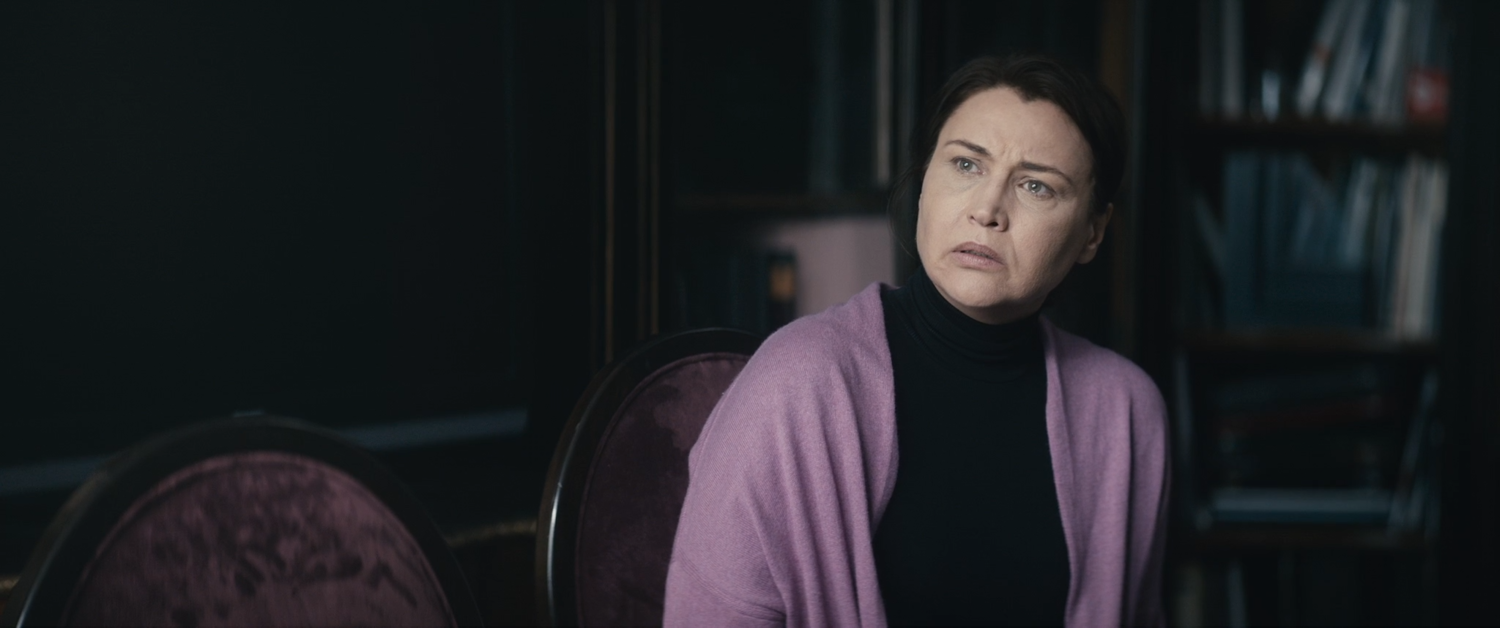
Daniela Nane returned to the cinema, after two decades in which she dedicated her career almost exclusively to the theater. The character of Alina in “Comatogen”, the new drama signed by Igor Cobileanski, earned her a nomination at the 2026 Gopo Awards, in the category “Best Actress in a Leading Role.” In an interview for the HotNews audience, the actress spoke both about the complexity of the protagonist she plays, the condition of women in today's Romanian society, and how the action of the film shows us how far a man can go when he is put in a limiting situation.
- “Things have changed in Romania as well, the stereotype that a beautiful woman is either intellectually limited, or frivolous, or both. But it still hasn't died, unfortunately,” says Daniela Nane, in the interview for the HotNews audience.
- “I fear the vulgarization of public discourse, the lack of empathy and gentleness. But I also have high hopes for young people,” the actress explains how she sees the future.
- For the past 20 years, Daniela Nane (54 years old) has dedicated her career almost exclusively to the theater, but things changed when she received Igor Cobileanski's proposal to star in his new film, “Comatogen.”
- The film can be seen in Romanian cinemas in June as well.
The Moldovan director's drama, awarded at Gopo 2026, both in the “Best Director” and “Best Screenplay” sections, offers the public a story that explores the boundaries between good and evil, but above all, that reveals the complexity of human nature.
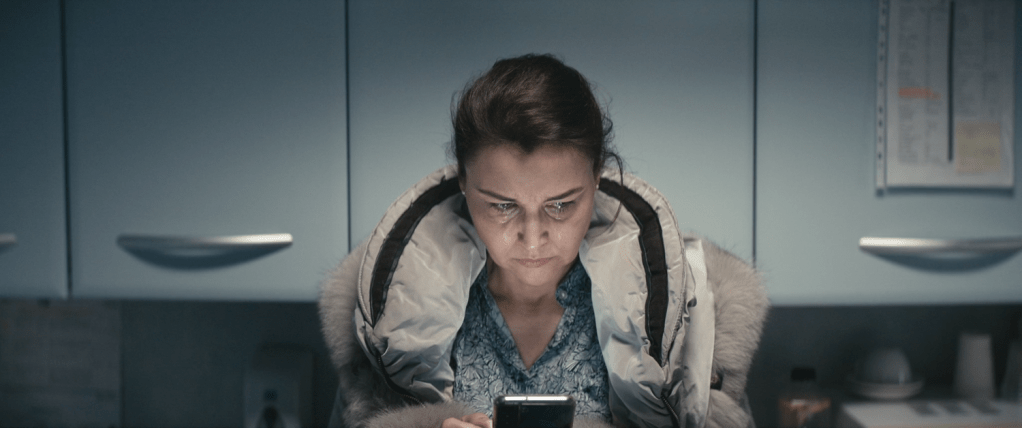
Daniela Nane plays the role of Alina, a single mother who works as a nurse in a private hospital. She takes care of Radu (Theodor Şoptelea), her 22-year-old son, a young man without a job, but with a gambling addiction. The moment he steals 18,000 euros from Pavel (Andrei Aradits), Alina's ex-boyfriend from high school and the man who decides to give her a chance in his real estate company, the woman finds herself put in an impossible situation – either she gets the money back, or her son will end up in the hands of the police. “I don't know if the public will love Alina, but I think they will recognize her suffering, and that seems to me more valuable and deeper than sympathy,” Nane tells HotNews.
The film does not judge its characters, but subliminally invites viewers to look at their own integrity or their own values and hypocrisies. The action gets complicated, because Alina takes care of Klaus (Gheorghe Visu), a rich architect and art collector, who is in a coma at the hospital where she works.
The man's daughter, Mihaela Klaus (Ada Lupu), who in turn pursues her own interests and wants to get her hands on the inheritance, offers to help Alina, but not without testing her moral compass. “To want to do good and still end up acting wrongly and then living with the consequences of your actions, here are the consequences of the lack of integrity that the director suggests in the first sequence of the film”, explains Daniela Nane.
For the role of Alina, she was nominated at the Gopo Awards 2026 in the “Best Actress in a Leading Role” section, and in the interview below she talks about her desire to continue making films, with complicated and intriguing roles, and about what scares her in today's world, but also about what brings her hope.
“I never judge a character”
– What kind of character or story are you waiting for a return to the cinema and why did you choose “Comatogen” for this?
– Daniela Nane: I was extremely happy when producer Cristian Gugu called me and told me that Igor Cobileanski wanted to see me for the main role in his next film. I knew that Igor is a great director and that he has an excellent sense of comedy, and I thought that he had seen me in some comedy at the Bulandra theater.
Reading the script I could see myself playing each sequence in my mind's eye and I immediately felt that this character was perfect for me. He was a fascinating character with a dramatic transformation that required subtle nuances to make the whole construction of the film make sense from every perspective. Those who have seen the movie know what I'm talking about. I am extremely glad to be back in cinema and to have had the chance for such a well-written role, I am deeply grateful.
– Alina ends up in an area of both financial and moral despair. What inner resources or observations of people did you draw upon to build a character who is strong but still fights these battles?
– When I think of a character, I start from the psychological observations in the script: how she is described by the text and by the other characters, what she says, what she does, how she thinks, what motivates her. The resources I use are both internal, from my own life experience, and from the psychological analysis of the character, always keeping in mind the director's requirements.
We, as actors, can build many versions of the character, but in the end the director's vision will remain. And it's very easy to work with a good director who knows exactly what to ask for and trusts that you can deliver all the nuances. Alina works from inertia, from boundless love, but also from fear.
I never judge a character, but choose to understand her mental map, what motivates her, what are the springs that determine her every decision. Wanting to do good and yet end up doing wrong and then living with the consequences of your actions, these are the consequences of the lack of integrity that the director suggests in the first sequence of the film.
“Alina shows us that we are all fragile in extreme situations”
– Does Alina's character tell us something about our human nature or how fragile we are when we reach the limit? Do you think the audience can empathize with her or even relate to her story?
– Alina shows us that we are all fragile in extreme situations, regardless of what we believe. There is a pressure point beyond which reason gives way to instinct, and the maternal instinct is perhaps the strongest of all. I don't know if the audience will love Alina, but I think they will recognize her suffering, and that seems to me more valuable and deeper than sympathy.
– You have been active on the Romanian theater scene for many years, and now, with this role in the film, what differences do you see between the two art forms? Which one do you feel closer to your soul and why?
– When I'm doing a lot of theater, I miss film, and during the holidays between seasons I miss theater. If I'm being honest, at this point I think I feel closer to the film. I did theater and I do it with great joy, but now I feel like I want to make films.
-Alina seems to be the image of a woman very present in the current Romanian society: the single mother who carries everything on her shoulders until exhaustion. How familiar does this type of woman seem to you and what does it say about the reality we live in?
– Yes, Alina could be any of us – I see her on the street, in hospitals or shops. The woman who does everything alone, without complaining, because she has no time and doesn't know how it could be otherwise, is a painfully current portrait. The film doesn't present her as a heroine, that's what makes it brutally honest.
“Beauty carrying the burden of demonstration exercise, especially in youth”
– We still live in a fairly conservative society in many ways. How do you see the role of women in Romania today? What do you feel has changed for the better from the past and what do you think we still have to learn as a society?
– Fortunately, a lot has changed: women are braver in letting themselves express themselves, but also in setting limits in non-negotiable situations. However, a paradox persists: society expects us to be, at the same time, strong and submissive, or perfect at home, but also perform professionally.
I think we still have work to do to understand that strength is not opposed to vulnerability, but that it is complementary, enriching our personality. And asking for help is not a sign of weakness; you can be a strong woman and at the same time have a support network around you.
– You have spoken openly in the past about the fact that beauty was not always an advantage at the beginning of your career and that sometimes people saw the appearance first, not the actor. Do you think that a beautiful woman actually has to prove more to be taken seriously? Is that still a truth now?
– Things have changed, the stereotype that a beautiful woman is either intellectually limited, or frivolous, or both is no longer so strong. But it has not yet perished, unfortunately.
Beauty that carries the burden of demonstrative exercise, especially in youth: it grows in you the constant need to show that you are more than a pretty face. It throws you into an uphill and winding battle against the prejudices and projections of others. On the other hand, in healthy ecosystems, with the right and sufficiently open people around, beauty gives way to gentle self-expression, and justly values skill and artistic talent. I am very happy to see in the domestic artistic space more and more actresses who know their value, principles and boundaries and demonstrate their talent with perseverance, and the fact that a beautiful appearance is added to that is a bonus.
“I've learned not to pretend it's good when it's not”
– In Romanian cinema, we rarely see mature and experienced actresses in complex leading roles. Do you feel this problem exists in the industry?
– The problem is not age, because now the range of roles that I could cover has widened; the problem is that screenwriters are interested in deep stories. And I hope to get another chance for difficult and challenging roles.
– You recently said that you are doing well both personally and professionally, although you have not always had easy times. You are one of the few public figures who speak openly about vulnerability. How did you find the strength to move forward in difficult times and how do you relate to life's ups and downs today?
– I don't think there is a recipe. I just learned not to pretend it's good when it's not. And not to stay there for long. Vulnerability is proof that you feel, that you live, that you have an honest relationship with yourself and the world. Over time, I came to relate to the ups and downs as a natural rhythm, not an injustice.
“The more humility, the more truth”
– We are living through a rather unstable period socially and emotionally. What are your fears related to Romania today and what would you most like to change at the level of mentality or society?
– I am afraid of indifference, of people who have given up believing in something and that something can still change. I fear the vulgarization of public discourse, the lack of empathy and gentleness. But I also have high hopes for young people, for those who choose to build solidly and are close enough to us, they deserve to shine the spotlight on them more often.
– What gives you hope today?
– The people. It's full of good and beautiful people around, you just have to have clarity in your soul to see them.
– Maybe a movie doesn't directly change the world, but it can become a mirror for us, about the human condition. On that note, what would you like the audience to be left with after “Comatogen”?
– With questions and reflections on integrity. It's good to examine your beliefs. The more humility, the more truth. I want people who will see “Comatogen” to leave the theater with an openness to inner purity, to honesty with themselves, first of all.
Because this is where honesty towards the world starts. And whoever prioritizes good intentions from a pure soul, sooner or later will reach wisdom. If the film manages to turn a story on the screen into a mirror, then it can be of use to the world.