Judicial reorganization vs. bankruptcy – How judges decide which companies are worth saving and which are not

The year 2026 brings an extremely tough survival test for Romanian entrepreneurs. Increasing fiscal pressures, declining consumption and market volatility are pushing thousands of businesses to the brink. In the face of this imminent collapse, the commercial courts have become real emergency rooms for the national economy.
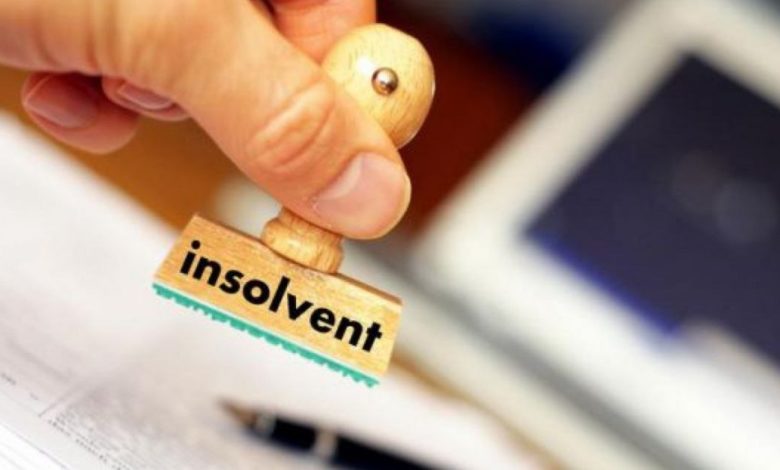
The number of companies that filed for insolvency has skyrocketed. Archive photo
Here, the syndic judge faces a monumental and responsible task every day. The magistrate must make the vital distinction between a mere temporary financial difficulty and an irreversible structural deterioration of the company in question.
A huge wave of insolvencies hits the economy in 2026
The situation on the ground is extremely difficult. Official data provided by the Trade Register show a massive deterioration of the business environment since the first months of this year.
After a year 2025 in which more than 7,500 companies became insolvent, the beginning of 2026 significantly accelerated this decline.
Almost 1,100 new insolvencies were registered in January and February alone, marking an increase of more than 13 percent compared to the same period of the previous year.
Moreover, voluntary company liquidations have effectively exploded. More than 5,400 businesses closed their doors for good in January alone, a staggering 47 percent increase.
The hardest hit are the trade, construction and manufacturing sectors. In this deeply suffocating economic context, more and more entrepreneurs end up in court desperate for protection from creditors. This is where the expertise of the judge comes in, the only one who can decide whether the business still deserves a legal chance to reorganize or must be liquidated urgently.
What is the real line between a momentary deadlock and a total collapse
The answer to this question instantly defines the fate of hundreds of employees, creditors and founders.
According to experts, temporary difficulty occurs when a perfectly commercially viable company is suddenly hit with an acute liquidity crisis. It could be a major client who has missed a vital payment, or an unexpected tax shock that occurred overnight.
The company still has a clear market, produces added value, but has temporarily run out of cash in its accounts. In these cases, prevention and rapid restructuring procedures are absolutely essential to save the business.
On the other hand, structural degradation represents a terminal stage for an economic entity. We are talking about companies that have been operating strictly at a loss for years.
Their business model is completely outdated technologically or commercially, their liabilities are toxic and far exceed the value of all assets, and the market simply does not need their products anymore. Here, artificially keeping the company alive only produces major additional damage to the economy, accumulating new bad debts to the state and to bona fide suppliers.
The crucial role of the syndic judge in saving the economy
The magistrate does not just analyze a file full of cold accounting figures, but assesses the real pulse of a business and its future potential. The judge must quickly and accurately identify the true intentions of the debtor.
The number of insolvencies increased by about 37%, and company dissolutions exploded in the first month of 2026
“Unfortunately, practice shows that many administrators use the insolvency procedure in bad faith, only to block foreclosures and artificially drag out time. A cursory analysis by the court may allow a bankrupt company to destroy, through the domino effect, other perfectly healthy business partners”, says Ovidiu Neacșu, Sierra Quadrant coordinating partner in an analysis published on his personal blog.
To correctly draw this fine line, the decision-maker relies on the detailed reports of receivers, economic expertise and knowledge of market dynamics.
Its decision to approve a reorganization plan or declare bankruptcy outright must be purely surgical.
“Prudence is legitimate. But if every situation is implicitly viewed through the lens of irreversibility, prevention tools risk remaining peripheral, not to mention useless. In addition, the vicious circle occurs where when prevention is rarely used, not enough successful case law is created. Entrepreneurs become reluctant, lawyers hesitate to recommend, practitioners invest less in ambitious recovery plans”adds Ovidiu Neacșu.
Saving a viable company protects jobs and maintains economic stability locally. Instead, the quick and clean bankruptcy of a degraded firm sanitizes the competitive market and allows the redistribution of financial and human resources to truly performing businesses.
What's next for the private sector in the coming months
The outlook for the second half of 2026 remains fraught with huge challenges for the private sector. Recent legislative changes and rising borrowing costs will force extremely harsh natural selection into the economy.
“High inflation will remain the biggest problem in the economy in the coming months. Unfortunately, this phenomenon will lead to the accentuation of the financial blockade, to the limitation of supplier credit, to major difficulties in the economic chains. From this perspective, vigilance in the relationship with partners must be in the foreground”says Ovidiu Neacșu.
ANAF puts a magnifying glass on companies with big financial problems: the new early warning rules
According to experts, entrepreneurs need to quickly understand that calling a restructuring specialist should be done at the first signs of temporary difficulty, not when the deterioration has become chronic and lethal.
Only by intervening early will they be able to credibly demonstrate to a judge that their business still has a future and is worth saving.
Will 2026 bring a collapse for small and medium-sized firms?
The figures do not give much cause for optimism. A recent analysis showed that in the first quarter alone, over 1,600 Romanian companies became insolvent. They left behind colossal debts, of almost 2.74 billion lei, affecting the jobs of over 7,000 employees.
According to experts, the real test of survival for a company is not issuing the invoice, but collecting the money.
In an increasingly volatile economic environment, the vulnerability of businesses in Romania is dangerously built at the intersection of three major factors. It's about the growing dependence on logistics and energy costs, the endless delivery times and profit margins too thin to absorb price shocks. When these elements overlap, credit risk explodes, bringing companies to the brink.