A senior British officer warns: The Russian army is far more lethal now than at the beginning of the invasion of Ukraine

The warnings from senior Western military commanders are becoming increasingly alarming. The Russian military is a “formidable adversary” and is “significantly more lethal” today than when Vladimir Putin launched the invasion of Ukraine, says Lieutenant General Mike Elviss, one of Britain's most senior military chiefs.
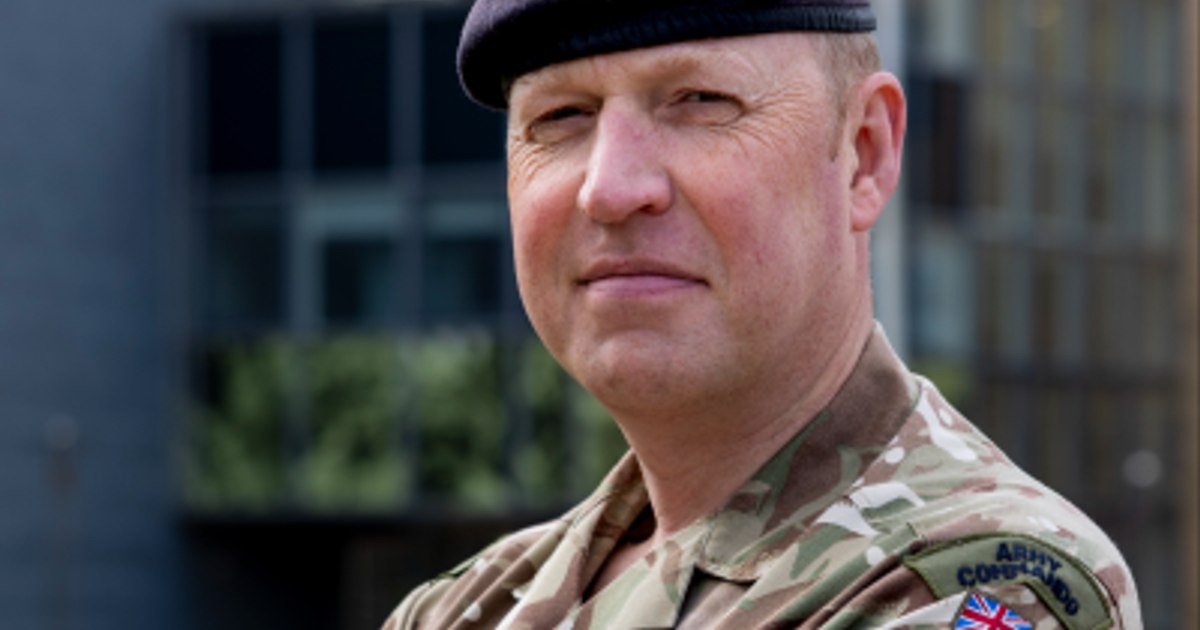
General Mike Elviss, one of the high-ranking heads of the British army/PHOTO:X
The general, who heads NATO's Allied Rapid Reaction Corps (ARRC), says he is deeply concerned that the UK public is unaware of the true scale of the threat from the Kremlin, unlike Russia's immediate neighbours. The alarm signal comes just a day after a media investigation revealed that Britain's drone stocks would run out in less than a week in the event of a Russian invasion of NATO territory, writes the Daily Mail.
According to General Elviss, although Moscow is not yet in a position to launch a new military incursion to the west, the North Atlantic Alliance would not be able to withstand such an attack at this time. The explanation lies in the fact that four years of “industrial-scale” attrition have hardened and battle-tested Putin's forces, turning them into an adaptable war machine.
The Lessons of the Ukraine War and the Importance of AI
The Allied Rapid Reaction Corps (ARRC) is one of NATO's two contingency intervention forces, grouping at maximum capacity 60,000 British, Italian, Canadian and Swedish soldiers. Following a major restructuring, the military capability of the British Army came under the direct command of General Elviss, making him the de facto coordinator of London's ground combat forces.
To respond to the new realities on the ground, the general mobilized military planners into disused London Underground tunnels, simulating the protected command posts that Ukraine has proven to be vital in modern warfare. This type of underground and digitized headquarters is designed to replace the traditional logistics structures made up of tents, which today become “safe targets for missiles and drones”.
“If you want to decide and act faster than an adversary, you need artificial intelligence in the decision-making process,” says the lieutenant general, emphasizing the importance of cutting-edge technology.
The Eastern flank is vigilant, the rest of Europe is delaying
The British general asks Western leaders to take Moscow's public statements literally: “Vladimir Putin always coveted Kiev. He made it clear and he invaded. He said the same thing about other places. In the military, we always have to plan for the worst case scenario.”
While states such as Sweden, Finland and Estonia are on high alert, the general's warning is that states further from Russia's borders cannot afford to lose the race for strategic reorientation after the end of the war in Ukraine. Furthermore, he laments that the political case for increased defense budgets has not been fully assimilated into the British collective psyche, even though the post-Cold War geopolitical reality has changed radically.
Chronic underfunding of defense in the UK
Sources within the Ministry of Defense in London confirmed the poor state of equipment of the British soldiers. The UK currently spends just 2.6% of GDP on defence, with Labor promising to hit the 3% mark in the next parliamentary term. By comparison, front-line states like Poland already allocate 4.48% of GDP, and Lithuania 4%.
Although last year's strategic defense review underlined the imminence of the Russian threat, detailed plans to implement emergency recommendations to revitalize Britain's armed forces have been slow to emerge, leaving the western flank vulnerable to a burgeoning Russian army.