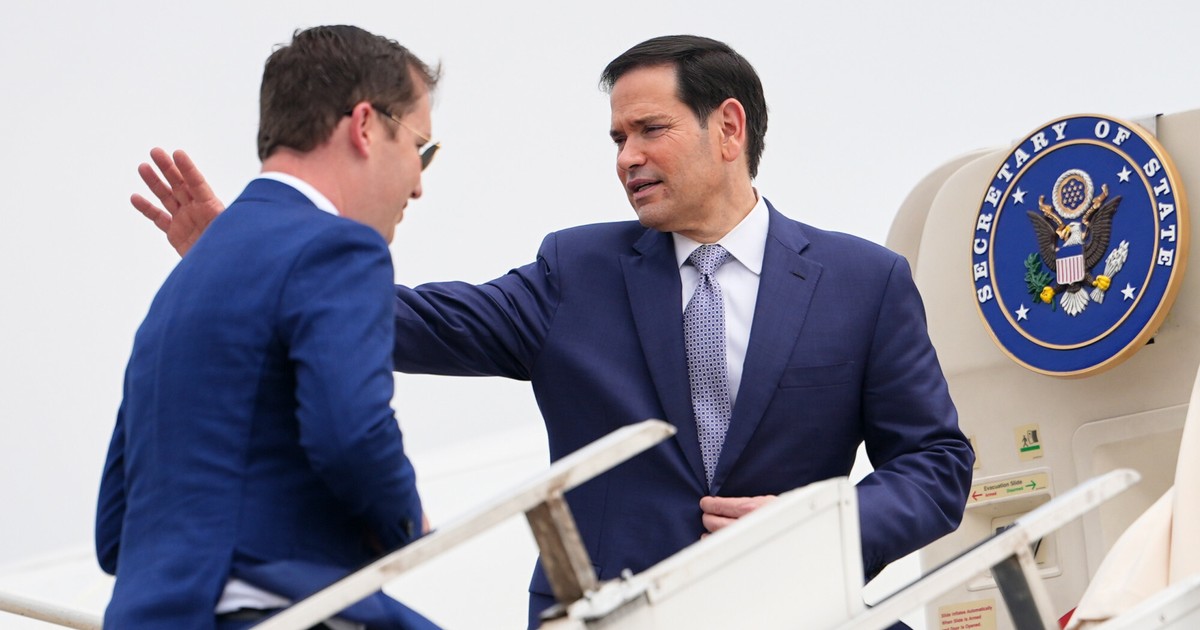
— It is possible that later today, tomorrow or in a few days, we will have information to report, Rubio told reporters, adding that he hoped it would be “good news.” In the opinion of the US Secretary of State, progress has been achieved in the negotiations. According to the Financial Times, the parties to the conflict are close to reaching an agreement extending the ceasefire for 60 days.
The spokesman for the Iranian Ministry of Foreign Affairs, Esmail Baghai, was quoted by AFP as saying that Tehran is in the phase of finalizing the protocol of agreement with the US. The agency reported that Baghai said on Iranian state television that Tehran “first wanted to write down a protocol of agreement (…) consisting of 14 clauses.” He added that in the negotiations with the American side there was a “tendency towards rapprochement”.
Mediators believe they are getting closer to an agreement on extending the ceasefire between the US and Iran by 60 days and creating a framework for discussions on the Islamic republic's nuclear program.
People briefed on the high-stakes talks said they would include a gradual opening of the Strait of Hormuz and a commitment to discuss diluting or handing over Iran's stockpile of highly enriched uranium.
The United States would also ease the blockade of Iranian ports and, in stages, agree to ease sanctions and unfreeze Tehran's assets held abroad. Iranian Foreign Ministry spokesman Esmael Baghaei said on Saturday that Tehran was discussing a “memorandum of understanding” to end the war as the first stage of an agreement and would then move on to discuss details of a broader agreement within 30 to 60 days.
“The agreement seems to be heading in the right direction. Now the Americans will analyze it,” said a diplomat briefed on the talks. “The Iranians are probably willing to make more concessions on nuclear energy, but they won't do so while the war continues – this deal helps plug that gap.”
The signs of progress came after Pakistani and Qatari negotiators held key talks with their Iranian counterparts on Thursday and Friday.
Moreover, the Ministry of Foreign Affairs spokesman noted that the issue of Iran's development of nuclear weapons is not currently part of the agreement with the US. US officials have repeatedly argued that the attack on Iran was necessary because Tehran was close to obtaining such weapons. Baghai emphasized that part of the agreement would be for US forces to end the blockade of the Strait of Hormuz.
Source: Financial Times, PAP