Article by GSP – Published Friday, May 22, 2026, 5:07 p.m. / Updated Friday, May 22, 2026, 5:08 p.m.
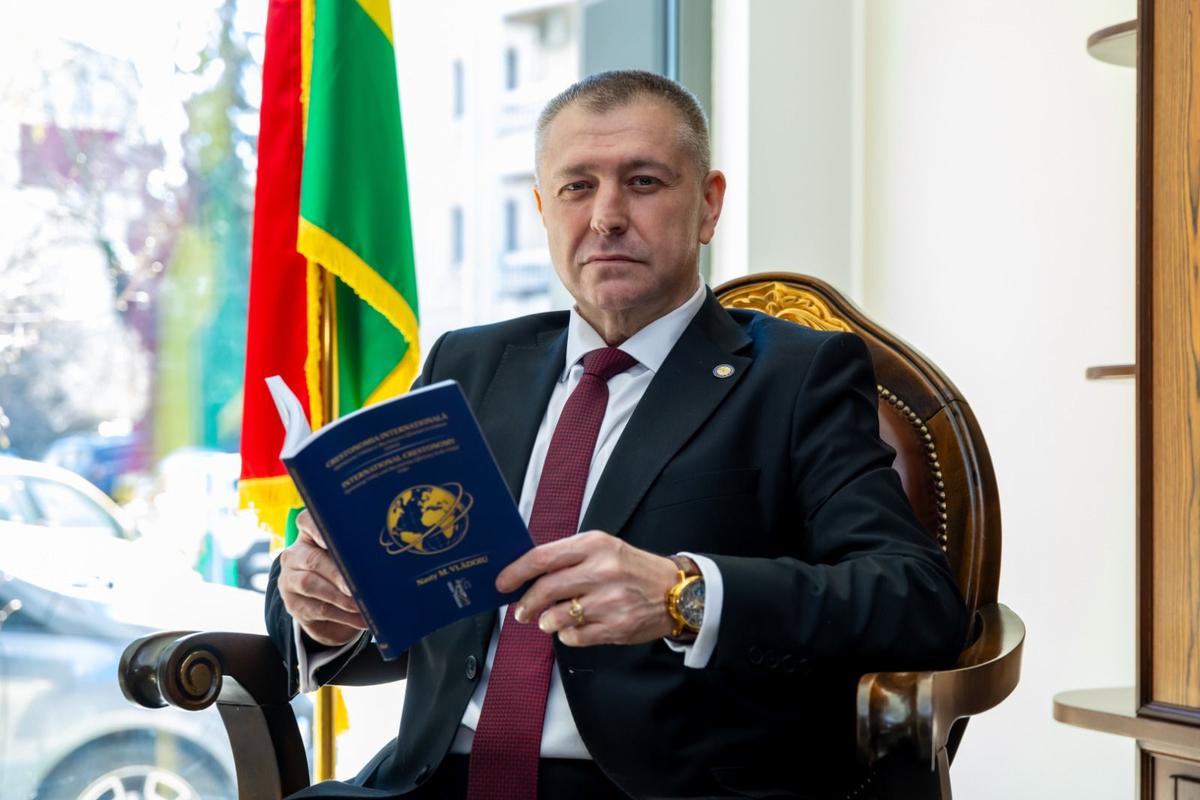
“Crestonomy” may seem like a play on words but it concerns us all. We talk about power and its effects not only every four years, of elections, but also considering that it affects our daily lives. Through the work “International Chrestonomia – Optimizing the useful and maximizing efficiency in the global order”, the university professor and lawyer Nasty Vlădoiu aims to clarify certain concepts related to the international order, frequently explained as one organized around the concept of power.
But what would power be without efficiency? An empty principle, without balance and which could not be enforced. Therefore, the concept of international crestonomie proposes a paradigm shift: instead of power, efficiency becomes the fundamental principle of international organization and cooperation.
Power means competition, hierarchies and often conflict. In contrast, international chrestonomy introduces a functional logic, where the relevance of actors is determined by their ability to generate utility and use resources optimally. This change entails the redefinition of legitimacy in international relations: authority comes from effective and sustainable performance.
The well-known university professor of international law Nasty Vlădoiu tries and succeeds in presenting international crestonomi as an emerging discipline, centered on two essential concepts, the optimization of the useful and the maximization of efficiency, in order to aim at the rational and responsible use of resources.
They are two inseparable dimensions that show that efficiency cannot be achieved at the expense of long-term ecological or social balances.
We recall Ulrich Beck's risk society theory, which showed that modern (post-industrial) society generates global, uncontrollable risks that exceed the capacity of institutions to manage them. Modernization produces insecurity, transforming the welfare state into a state of risks.
And yet, if through crestonomy we arrive at sustainability seen as a structural condition. It redefines the success criteria of international cooperation, shifting the focus from quantitative growth to systemic balance. Thus, cooperation becomes a process where actors simultaneously pursue efficiency and conservation of common resources, leading to less risk.
By adopting a Christonomic logic, the mechanisms of international relations can be profoundly transformed. Thus, global institutions would be evaluated according to their functional performance, not political influence, and states and organizations would become nodes in an optimization network, not centers of power. A first conclusion leads to the replacement of competition with a level of cooperation based on efficiency.
This perspective favors solutions to global problems such as climate change, resource management or economic inequalities. All through cooperation and balance.