Beijing, the new center of global diplomacy? Trump leaves, Putin comes. What the leader of the Kremlin wants from the president of China

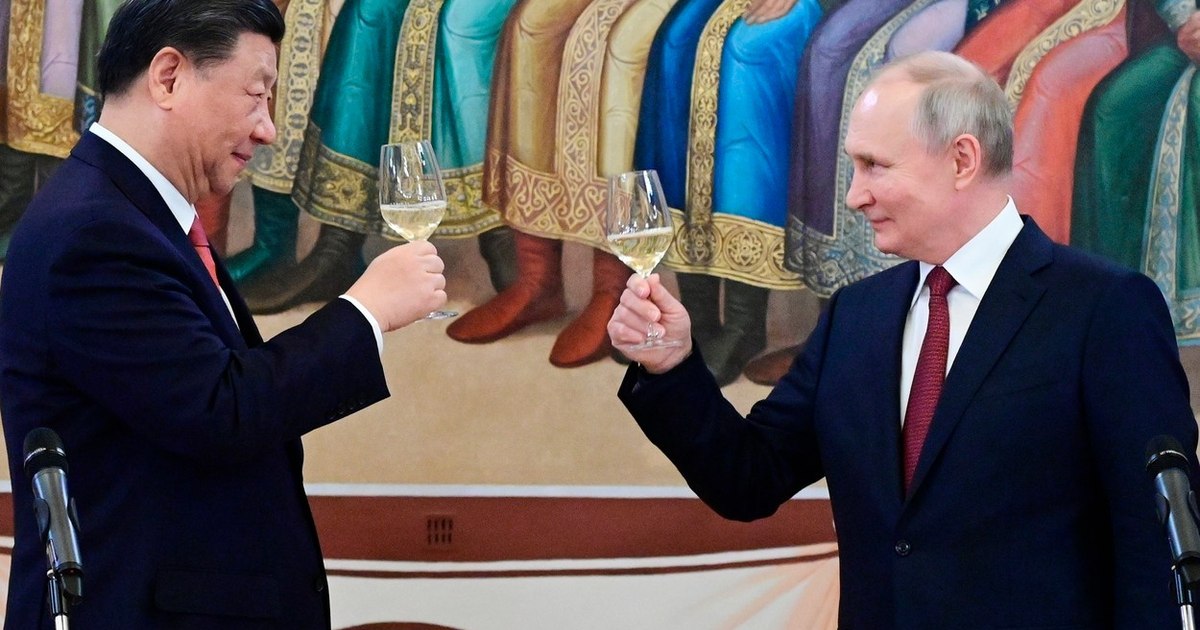
Just days after US President Donald Trump's high-stakes visit to Beijing, Chinese leader Xi Jinping is hosting Vladimir Putin this week in a new signal of strategic rapprochement between China and Russia.
Xi Jinping and Vladimir Putin/PHOTO: Profimedia
Ahead of the meeting, the two leaders exchanged “congratulatory messages”, according to Chinese state media. Xi said bilateral relations have “continuously deepened and strengthened”, as this year marks the 30th anniversary of the establishment of the strategic partnership between the two states.
The Russian president is due to arrive in Beijing on Tuesday evening, and formal talks with Xi are scheduled for Wednesday morning. The Kremlin said the agenda would cover all areas of bilateral cooperation, including the Power of Siberia 2 gas pipeline project, which could transport an additional 50 billion cubic meters of Russian gas annually to China via Mongolia, writes The Guardian.
Moscow relies on a “privileged partnership”
The Kremlin says it has “very serious expectations” from this visit and describes the relationship with Beijing as a “strategic and privileged partnership”.
Russia and China have strengthened their ties after the West imposed sanctions on Moscow over its invasion of Ukraine. Currently, China is Russia's most important trading partner, buying Russian energy and providing a significant part of the imports needed by the Russian economy, Reuters notes.
The Russian delegation will include deputy prime ministers, ministers and directors of important companies, a sign that the emphasis will also be placed on economic and energy cooperation.
What does Putin want from Xi?
The visit comes at a sensitive time for the Kremlin. Donald Trump's warm reception in Beijing has fueled speculation that Moscow may seek assurances that any improvements in Sino-US relations will not come at the expense of Russia.
For Vladimir Putin, the immediate priority appears to be confirmation that his personal and political relationship with Xi Jinping remains strong. The Russian leader also wants to understand how Beijing views the current developments of the war in Ukraine and possible prospects for negotiations.
Analysts note that Russia is showing signs of fatigue after more than four years of conflict. Military parades have been curtailed, and Russian energy infrastructure continues to be hit by Ukrainian attacks. Putin himself recently suggested that the war could enter a decisive stage.
China is trying to avoid a weakened Russia
Experts say that Beijing has no interest in the war continuing indefinitely, but neither does it want a destabilized or severely defeated Russia, notes DW.
China and Russia share a long border, and Moscow remains an important strategic partner for Beijing, both geopolitically and energy-wise. A possible collapse of the Russian regime would create, according to analysts, major risks for China.
At the same time, tensions in the Middle East and risks to oil shipments through the Strait of Hormuz have made Russian energy even more attractive to Beijing. Russia already supplies nearly a fifth of China's oil imports.
A close relationship, but not without limits
Although Beijing and Moscow continue to talk about close cooperation, some analysts believe the relationship is more pragmatic than official rhetoric suggests.
“China and Russia are like a couple sleeping in the same bed but dreaming of different things,” says Claus Soong, researcher at the Mercator Institute for Chinese Studies (MERICS).
China aims to secure its energy supply without becoming overly dependent on Russia, while Moscow increasingly needs the Chinese market to compensate for its isolation from the West.
The phrase “boundless partnership”, used by Xi and Putin before the invasion of Ukraine in 2022, was later qualified by Chinese officials, who described it as “mere rhetoric”.
Beijing, the new center of global diplomacy?
Chinese state media have presented the rapid succession of visits by Trump and Putin as evidence that Beijing is becoming a focal point of world diplomacy.
In the current geopolitical context, China is in an advantageous position: both the United States and Russia need functional relations with Beijing, but for very different reasons.
For Washington, China remains the main strategic rival. For Moscow, however, Beijing has become an essential economic and diplomatic partner in a period of increasing international isolation.