Conclusions from Trump's trip to China. Xi has not changed his mind on Iran, Taiwan or the economy

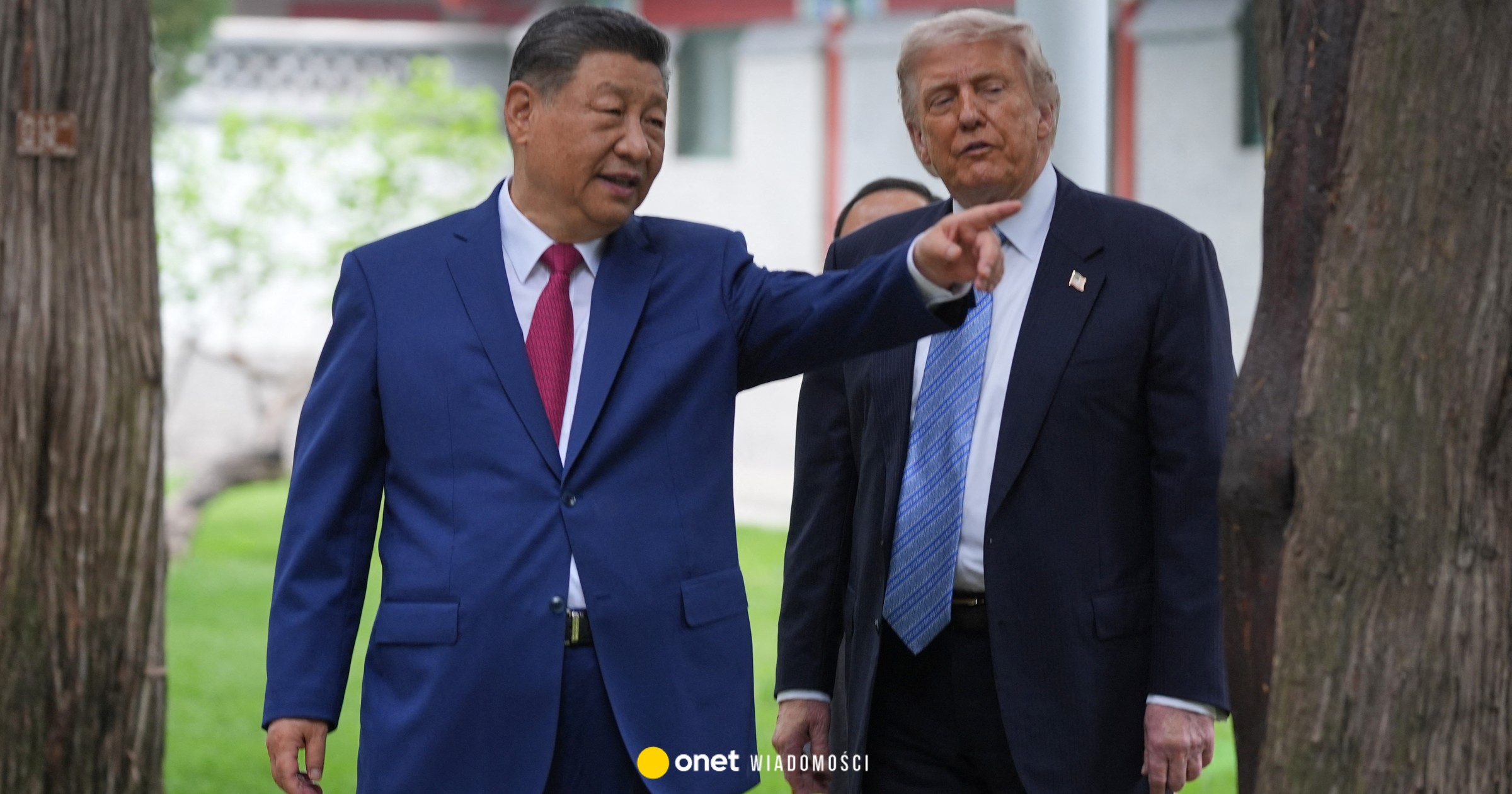
When two of the most powerful (and currently only) superpowers in the world peacefully drink tea together, one can feel calm. In this sense, all outsiders can consider the US president's visit to the Middle Kingdom a success.
However, the balance looks completely different from the US perspectivewhose leader, before traveling to China, boasted that with this event he would lead the world into a new era. However, nothing came of it. Donald Trump came to Beijing extremely trustworthy, and Xi Jinping controlled the powerful guest from beginning to end.
The communist leader probably had just as much fun during Trump's three-day visit. The American could not hide his sincere admiration for his host. He called Xi a “great man”, a “close friend”, and a “strong leader who controls 1.4 billion people with an iron fist”. Has Trump ever complimented anyone so lavishly?
Xi responded to his overseas friend's humble gestures with a diplomatic smile. The fact that Trump – a professed teetotaler – allegedly toasted his friendship with Xi with champagne during a state banquet may be the ultimate proof of the deep bond he felt towards the Chinese.
Yet Xi has not budged even a step on any key issues.
Case one: Iran
Xi and Trump agreed in their statements that the Strait of Hormuz should remain open and Tehran should not possess nuclear weapons. However, American expectations that China would put pressure on the Iranian regime were not confirmed in official documents.
Case two: Taiwan
At least this much was achieved: Trump did not fall into this trap. He did not allow himself to be provoked into any statement questioning US support for the island – he did not call the dispute “China's internal matter” or “praise peaceful reunification.” However, Xi made it clear from the beginning of the summit that the Taiwan issue hangs over Sino-US relations like the Sword of Damocles: one careless word can lead to an “extremely dangerous situation”to “clash and even conflict”.
Third issue: the economy
Donald Trump introduces Elon Musk to Han Zheng, China's vice president, at the airport in Beijing, May 13, 2026.BRENDAN SMIALOWSKI / AFP
The presence of CEOs of American companies emphasizes that The US is no longer able to realize its economic ambitions without the Middle Kingdom as a customer and manufacturer. The fact that the Chinese technological power will be able to buy top-class Nvidia chips as a result of the summit – the H200 is the Rolls-Royce of semiconductors – is another profit for Beijing and a significant risk for the Americans, who have given the Chinese an extremely powerful tool.
A Chinese gift that will not bloom in Washington
In short: from the American point of view, there can be no breakthroughs. The summit changed little, if anything. Trump's trip was far from the well-thought-out visits of previous US presidents to China. The best example is Richard Nixon's visit to Mao Zedong in 1972, when the staunch anti-communist pulled China out of isolation, drove a wedge between Mao and the Soviets and thus significantly weakened the latter.
After this year's summit, the world has not changed at all. Trump still believes he has a “good friend” in Asia. China is more confident than ever that it has a partner in Washington that can be easily controlled. Boeing can build planes, Nvidia can sell chips, and White House gardeners can sow the rose seeds that Xi gave to the guest as a parting gift.