What two experts say about Oana Gheorghiu's e-mails: “I don't think she's cheating, but she had no business communicating in this way” / “Serious problem”

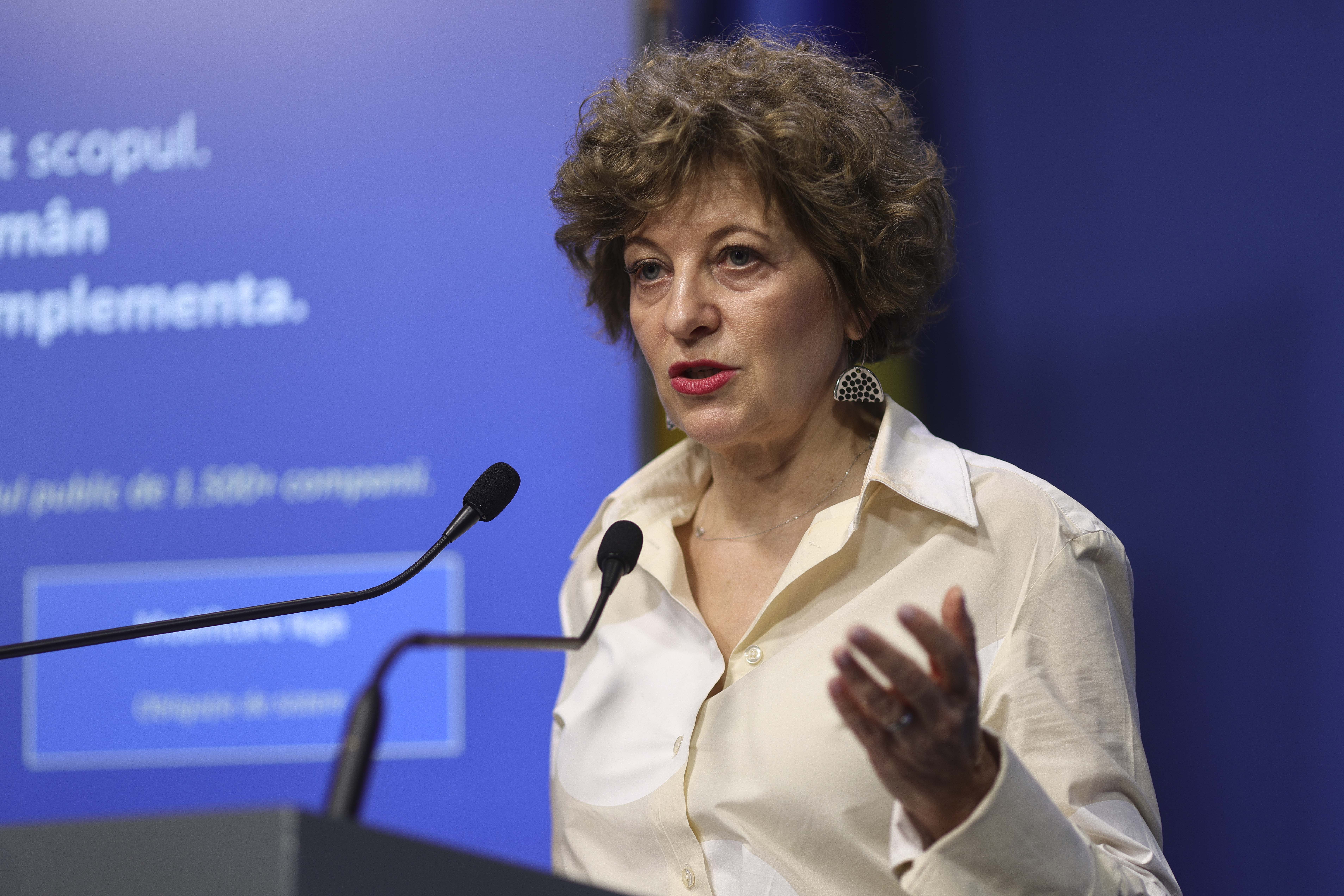
Several e-mails sent by Deputy Prime Minister Oana Gheorghiu to ADR and STS, in which she asked if the institutions were interested in digital services offered by the German company Schwarz Digits, triggered a public debate. Oana Gheorghiu says that it was about “exploratory” and transparent discussions. Professor Alina Mungiu-Pippidi and researcher and public activist Ovidiu Voicu claim that the episode shows functioning problems in the Government.
- “I don't think that Ms. Gheorghiu is taking a beating from the Schwarz company, but she had no business communicating in this way. Her way of functioning is totally different from a Western Government, from a European Government,” said Alina Mungiu-Pippidi in a dialogue with HotNews.
In February 2026, Deputy Prime Minister Oana Gheorghiu sent emails to several state institutions, including the Authority for Digitization of Romania (ADR) and the Special Telecommunications Service (STS).
In the messages sent from the official address of the Government, Gheorghiu asks the institutions to say if they have identified “potential solutions, services or capacities of interest” offered by Schwarz Digits, the IT division of the German Schwarz group, which owns Lidl and Kaufland.
“Your answer will be integrated in a consolidated information to Mr. Prime Minister, in order to substantiate any subsequent strategic decisions”, it is stated in one of the e-mails, the communication being published by Gândul.
Oana Gheorghiu did not deny the authenticity of the emails
The Kaufland company, part of the Schwarz group, previously financed the “Dăruiește Viața” Association, founded by Oana Gheorghiu, including a donation of 250,000 euros for one of the NGO's projects, wrote the same source, Gândul.
In a public reaction, Oana Gheorghiu rejected the accusations and said that the information presented “is completely false”, without denying the authenticity of the emails.
The Deputy Prime Minister said that “My role was and is to facilitate the dialogue”
“This approach does not represent influence peddling, nor purchase recommendation, nor any form of pressure. I did not ask anyone to contract services, I did not intervene in favor of any company and I did not exert any kind of influence on any procurement or partnership procedures,” the deputy prime minister said.
She specified that the meetings with Schwarz Digits representatives had an “exploratory character”, were published in the Single Register of Interest Transparency (RUTI) and included representatives of several institutions: ADR, STS, SRI, MApN, MAi, DNSC, the General Secretariat of the Government and the Ministry of Economy.
“My role was and is to facilitate the dialogue, the exchange of information and the identification of possible opportunities for cooperation or learning from external experiences relevant to the digital transformation of the administration,” said Gheorghiu.
Alina Mungiu-Pippidi: “Her competence does not fall into this area”
Political scientist Alina Mungiu-Pippidi told HotNews that the situation “is not simple”, but that the problem goes beyond the individual case of the deputy prime minister.
“The case is not simple, but it is pathological. But the pathology is much wider than someone's private behavior,” she says.
In his opinion, the publication of the e-mails also has a political component, against the background of the conflict between the Government and the former head of ADR, but the authenticity of the documents raises questions about the functioning of the administration.
“At first glance, it's about a pesedist who was fired and who is taking revenge, helped by some pesedist organs. Beyond that, however, these emails that have come to the surface are, I understand, authentic”, says Mungiu-Pippidi.
She criticizes the fact that the deputy prime minister was directly involved in an area that, in his opinion, belonged to the attributions of the Ministry of Digitization.
“There is nothing abnormal that the world is meeting with this company. But the enormous abnormalities are the following: that any discussion about development in this field must be led by Mrs. Gheorghiu, in whose competence this area does not even come.”
The political scientist says that the episode also shows the lack of basic administrative procedures within the Government.
“Mails that she writes herself, without any kind of secretary, are signed by 'Oana'. It shows that this person was completely devoid of any logistical support in the Bolojan government.”
“Its way of functioning is totally different from a Western Government, from a European Government”
Pippidi believes that the situation does not necessarily indicate the existence of bribery or influence peddling, but that the way of working is incompatible with the standards of a Western executive.
“I don't think that Ms. Gheorghiu is taking a beating from the Schwarz company, but she had no business communicating in this way. Her way of working is totally different from a Western Government, from a European Government.”
Mungiu-Pippidi says that the whole episode calls into question the reformist discourse of the Bolojan Government.
“It shows us that the great reformist Government, the one for which we have to kill ourselves because it is going to save the country, in reality works completely aberrantly. No kind of really institutional logics.”
Voicu: the meetings were in the Government register, but the follow-up was “completely unacceptable”
And Ovidiu Voicu, executive director of the Center for Public Innovation, publicly criticized the deputy prime minister's approach.
“Mrs. Oana Gheorghiu, Deputy Prime Minister, requested, in writing, officially, from at least two public institutions, ADR and STS, to say if they are interested in purchasing services from a specific company, Schwartz Digitals. This is completely unacceptable,” Voicu wrote in a post on Facebook.
He noted that the meetings with the Schwarz group were declared in the Government's transparency register, but the rest was not in order. “Serious problem”, Voicu reacted.
He also considers the fact that the e-mails talk about “potential strategic digital decisions” problematic.
“If he did have the meetings, he should have avoided any kind of follow-up that could be interpreted as pressure for one institution or another to acquire the services of Schwartz Digitals. In the message to ADR and STS he says that the information will be passed on to the Prime Minister for “possible digital strategic decisions”. I mean what decisions? A potential outright strategic acquisition? ”, asks Ovidiu Voicu.
Fired a week before the revelations
The scandal appeared at a tense moment for the digitization area. On May 4, 2026, the Government announced the dismissal of the president of ADR, Dragoș Vlad, citing “operational failures”, “insubordination” and “institutional opacity”. A few days after the revocation, the e-mails sent by Deputy Prime Minister Oana Gheorghiu to ADR and STS regarding the Schwarz Digits company appeared in the public domain.
The Deputy Prime Minister claimed that the publication of the documents represents an attempt to shift attention from the problems in the activity of ADR and from the mandate of Dragoș Vlad.
“Instead of a serious discussion about delays, blockages and administrative failures, we are witnessing an attempt to present oneself in the position of a victim and the fabrication of a pseudo-scandal”, said Oana Gheorghiu.
In this context, Noni Iordache, the leader of the Government Employees' Union, told Antena 3 CNN that the situation raises questions about how the political and administrative powers are delimited in the Government and that clear explanations are needed regarding the Executive's relationship with the German Schwarz group and the correspondence between the Deputy Prime Minister and the institutions in the digitalization area.