A NATO and EU member country has just officially proposed sending troops on a mission to the Strait of Hormuz to help the US

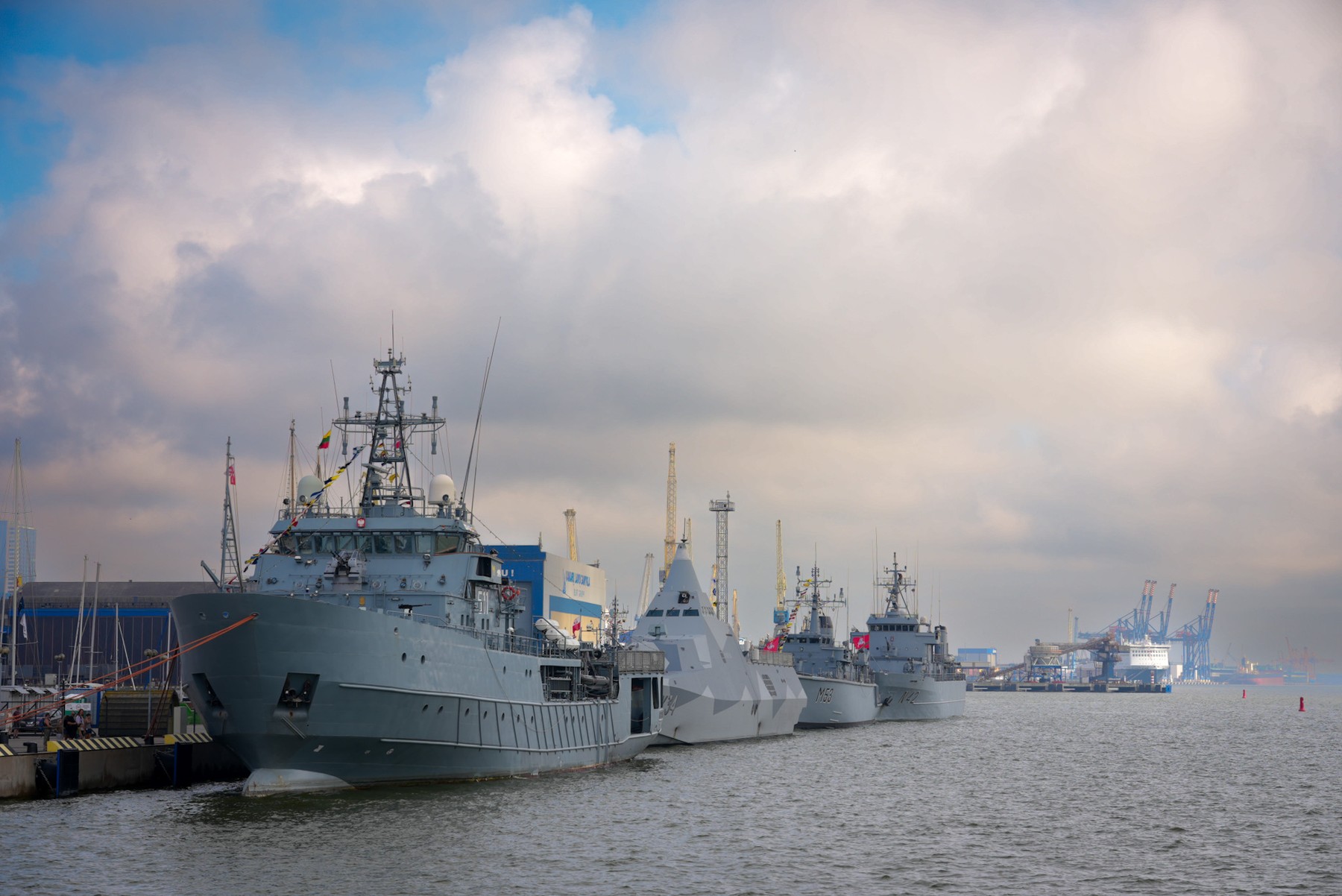
Lithuania, a member country of NATO and the European Union, has proposed sending troops to help the US in the Strait of Hormuz, Reuters, Sky News and LRT write on Monday.
Thus, the Baltic state should send dozens of soldiers to the area, the Defense Council, chaired by President Gitanas Nauseda, decided on Monday in a proposal addressed to the parliament in Vilnius.
Lithuania's Defense Council – a body made up of top political and military leaders – has approved the deployment of up to 40 soldiers and civilian defense personnel to an international mission to ensure free passage in the Strait of Hormuz, the press office of the Lithuanian president said on Monday (May 11th).
According to a press release, the Council supported sending “up to 40 soldiers and civilian employees of the national defense system” to participate with allies in international maritime security operations in this strategically important waterway.
“The State Defense Council approved the mobilization of Lithuanian military capabilities […] to participate with allies in international maritime security operations aimed at ensuring free navigation in the Strait of Hormuz and proposed that the government immediately initiate the appropriate amendment of the mandate of the Seimas (Unicameral Parliament of Lithuania, nr) regarding international operations”, the press release sent by the presidency mentions.
A vote in parliament will be required to approve the plan.
President Nauseda's office added that Lithuania is ready to provide logistical support and allow the use of its military infrastructure in response to US requests.
The president's spokesman, Ridas Jasiulionis, told the NBS that the decision was taken in writing, and not during an official council meeting.
According to the president's office, the council made this decision after analyzing the information and proposals presented by the Ministry of Defense regarding Lithuania's possible contribution to ensuring the safety of maritime traffic in the Strait of Hormuz.
The United States is trying to form a new international coalition to restore commercial shipping through the strait, one of the world's most important oil transit routes, through which, before the outbreak of the Middle East conflict, about a fifth of international shipments of crude oil and liquefied natural gas passed.
Trump rejected Iran's response to the US proposals
On Sunday, US President Donald Trump bluntly rejected Iran's response to US proposals for an end to the war, rekindling threats against Tehran, accused of targeting its Gulf neighbours.
“I just read the response from the so-called “representatives” of Iran. I do not like it at all – IT IS TOTALLY UNACCEPTABLE!”, the American leader wrote in capital letters in a short message on his social network, Truth Social.
More than a month after the beginning of the armistice between the two belligerents, the negotiations seem more than ever at a standstill, and the hopes for a solution are nebulous, as neither side has publicly disclosed its proposals, AFP and Agerpres agencies note.
After days of waiting, Iran announced on Sunday afternoon that it had responded to the US plan, but without providing details.
Iranian state television reported only that Tehran's response, conveyed through the Pakistani mediator, was “focused on ending the war (…) on all fronts, especially in Lebanon, and guaranteeing the safety of maritime navigation.”
According to the Wall Street Journal (WSJ), citing sources familiar with the matter, Tehran's proposal calls for a gradual reopening of the Strait of Hormuz, which Iran has blocked since the start of hostilities on February 28, and a simultaneous lifting of the US naval blockade on Iranian ports.
The WSJ notes that Tehran is also prepared to “dilute” some of its enriched uranium and ship the rest to a “third country.”
Washington and many countries suspect Tehran of seeking nuclear weapons by enriching uranium, which it denies, defending its right to civilian nuclear power.