“The Forger”, the genius kid who saved thousands of lives. He worked to exhaustion, without receiving any reward, for the causes he believed in

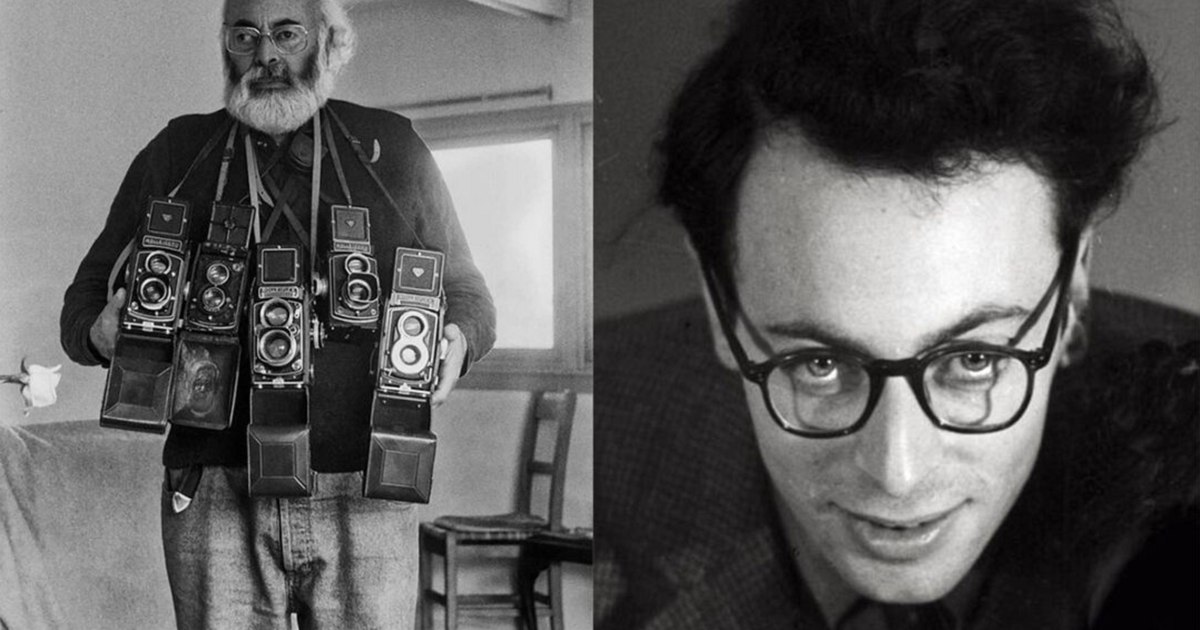
During the worst years of the Second World War, an anonymous autodidact, hidden in a cellar in France, saved thousands of lives, especially children. His name was Adolfo Kaminsky, and he was a brilliant, almost untraceable forger who offered a chance for freedom to the persecuted.
Adolfo Kaminsky PHOTO Adolfo Kaminsky/Leila Kaminsky
In the history of the world there have been people who changed destinies without firing a gun, without leading armies and without holding important positions in the state. They are people who risked everything for their fellow men.
One of these was Adolfo Kaminsky, an Argentinian Jew, photographer, self-taught chemist and brilliant forger. He saved thousands of lives through the documents he made in cellars, cellars or warehouses. He risked his life countless times, because if he had been caught, he would have been executed on the spot.
Although he helped thousands of Jewish families reach safety with the help of false documents, his name remained almost unknown. His life seems straight out of a spy novel, but behind the forged documents with an almost undetectable precision was a modest, almost shy man, convinced that every act of resistance can save lives.
A Russian Jew, turned Argentinian, emigrant to France
Adolfo Kaminsky's story begins on October 1, 1925, when he was born in Buenos Aires. He came from a Jewish family. His parents, Solomon and Anna Kaminsky, had emigrated from Russia to South America, fleeing anti-Semitism and political persecution. They had been part of the General Jewish Labor Bund, a socialist organization of the Jewish labor movement in the former Russian Empire.
Before arriving in Argentina, the family had lived in France, but had been expelled in 1917 due to political beliefs. After several years overseas, they returned to France around 1932. Adolfo was then only seven years old. At first they lived in Paris, then they moved to Vire, a small town in Normandy, where his uncle already lived.
Adolfo's childhood was, however, quickly overshadowed by the rise of fascism in Europe. With the outbreak of World War II and the occupation of France by Nazi Germany, the Kaminsky family became the target of anti-Semitic legislation.
At 14, Adolfo had to drop out of school to work and help support the family, especially as racial laws limited his parents' right to work. He was employed as an apprentice at a clothes dyer. He was an intelligent teenager, curious and attracted to knowledge. He quickly learned the notions of chemistry and, above all, practically formed his ability to combine substances and colors. In parallel, he frequented the pharmacy in town and carefully observed the chemical processes, learning from the experience of those around him.
In 1942, tragedy struck the Kaminsky family. Adolfo's mother, Anna, died under unclear circumstances between Vire and Paris. Some accounts suggest that she was tracked down and killed by the Gestapo, but the exact circumstances have not been fully clarified.
On the brink of the grave
The death of his mother deeply marked Adolfo Kaminsky, who was only 16 years old at the time. Eager to fight the Nazi occupation, he began building detonators for French Resistance fighters. They quickly noticed his knowledge of chemistry, but also the skill with which he combined substances and made useful devices for sabotage actions.
The Kaminsky family's situation worsened in 1943 when Adolfo, along with his father and brothers, were arrested by French collaborationist authorities and taken to the Drancy camp, the transit camp used for Jews arrested in France. From there, thousands of people were deported to Auschwitz and other Nazi camps.
The camp was initially administered by the French collaborationist authorities, and later by the SS. More than 60,000 Jews passed through Drancy, most of whom were deported to extermination camps. The Kaminsky family spent about three months there. During this time, Adolfo came into contact with numerous Jewish families and learned firsthand of the tragedies that were unfolding throughout Nazi-occupied Europe. He understood then how small the chances of survival were for the deportees.
The release came unexpectedly. His brother Paul repeatedly sent letters to Argentine diplomatic authorities and the family was able to invoke Argentine citizenship. Following the interventions made by the Argentine Embassy in France, the Kaminsky family was released.
Doctor Mengele's sadistic experiments on seven dwarfs from Maramureş. The “Angel of Death” extracted their bone marrow and blinded them with poisonous drops
“If I sleep for an hour, 30 people will die”
The time he spent in the Drancy transit center marked Adolfo Kaminsky deeply, as much as the death of his mother. He was 18 years old and decided that his family should not be the only ones to escape from that inferno. He chose to join the French Resistance and put his knowledge of chemistry and experience as a dyer to the service of the persecuted.
It all started while he was searching through Paris for false documents that would protect his family from further deportation. He needed impeccably made papers, and such forgeries were hard to come by. During these searches, he came into contact with underground Resistance groups in Paris. A forger in a Jewish resistance network known as “the Sixth”, codenamed “Penguin”, discovered that Adolfo had worked as a dyer's apprentice and mastered valuable techniques for removing ink and altering documents.
He was quickly recruited into the clandestine network. Kaminsky began working in secret laboratories, constantly moved to avoid discovery. They worked in basements, hidden barracks and cellars. He made fake documents for Jews without accepting money. His only goal was to see them to safety.
Under the false identity of Julien Keller, he became an active member of the French Resistance and began working day and night to produce as many documents as possible. “The life or death of a human being depends on each document“, said Kaminsky. For him, every minute meant a real risk, but also a chance offered to others, just as his family had received one in Drancy. He was determined above all to save as many Jewish children as possible, knowing very well what fate awaited them in the Nazi camps.
Arrests and deportations were increasing at an alarming rate, and Adolfo Kaminsky had become one of the Resistance's most important resources. He had an extraordinary talent. He made fake documents of such high quality that they were almost impossible to distinguish from the originals. He had also discovered how to remove blue ink from paper using lactic acid in cream, a technique many thought impossible.
He also mastered complex methods of reproducing typewriter characters, and sometimes made the necessary paper himself. He understood photogravure processes, which enabled him to reproduce official letterheads, watermarks and rubber stamps. In cellars, cellars and improvised laboratories, away from the eyes of the world and without asking for any reward, the shy young man saves the lives of thousands of people. Make fake birth certificates, passports and ration cards.
Out of conviction and a deep sense of responsibility, Kaminsky often worked himself to physical and mental exhaustion. At one point, 300 children urgently needed documents; without them, they risked deportation. Kaminsky worked 48 hours non-stop. “The calculation was simple. In an hour I make 30 fake documents. If I sleep for an hour, 30 people will die”he said. He managed to finish the paperwork in time, then collapsed from exhaustion on the desk.
The unjust laws during the Second World War, by which the Jews were isolated: forced to marry only among themselves and not to own property
It is estimated that he directly contributed to the rescue of thousands of people. Some sources indicate approximately 14,000 false documents made during World War II alone.
A life dedicated to people
After the Second World War, Adolfo Kaminsky did not stop. He continued to use his talent in the service of causes he considered just. He created false documents for Algerians involved in the struggle for independence, for militants in Guinea-Bissau and Angola who opposed Portuguese colonialism, but also for other politically persecuted people in different parts of the world.
Kaminsky was not acting out of loyalty to a state or a party. He often said that his only concern was the persecuted people. Over the years, he supported numerous causes, but consistently refused to cooperate with groups that resorted to violence against civilians.
Neither glory nor money interested him. In most cases he worked for free, guided exclusively by his own moral and political convictions. Around 1970, he decided to stop, aware that his identity and activity had become known to too many people.
Later, he devoted himself to photography and visual art. His images often capture marginalized people, discreet urban scenes and moments of solitude, retaining the same sensibility that had marked his entire life.
His story became known to the general public only after his daughter, Sarah Kaminsky, published the book “Adolfo Kaminsky, une vie de faussaire”. The book brought back into focus the destiny of a man who chose anonymity instead of fame. Adolfo Kaminsky died on January 9, 2023, in Paris, at the age of 97.