The facade is crumbling. Victory Day exposed Russia's great defenselessness [OPINIA]

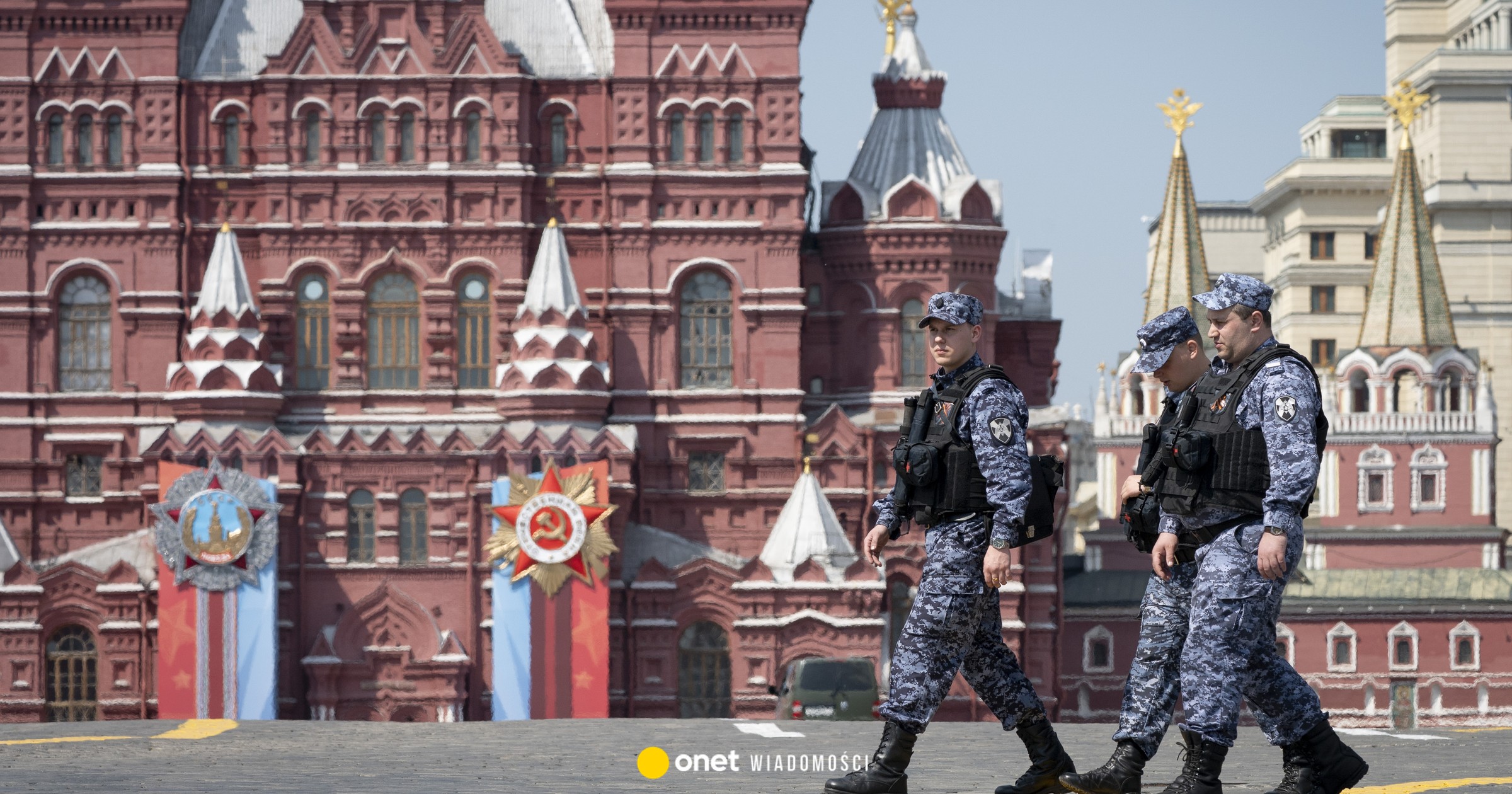
There have been collective sighs on the Russian Internet lately. Card payments don't work and stores only accept cash, users complain. However, it is difficult to get it because many ATMs are closed. The reason for these failures are internet blockades introduced by the Russian government on the occasion of the celebrations of the anniversary of the Soviet Union's victory over Nazi Germany, which took place in several cities. Due to concerns that Ukrainian drones could use the cellular network, for example, to navigate towards Red Square in Moscow, it has been repeatedly turned off in recent days.
These restrictions are further proof that the issue of war cannot be easily downplayed, even in Russia. More than four years have passed since Russia's major invasion of Ukraine, but most Russians have managed to maintain a semblance of normality for a long time. Full supermarket shelves, trips to Turkey and 24-hour deliveries created the illusion of everyday, normal life.
That this one the facade is crumbling more and morewas particularly visible during this year's parade organized on May 9 on the occasion of Victory Day in Moscow.
The day commemorating the Soviet Union's victory over Nazi Germany 81 years ago is central to Russia's understanding of history. In recent years it has been increasingly exaggerated for propaganda purposes.
It is usually accompanied by impressive military parades on Red Square. Rockets and tanks are presented, followed by soldiers in elegant uniforms, and President Vladimir Putin, surrounded by a group of high-ranking state guests, stands on the tribune and salutes.
Russian President Vladimir Putin is seen on screen during a speech during the Victory Day Parade, Moscow, May 9, 2026.Contributor / Contributor / Getty Images
This year, however, it was different. The celebrations were much more modest than usual. At The parade began at 10 a.m. Moscow time and was broadcast live on state television. Earlier, the live broadcast showed participants in a “special military operation”, as Moscow euphemistically calls the invasion of Ukraine. Veterans were visible in the spectator stands. “The oldest one is 102,” the presenter noted appreciatively. The Russian president then appeared, just three minutes before the ceremony began.
At 10 a.m. sharp, the Kremlin bells rang. Red Square was full of soldiers decked out in impressive uniforms covered with decorations. Defense Minister Andrei Belousov traveled from unit to unit, wishing them on Victory Day, as this holiday is called in Russia. The soldiers responded with a loud “hurray”.
Putin promises victory
Then Putin stood behind the podium. He spoke of the “magnificent victory”, of “immeasurable losses” and of the “unity of the Soviet peoples” that made victory over the Nazis possible. Then there was a minute of silence.
At the end, Putin referred to the present – he said that Russia is also fighting fascism today. — We are facing an aggressive force supported by NATO. Still, we move forward. Victory will be on our side! The Russian people will endure everything! – he said. He added that the great achievement of the Red Army in the fight against Nazi Germany inspires today's soldiers during their mission in Ukraine. And that he is “deeply convinced that our cause is right.”
In previous parades, this was the moment when Russian combat power was presented in the form of weapons and heavy equipment crossing Red Square. That year, on May 9, only a few battalions marched through the square. The victory parade took place without tanks, rockets or other heavy weapons – the last time such a situation occurred in 2007. Instead of a show of force, Russian television showed footage from the front: tanks in the field and drone pilots in a camouflaged tent.
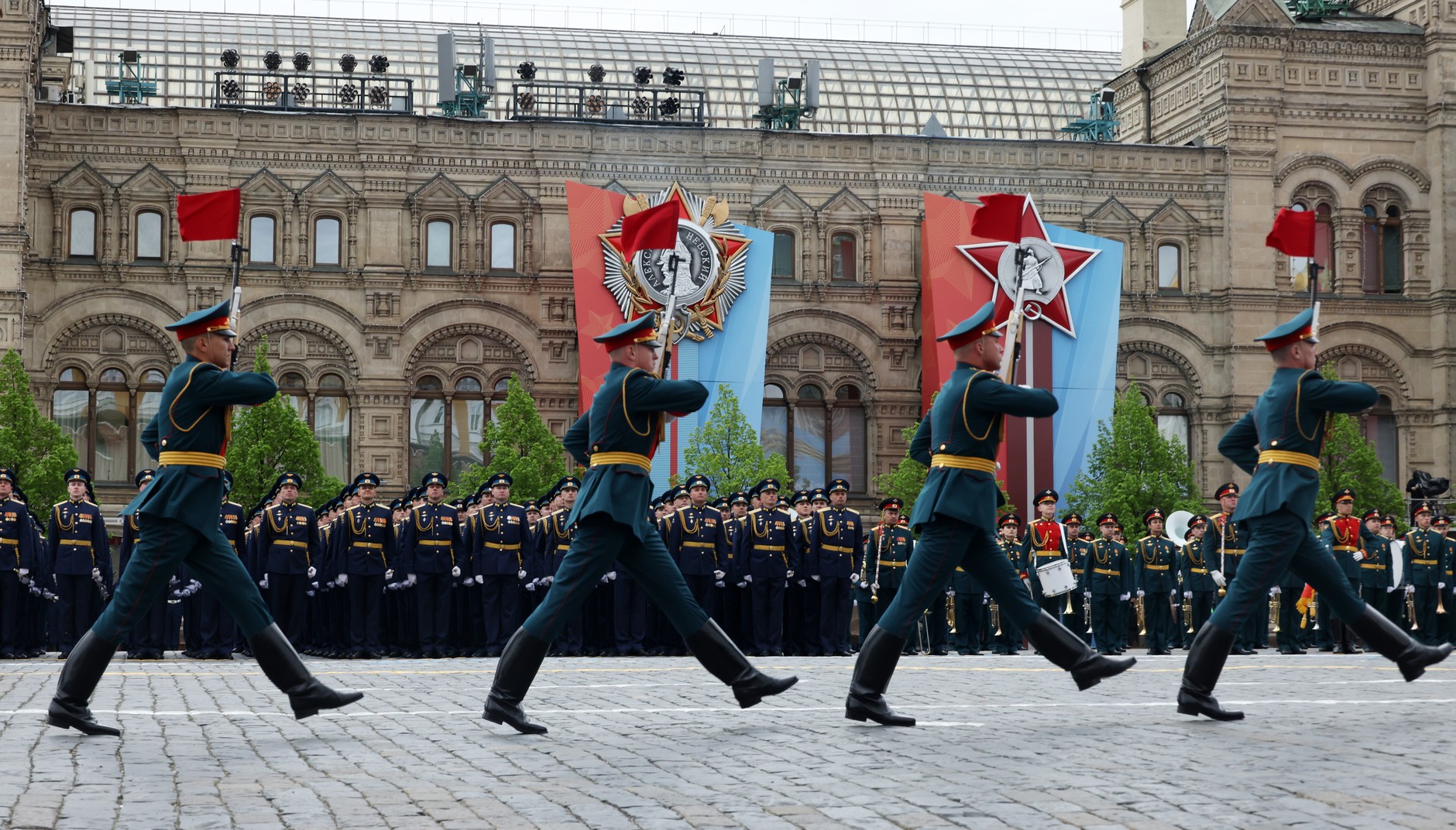
Victory Day Parade in Moscow, May 9, 2026.Contributor / Contributor / Getty Images
The Kremlin said it had refrained from showing military equipment at the parade “due to the operational situation.” On the one hand, this probably meant that tanks and hypersonic missiles were more urgently needed on the front than on Red Square. On the other hand, it showed that Moscow fears that concentrating valuable weapons in one place will make them too easy a target.
The visitors' stand from which Putin watched the parade was also much less populated this year. While last year 29 heads of state and government came to Moscow, this year there were only five: President of Belarus Alexander Lukashenko and the leaders of Kazakhstan, Uzbekistan, Malaysia and Laos. Although Slovak Prime Minister Robert Fico paid a short visit to Moscow and was received by Putin, he did not participate in the ceremony on Red Square.
“We don't need anyone's permission”
The leader of the Kremlin, who now appears anywhere only under tight security measures, he was probably more concerned about his safety this year than ever before. Putin is known for attaching great importance to his security.
Before the parade, the tension must have been particularly high. On Friday, Russia and Ukraine exchanged attacks. Moscow ignored the ceasefire previously announced by Kiev on May 6, unilaterally announced a ceasefire for Friday and Saturday, and threatened Ukraine with an unprecedented attack on the capital if it violated it. The Russian Defense Ministry even urged diplomats in Kiev to leave the city as a precaution.
Kyiv did not allow itself to be intimidated by threats. Ukrainian President Volodymyr Zelensky reacted coldly. — It is time for the Russian authorities to take serious steps to end the war, since the Ministry of Defense already believes that without Ukraine's good will it will not be able to organize the parade in Moscow, he said.
On Friday evening, US President Donald Trump unexpectedly announced a three-day ceasefire – from May 9 to 11. Both Moscow and Kiev agreed to this appeal, which also provided for an exchange of prisoners. The fact that Zelensky then allowed himself to “permit” a Russian military parade and by decree ordered it to be excluded from attacks was perceived by Moscow as an insult. “We don't need permission from anyone,” Kremlin spokesman Dmitry Peskov said on Russian state television.
“Putin would like to cancel this parade”
In any case, this may have reinforced the impression of weakness that Russia has exuded this year. — Putin would like to cancel this parade. However, it cannot do this because it has been held every year since 1945 and is an almost religious event, military expert Nico Lange told WELT TV before the parade. In his opinion, the Kremlin wanted to create an appearance of normality – even though everyone could see that, for some reason, there were no combat vehicles on Red Square.
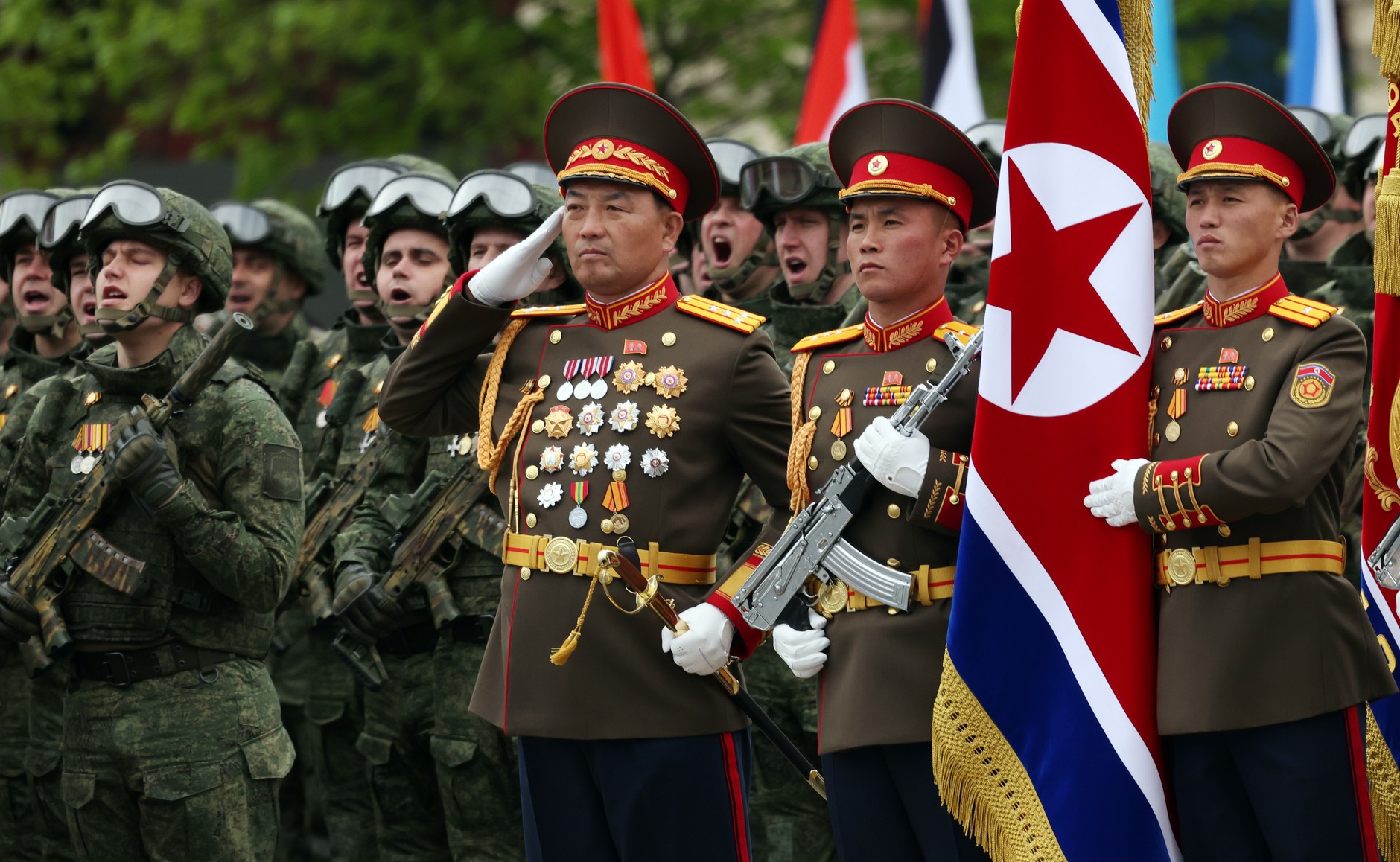
North Korean officers participating in the Victory Day parade on Red Square, Moscow, May 9, 2026.Contributor / Contributor / Getty Images
At least there were no incidents. To the constant accompaniment of marching music from the Moscow Garrison Band, nine Su-25 planes soared into the sky to be covered with white, blue and red streaks. A battalion of North Korean soldiers marched through Red Square, the only foreign military forces to take part in the parade. They were honored for fighting in Ukraine alongside Russian soldiers.
On TV, the presenter praised their “significant contribution to the liberation of the Kursk region from the occupation of neo-Nazis.” This is the false claim repeated in Russia that Russia must liberate Ukraine from the hands of “Nazis.” — Victory over fascism is our moral foundation, said the presenter on state television. On this basis, Russia decides what is good and what is bad.
At 10.45 Putin, on the western side of the Kremlin walls, at the grave of the unknown soldier, commemorated the millions of soldiers who died during World War II. Together with the state guests present, he laid flowers on the grave. “A nation that honors its heroes is glorious,” one could hear on the television broadcast.
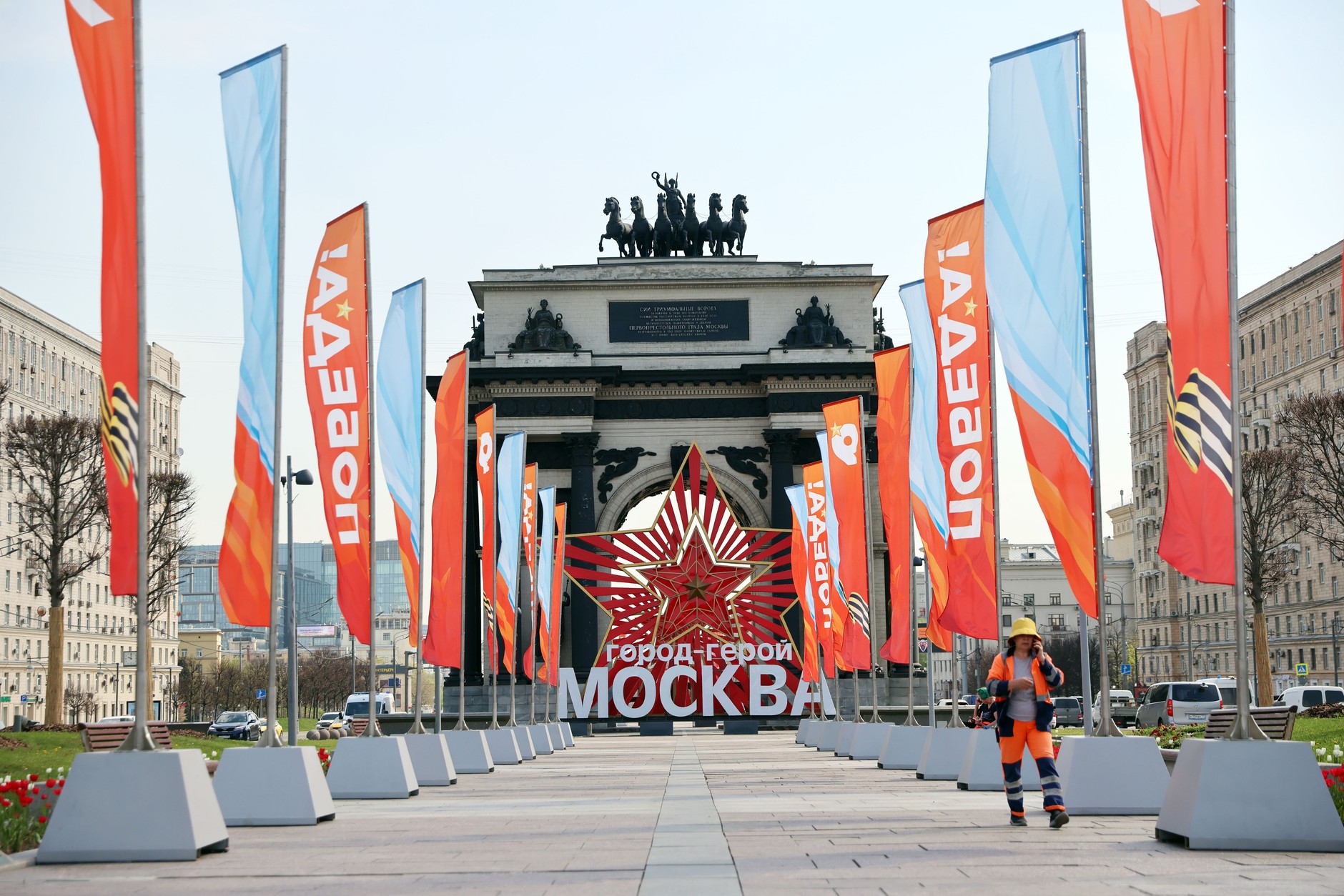
A tourist passes in front of the Arc de Triomphe in Moscow, May 7, 2026.Tian Bing/China News Service/VCG via Getty Images/Getty Images
State television paid no attention to such details. “No one was able to disrupt the great victory celebration,” summed up a journalist from Russia's Channel 1. It was shortly after 11 a.m. and Putin had disappeared again. The broadcast from Red Square ended and the program was to be continued elsewhere.