Spain has begun evacuating passengers from the MS Hondius cruise ship, which is in quarantine near the island of Tenerife in the Canary archipelago, after confirming an outbreak of hantavirus on board, the BBC reports.
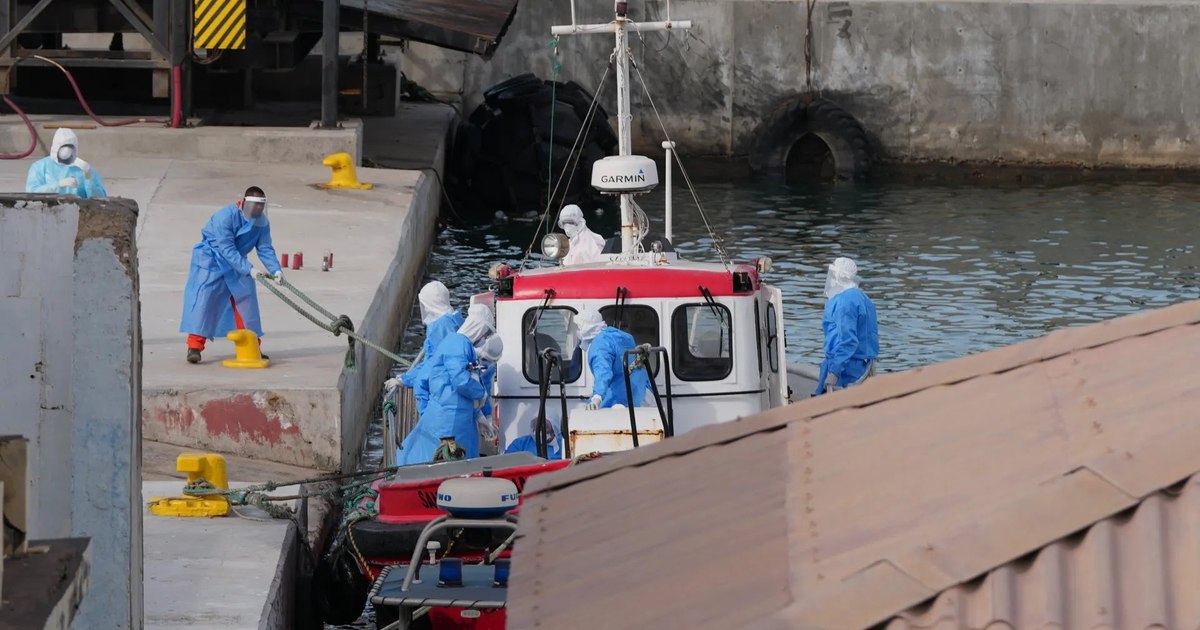
Evacuation of passengers from the quarantined ship/PHOTO: X
Health Minister Mónica García said the operation was “running normally” and that all passengers on board were still asymptomatic.
Telephoto footage showed passengers moving on deck or standing at windows, all wearing white medical masks, as the evacuation began. In the first transfers, several people were seen on a rescue boat, keeping physical distance and filming the moment they approached the shore, where they were met by teams in protective gear.
Passengers are evacuated according to nationality. They will be transported by bus to the local airport, from where charter flights will repatriate them.
The first to disembark are the 14 Spanish nationals, followed by passengers transported to the Netherlands, including Dutch, Greek and German nationals, as well as part of the crew. Other flights are scheduled later, including to the United Kingdom and the United States, with the last evacuation flight expected on Monday to Australia.
The Hondius docked in the port of Granadilla before sunrise, a month after the first passenger died on board. It subsequently remained anchored offshore while law enforcement and response teams secured the area and coordinated the disembarkation of more than 100 passengers and crew members.
Medical teams boarded for clinical assessments
At 07:00, medical teams boarded for clinical assessments. Authorities have set up a security zone of one nautical kilometer around the ship, which will not be allowed to dock directly at the wharf.
The Candelaria University Hospital in Tenerife mobilized intensive care specialists for possible serious cases. An isolation unit is ready, fully equipped for infectious diseases, including ventilators and testing equipment.
“We are absolutely ready“said chief intensive care physician, Mar Martín. “It's a virus we've never seen before, but we're treating it like any other complex infection.”
The Minister of Health described the operation to prevent the spread of the Andean strain of hantavirus as “unprecedented”, while stressing that the risk to the general population is low. She warned against “alarmism and misinformation”.
Locally, security measures in the industrial port in the south of the island have been strengthened, with access restrictions and the installation of reception tents for intervention teams.
Evacuated Spanish citizens will be transferred to Madrid, where they will enter mandatory quarantine in the Gómez Ulla Military Hospital.
The director-general of the World Health Organization, Tedros Adhanom Ghebreyesus, who is in Tenerife to oversee the operation, praised the authorities' response, describing it as “robust and effective”.
The virus has been associated with a waste area in southern Argentina, where it is carried by rodents. Human-to-human transmission is rare, but three passengers died.
Despite initial fears, many islanders say the risk is limited. However, there have been protests in recent days by port workers concerned about safety measures.
Some of the crew will stay on board to take the ship back to the Netherlands. For most passengers, the evacuation marks the end of weeks of uncertainty at sea, but followed by a long period of quarantine.