In the gray times of the Polish People's Republic, there was a shortage of almost everything on the market. Footwear was no exception. However, if we could choose something from the small offer, we reached for it without hesitation shoes with the Chełmek logo. At that time, virtually indestructible footwear was produced in the town located on the border of Lesser Poland and Silesia. Unfortunately, today you won't find any former factory halls here. They were replaced by warehouses and stacks of pallets. On the street where the shoe factory used to stand, we are greeted by a Chinese market, in keeping with the times.
Today, in the era of market economy, you can buy other shoes with a well-known logo in dozens of stores throughout Poland. The designers of Bata footwear, as this is what we are talking about, try to follow the latest fashion trends. Few of us realize that the history of this brand dates back to the Austro-Hungarian Empire at the end of the 19th century.
Success in Czech
On April 3, 1876, Tomas Bata was born. 18 years later, in the then small town of Zlin in eastern Moravia, a young shoemaker, Tomas, together with his sister and brother, founded a shoe company. Over the course of several decades, the family project has become a brand recognized on all continents.
The Bata shoe factory in Zlin, Czechoslovakia in the 1930sBATA FACTORY / PAP
They are organized in the Czech Republic throughout 2026 celebrations commemorating the 150th anniversary of Bata's birth. The largest – in Zlin. This anniversary has also been included in the UNESCO calendar of anniversaries for 2026-2027.
Today, every resident of Zlín, which has a population of 70,000, knows perfectly well that the entrepreneur Tomas Bata, who embodied the Czech version of the American dream of success, is behind the city's phenomenal development.
Tomas inherited his talent largely from his father, Antonin, who was a shoemaker. Young Bata became the owner of a small shoe factory in Zlin shortly after reaching adulthood. Shortly thereafter he became rich by supplying shoes to the Austro-Hungarian army during World War I. This allowed him to quickly develop the company and guaranteed quite significant income, which he spent on building factories and the city around them.
Bata is called “The Henry Ford of Eastern Europe”. Tomas knew that to develop the company, he needed a completely new approach to work organization and shoe production methods. So he organized a business and training trip to the USA to see with his own eyes what modern production and management techniques look like. Like an industrial spy he got a job in one of the American factories, to observe the way work is organized. The Ford car plant made a huge impression on him. After returning to his homeland, he knew perfectly well how to transfer American experiences to Europe. He surprised everyone with his innovative ideas. One of his first moves after returning from overseas was to order machines for his company in the USA and Germany.
Bata not only succumbed to the ideas of creating functional cities of organisms, which were fashionable in the interwar period – he significantly developed and enriched these concepts.
Thanks to him, the modern form of Zlin was created on the drawing boards of architects and urban planners of that time as an urban organism surrounding factories, which could be a model for everyone. The manufacturer asked for help in this matter, among others: to one of the world's greatest architects – Le Corbusier. The cooperation with Le Corbusier was continued by Jan Antonin Bata, Tomas's successor, who also wanted the most beautiful urban vision of Zlin.
In the footsteps of Bata
We feel the spirit of Bata's genius in every corner of Zlin. There are countless places related to the Czech king of footwear. It takes several days to get to know them thoroughly!
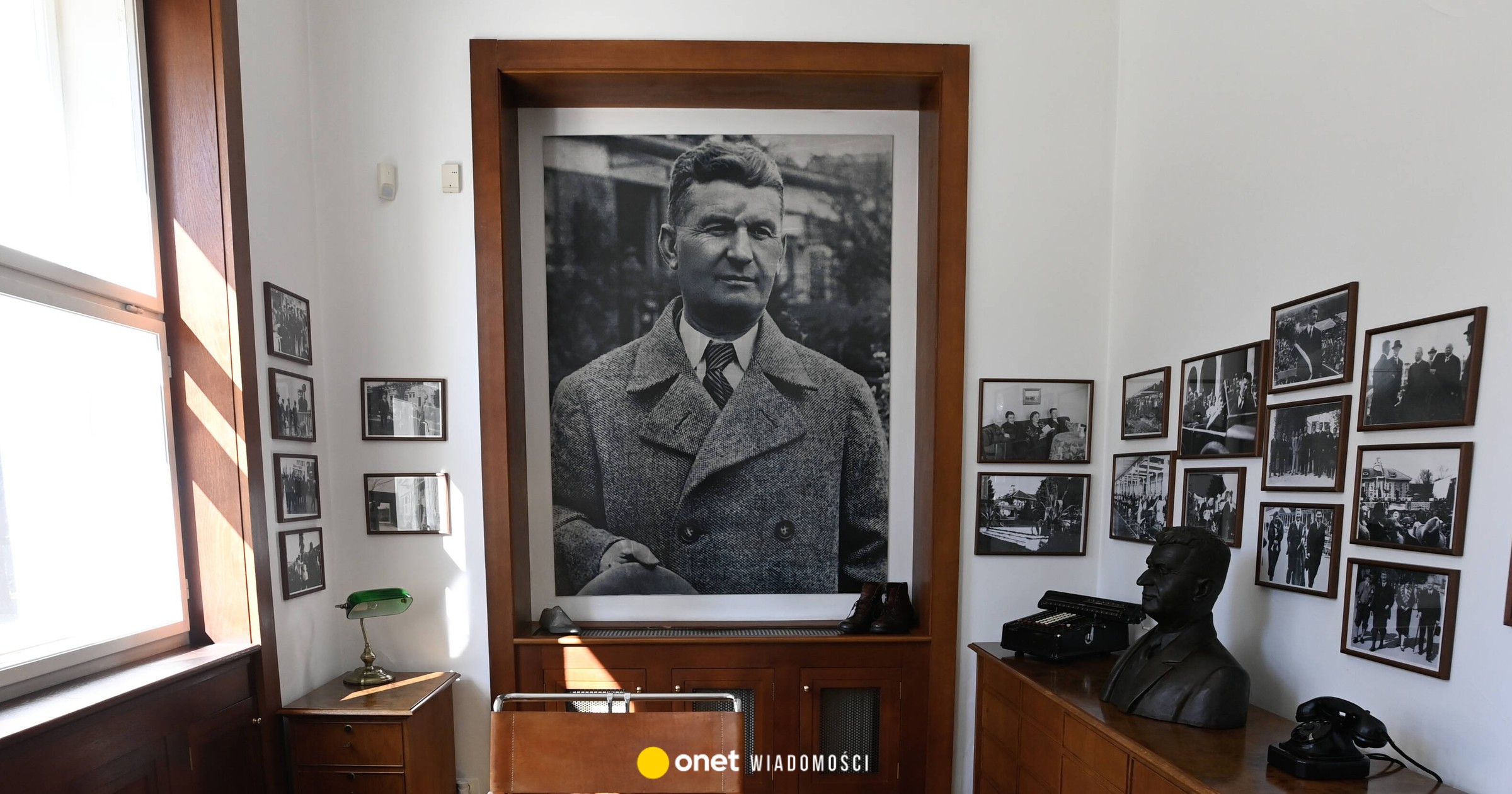
Firstly, there is a building-monument, called Tomas Bata Memorial Place, considered a masterpiece of functionalism. This recently restored building from the 1930s commemorates the founder of the Czech shoe empire. Its interior is dominated by Z-shaped steel and concrete stairs and a 1:1 scale model of the Junkers plane in which the entrepreneur died. The tragedy occurred on July 12, 1932, when his private Junkers F13 took off from the company airport in Otrokovice and crashed in thick fog after a few minutes of flight.
As part of the celebration of the 150th anniversary of his birth, the building was opened “City of Dreams” exhibition. The interactive exhibition presents Bata's vision of a modern city, his business philosophy and the history of cooperation with the designer of the monument building. It was the architect Frantisek Lydie Gahura, to whom Zlin also owes its unique character.
One of the city's biggest footwear attractions is the exhibition “Bata's rule: today fantasy, tomorrow reality” (“Princip Baťa: dnes fantasie, zítra skutečnost”). It can be seen in building 14/15 of the Baťa Institute, which houses the Museum of Southeast Moravia. There is, among others, the largest collection of footwear in Europe, from Japanese geisha shoes to powerful basketball shoes. We will also learn about the details of Bata's business philosophy: production, stores, advertising, and the work of the Zlin film studios.
Jednodvacitka or Zlin skyscraper is administrative building number 21 of the Baty Plant, completed in 1938 and built according to the design of Vladimir Karfik. At that time, it was the tallest and one of the most modern buildings in Europe. It has 17 floors – each of which contained the now fashionable open space for… 200 employees. A technological rarity is the elevator and the company head's office – with a sink and air conditioning!
It is also worth visiting Tomas Bata's villa from 1911. The entrepreneur wanted to build a comfortable residence for himself and his family, from which he could see his factory. The villa can be visited thanks to the Tomas Bata Foundation, which has its headquarters here.
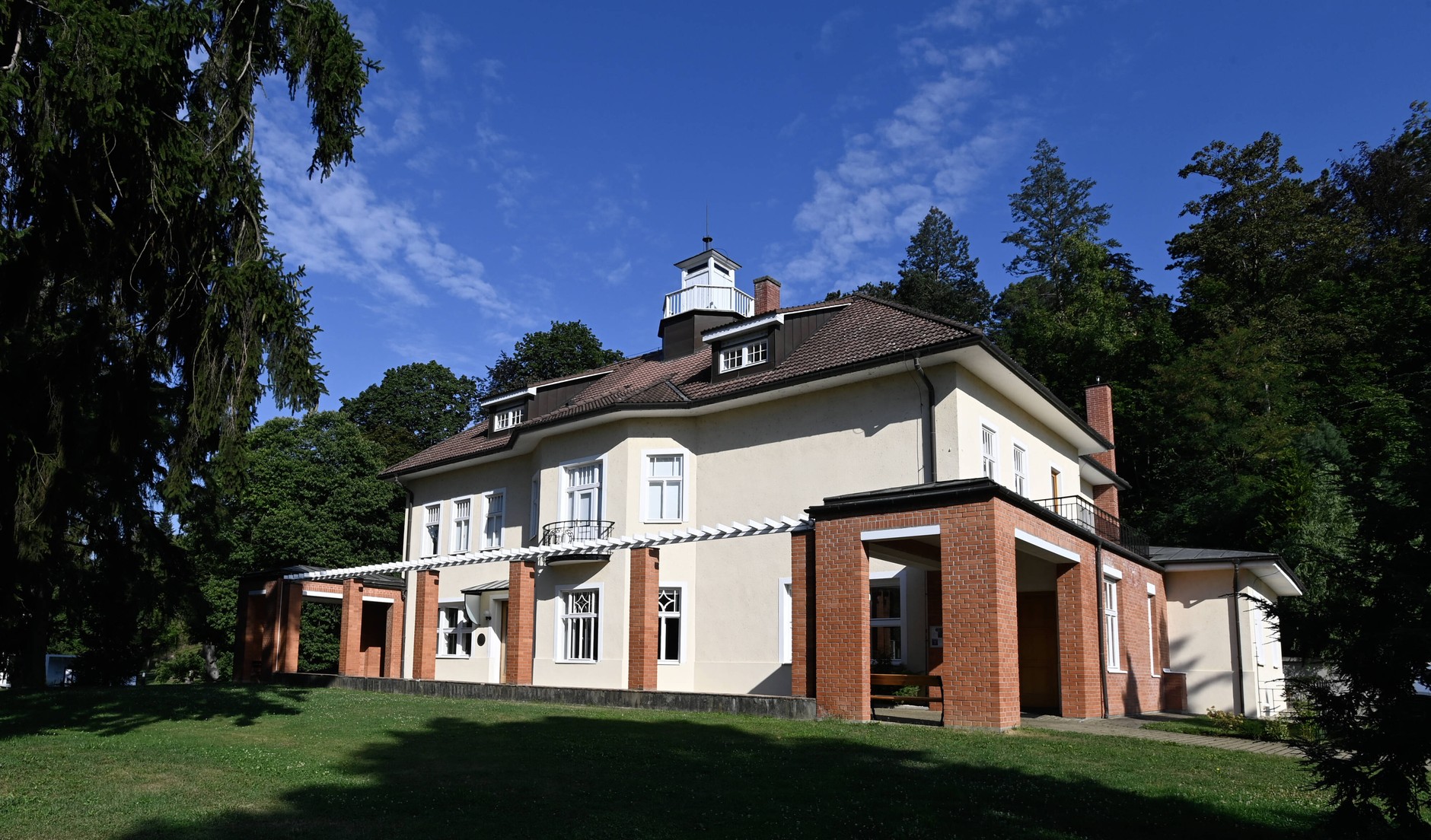
Tomasz Bata's villaDalibor Gluck / PAP
From every vantage point on the Zlin hills you can also see small brick houses with gardens and characteristic facades, which were intended for factory workers. This quite large town was a truly revolutionary concept at the time. Bata wanted his employees not to get tired of commuting to the factory, that's why took care of accommodation as close to the workplace as possible. In those days, houses provided residents with an extremely high standard of living. Today they are a unique monument.
In the city you can still see film studios that were used to shoot commercials for the Baty company. Later, legendary Czech films were made there.
The entrepreneur also knew that man does not live by work alone. That is why the spa town of Luhacovice was founded near Zlin. Tomas and his family went there to rest and “recharge their batteries”.
Today Bata has it production plants in 27 countries around the world, and stores – in over 50. It is estimated that 14 billion pairs of shoes have been sold in the entire history of the company!
The company was first managed from its hometown of Zlin, then from London, New York, Toronto, and from 2002 – from Lausanne, Switzerland. As you can see, Tomas Bata can easily be called the first globalist.
Chełmek and Krapkowice – Bata's Polish children
In 1931, Chełmek was a poor and neglected agricultural village. Its fate changed radically when Tomas Bata, on the property purchased from Prince Adam Sapieha, began the construction of a gigantic for those times a shoe factory and a modern housing estate for employees. Within five years, the number of inhabitants doubled. The factory in Chełmek became the most modern industrial plant in Poland in the interwar period. As you can easily guess, the company Bata quickly dominated the footwear market in the country. Shoe factories in Chełmek, in various locations and under various names and banners, existed in Poland until 2023.
To this day, many residents of Chełmek use the infrastructure built by the Czech tycoon. Thanks to him, a mini-town was created in Chełmek 16 modern, multi-family houses surrounded by greenery built of characteristic red brick. According to Bata's assumption, both the plant's employees and management were to find accommodation there. The square houses are still inhabited.
Bata in Chełmek also invested in sports — tennis (the courts built at that time are still used by tennis players) and football (KS Chełmek was established in 1932). Thanks to him, the first company newspaper in Poland, “Echo Chełmka”, was also published. In 1936, thanks to the material and financial support of the factory, a large church was built within a year (!).
In 2006, right next to the former shoe factory, on the corner of Baty and Staicha streets, a Bata Memorial House. This was requested by the local government, which received money from the European Regional Development Fund and the state budget. The memorial house houses museum rooms devoted to the Bata family, the history of the footwear industry and the past of the region. The honorary hosts of the place are members of the Tomasz Bata Idea Club Association.
Bata's Polish traces lead not only to Chełmek. In 1930, Count Sponeck sold him his lands in Otmęt near Krapkowice (306 ha). Five years later, there were already four production halls there – some of the most modern in Europe. The inhabitants of Krapkowice still remember the Czech entrepreneur who contributed to the industrial boom of the town. At the entrance to the Krapkowice park (created thanks to Bata's efforts), at ul. Shoemakers, disputes were raised in 2020 a stone with a plaque depicting a Czech industrialist. Next to his image there is an inscription: “Tomasz Bata (1876-1932) – a great visionary, founder of the European network of shoe factories. Precursor of the modern management style and builder of the socio-industrial infrastructure of Krapkowice.”