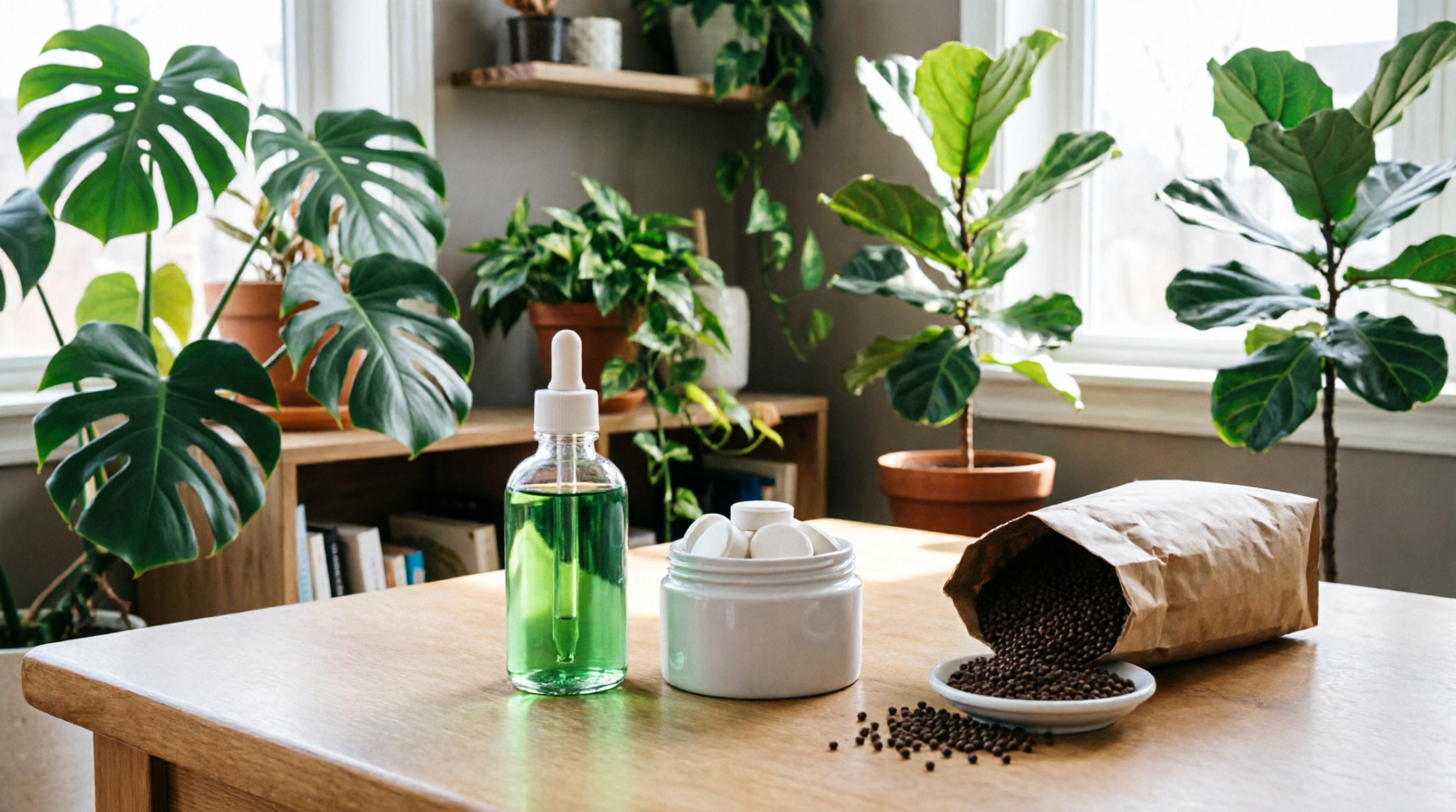
Feeding is a mandatory stage of caring for a houseplant, along with additional lighting, temperature and watering. Without them, plants will not bloom, form shoots and leaves. There are several forms of fertilizers for indoor plants: expert Sofia Belova spoke about their features, pros and cons.
Basic forms of fertilizer
The following forms are distinguished:
- Liquid. Plants absorb them quickly, and they are evenly distributed throughout the soil. If you notice a lack of any elements in your flower, then liquid fertilizer is an emergency option for feeding the plant. The downside is that you will have to use it more often than other types of fertilizers.
- Pills. Such fertilizers “play the long game,” so the amount of fertilizing is reduced. The downside is that useful elements are distributed unevenly throughout the root ball: in some places there are more of them, in others there are much fewer. If you need to make up for the lack of microelements in a short time, then tablets are definitely not suitable for you.
- Granules. They also last a long time and are distributed evenly over the ground. They need to be mixed with the substrate, so they are great for making potting mix. Disadvantage: elements enter the soil and root system slowly.
So, liquid fertilizers act instantly and show immediate results, but they will have to be used often. Granular ones are suitable for preparing soil mixtures. And the tablets are suitable for busy people who find it difficult to stick to a feeding schedule.