New revelations from the blogger who publicly criticized Putin about the power games at the top of the Kremlin

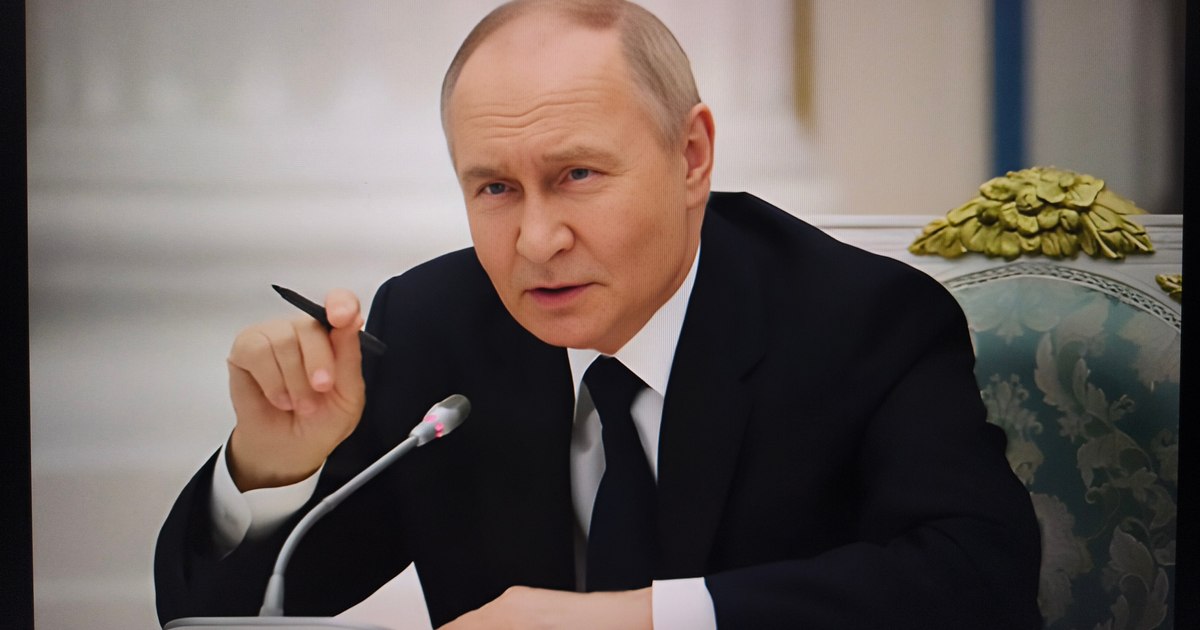
The lawyer who was hospitalized after attacking Vladimir Putin spoke in an interview with the Washington Post about possible power struggles at the top of Russia. The blogger's open defiance points to a wider divide in the Kremlin's upper echelons of power, according to a Russian official, a prominent opposition figure and analysts.
Vladimir Putin PHOTO shutterstock
Ilia Remeslo, who for 10 years has been a staunch supporter of the Kremlin regime, surprisingly turned against Russian President Vladimir Putin in March when he publicly called for his resignation and his trial as a “war criminal”.
Shortly after his public appearance, Russian authorities forcibly committed him to a psychiatric hospital in St. Petersburg. Unusually for a regime accustomed to locking up its critics, Remeslo was released after 30 days and says he will continue to challenge Putin from inside Russia.
“I said from the very beginning that I would not stop. I decided that this is my life's mission,” he said in an interview with The Washington Post.
Remeslo's change of position comes amid reports of rifts among the Russian elite over the war in Ukraine, economic problems and tightening restrictions, including on the internet.
According to him, “the level of dissatisfaction is colossal”who says that his impression is that part of the power system “already starting to act against Putin”. He compares developments today to the period before the breakup of the Soviet Union, when loyalty to the regime eroded rapidly.
“Putin's Russia will follow the same path as the Soviet Union. Everything is repeating itself”he said.
The latest polls show a drop in Putin's popularity – to its lowest level since the start of the 2022 invasion, according to polls by the state-run VCIOM institute.
Conflict between the presidential administration and the secret services
Kremlin watchers and sources within the system claim that a conflict has arisen between a faction of the presidential administration, led by Sergei Kirienko, the Kremlin chief's technocratic first deputy who oversees Russia's political apparatus, and the Federal Security Service (FSB).
Security services are believed to be behind the drastic restriction of internet access, amid fears that Putin could be targeted or that opposition to the regime could be mobilised. Some of the Kremlin's political advisers, however, believe that these restrictions only fuel public discontent with the leadership.
“There's a great power struggle going on,” Remeslo said, noting that he remained in contact with some former allies in Russian power structures. “The FSB and the administration are in deep conflict. There is no united front around Putin. They all work against each other.”
Confirmations from the Russian opposition in exile
Mikhail Khodorkovsky, a former oil tycoon and once Russia's richest man, now a prominent figure in the Russian opposition in London, sees Remeslo's release as a sign that he has support from factions in the Kremlin.
He says that, categorically, there is a conflict between the presidential administration and the FSB directorate responsible for combating terrorism and defending the Russian constitution, which would have gained more and more influence and would impose increasingly restrictive policies.
“These guys got a lot of authority and started tightening the screws really hard. The presidential administration is somehow trying to let Putin know that the pressure may be reaching the limit.”
Putin will remain in power most likely until his death. Expert: “Hard to imagine it could be removed”
The current situation is reminiscent of the power struggles in the Kremlin before Russian President Boris Yeltsin was re-elected in 1996. Hard-liners wanted to ensure Yeltsin stayed in power by imposing martial law and canceling or postponing the vote, while Russia's more progressive oligarch class wanted to fund Yeltsin's election campaign and refine it as much as possible.
“In some ways, the same story is repeating itself,” a person familiar with the situation revealed on condition of anonymity. “Kirienko and his team are trying to convince Putin that they can maintain control over the situation in the country through political technologies. And the FSB is trying to convince Putin that the only way to stabilize the situation in the country is through brutal methods and tightening the screws.”
In a sign that something was afoot, one of Kirienko's closest lieutenants, Sergei Novikov, head of the Kremlin's social projects department, remarked at a conference on demography that in Russia “it is already impossible to ban anything” – a statement interpreted as a reference to restricting the Internet.
“Everywhere we can see chaos in management processes,” Alexander Baunov, political analyst at the Carnegie Russia Eurasia Center, wrote last week.
“The relationship with Putin is changing. Economic optimism and the everyday patriotism associated with it are disappearing. Finally, the impossibility of winning a war – which has changed and minimized Russia's advantages – is being recognized. It is as if the air has changed in Russia.”he pointed out.
Fears for Vladimir Putin's safety
The situation is also tense against the backdrop of the intensification of Ukrainian drone attacks on Russian territory, including near Moscow. In parallel, Putin's security would have been significantly strengthened in recent months.
Putin's Federal Protection Service has tightened security checks on those who visit Putin, while those who work with him are banned from using mobile phones or any other internet-connected devices and are also barred from traveling on public transport.
According to European intelligence reports, the Russian president is increasingly avoiding public appearances and is said to rule the country from secure locations, including bunkers.
Accusative finger-pointing erupted in December over failed security measures following the assassination of a high-ranking Russian general.
Another factor that could have caused the restriction of Internet access was probably the assassination of Iran's supreme leader, Ayatollah Ali Khamenei, a longtime ally of Putin, Khodorkovsky believes.
“In Moscow, the killing of Khamenei was perceived as a use by the Americans of Internet technology for remote surveillance, and since the Russian network is open for this kind of remote surveillance, they were worried”he explained.
What are the chances that Vladimir Putin will be removed from power? The Russian leader's strategy in the face of domestic pressures and failures in Ukraine
Remeslo, who in the past has actively participated in campaigns against the opposition, including against Alexei Navalny, says he regrets the role he played, including through perjury, and is now trying to make amends for these actions by mobilizing opposition to the regime.
He claims he has built up growing disillusionment, especially after the war in Ukraine did not go as planned and after Putin's retreating reaction to the failed 2023 Wagner Group uprising.
“I understood that this is not the president I voted for. He is not a brave person,” he says, explaining that, seeing that negotiations with the US were going nowhere, he decided he had to speak up. “It was necessary to try to stop it,” Remeslo said. “It was necessary to speak against him.” He says he estimates that about half of the Kremlin administration shares his view, including his former boss, Kirienko, as well as some officials in the Russian security services and the Defense Ministry who are more progressive than those leading the crackdown, Remeslo said.
“There are good people in the administration,” he said. “I laugh at Putin and say that he is very primitive and that he is doing everything possible to lead the country into the abyss.”
In Remeslo's opinion, Putin's downfall will be caused by his inner circle.
“At some point, he will be removed by his own circle, when he is no longer useful to them”he predicted.