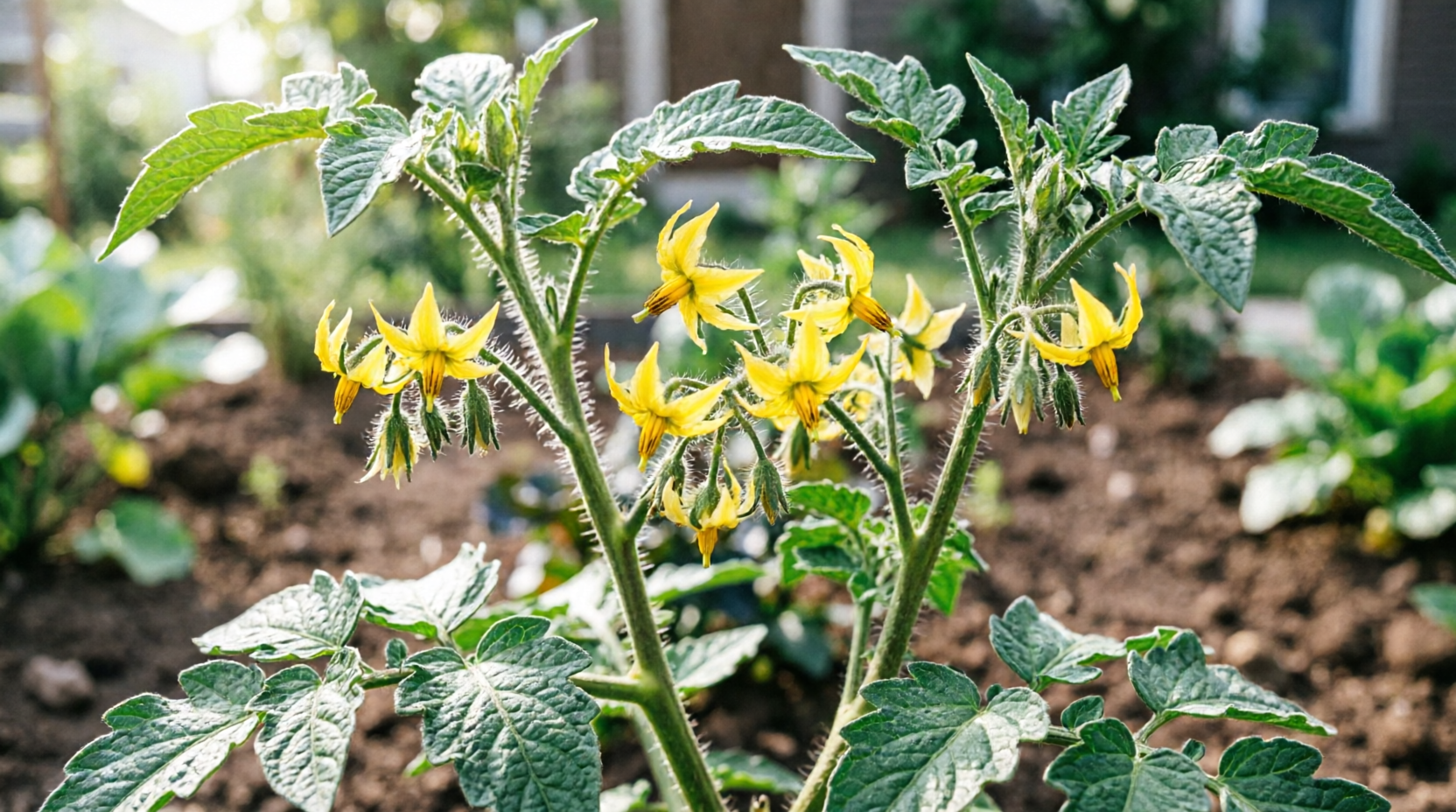
Feeding tomatoes with nitrogen during flowering is a big mistake, warns the author of the Zen channel “Garden Cribs.” Potassium, phosphorus and boron are ideal for feeding. Otherwise, the plants will turn into dense green thickets with sparse fruits.
The first feeding is potassium monophosphate at the root
As soon as flowers appear on 2-3 clusters on the bushes, feed the tomatoes with the following composition:
- 15 g of potassium monophosphate per 10 liters of warm water;
- 0.5 liters of solution under a bush on damp soil.
Thanks to potassium, nutrients will be quickly delivered to the ovaries, and the fruits will grow sweet and sugary. Phosphorus, in turn, strengthens and heals the roots.
Second feeding – boric acid on the leaves in the evening
After 5 days, feed the tomatoes with boric acid. Without boron, pollen will not germinate, and flowers will quickly fall off. If the leaves at the top of the bush curl in the evening and straighten out in the morning, you need to act without delay.
The feeding is like this:
- 1 g of boric acid powder in 1 liter of hot water (70-80 °C);
- 1 liter of concentrated solution – in 9 liters of warm, settled water;
- Spraying tomatoes leaf by leaf in the evening – 0.5 liters per bush.
The third feeding is green fertilizer at the root
4 days after fertilizing with boron, it is the turn of green fertilizer. Use comfrey, which contains potassium and phosphorus. You should not use nettle because it contains a lot of nitrogen.
Feeding order:
- Fill 1/3 of the barrel with comfrey and fill completely with water;
- Leave to brew for a week;
- Dilute the infusion in a ratio of 1:10;
- Water the soil with water, then 0.5 infusion under the bush.
Important: keep the barrel tightly closed and away from the house, as the fermenting infusion has a specific smell. Do not store the solution – use it all at once.