The fabulous legacy of the Jews in Romanian cuisine. Three incredible recipes learned from the Ashkenazis that will make you lick your fingers

The legacy of the Ashkenazi Jews also remained in European cuisine. They were an eastern branch and lived in countries like Ukraine, Russia, Romania, Poland and Germany. Their culinary tradition is exceptional with delicacies that combine oriental characteristics with local adaptations.
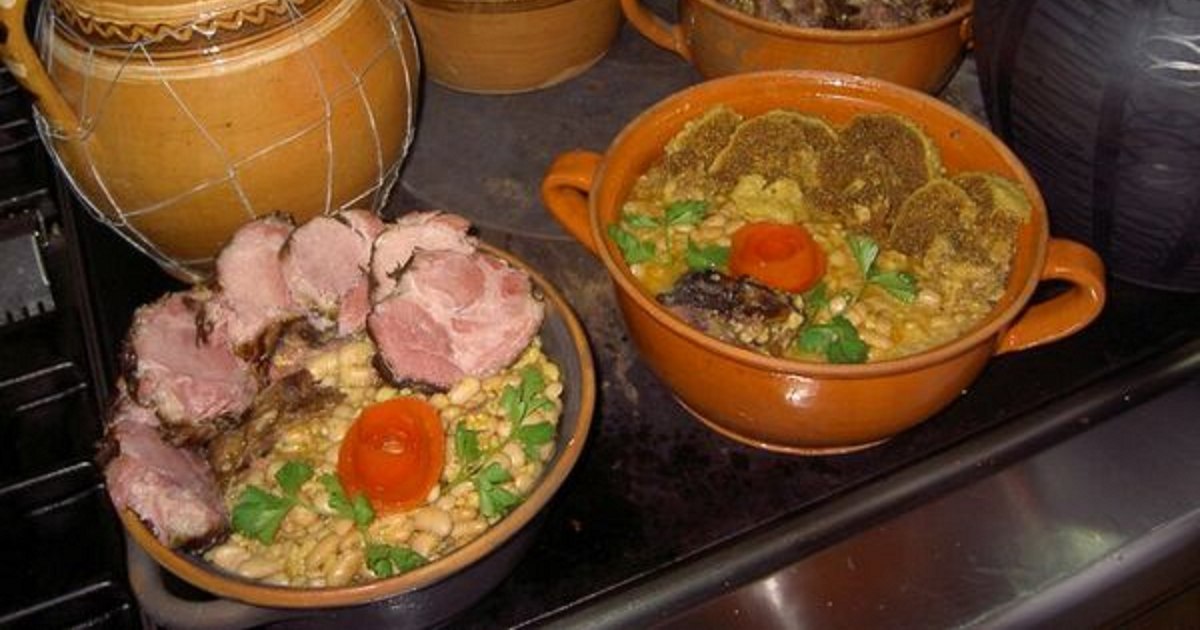
Ciolent Ashkenazi on the territory of Transylvania PHOTO magazinsalajean.ro
Jewish communities have lived in Europe for over 1,700 years, with the first documented evidence of their organized presence dating back to the 4th century CE, in the Roman Empire. The Jews arrived on the territory of Europe both after the destruction of the Second Temple in Jerusalem, in the context of the Jewish-Roman wars of the 1st century AD, and as a result of the integration of Judea as a Roman province, which led to the establishment of a significant diaspora in the Mediterranean basin. Jews spread as merchants and craftsmen, often seeking new economic opportunities or being deported by Roman authorities. For nearly two millennia, they have been an important part of European history, both in the West and, especially, in Central and Eastern Europe. They left their cultural mark not only in the field of finance and banking, in the architecture of certain areas, in crafts and trade, in science and art, but also in the culinary field. There are some dishes of the Ashkenazi Jewish communities (or Ashkenazi Jews), the most numerous in medieval Europe, but also from the 19th century, which have survived to this day in the gastronomy of various European peoples. They are some absolutely delicious dishes, most of them easy to cook and with affordable ingredients, that must be tried at least once in your life.
A fabulous European-Levantine synthesis
An important branch was the Ashkenazis, a Jewish population originally from Central Europe, established, especially in the Middle Ages, in the north of France and in the area of the Rhine. Unlike Sephardic Jews in Spain, Ashkenazis migrated en masse to Poland, Ukraine, and Russia, adopting the Yiddish language and developing specific religious traditions; they represent the majority of modern Jews. Although originally settled in the Rhine Valley, they migrated in the 15th and 16th centuries to the east due to persecution. Pogroms were organized, including by the great seniors and monarchs who wanted to get rid of their accumulated debts to Jewish creditors. The latter had become the scapegoats for any untoward event in the western kingdoms. At the same time, robbery was a frequent reason for mobs to attack Jewish communities, the situation becoming even more complicated under the religious pressure of the Inquisition.
So, as early as the 16th century, there were already developed communities of Ashkenazi Jews in Poland, Ukraine, Russia, Lithuania and Moldova. Starting from the 17th century, the Ashkenazi Jews were also marginalized in the area of Ukraine and Russia, some migrating massively to the Romanian Principalities, where they found a relative degree of tolerance. Besides, there were enough rulers who wanted, through Jewish merchants and craftsmen, to develop urban life in Moldavia and Wallachia. An important part also settled in Transylvania, but on the Central European chain. The Ashkenazis developed the Yiddish language, a fusion of Hebrew, German and Slavic languages, also having a specific prayer rite (nusach ashkenaz). In addition to traditions and culture, the Ashkenazis also brought their gastronomy to the host countries.
It was formed over the centuries and reflects a fusion between Jewish religious traditions and the historical conditions of Jewish life, often marked by poverty, migration and adaptation to cold climates. For this reason, Ashkenazi food is essentially simple, nutritious and designed to make the most of accessible and easy-to-preserve ingredients. At the same time, a defining element of this cuisine is the strict observance of kosher rules, which require, among other things, the separation of meat from dairy and the prohibition of certain foods.
These rules have profoundly influenced recipes and cooking techniques. For example, chicken fat, known as schmaltz, is often used in place of butter, and the dishes are designed so that they can be eaten according to the religious calendar. Ashkenazi dishes were so delicious that they remained in the local gastronomy. This is why even today, in Europe, including Romania, Ashkenazi dishes are prepared by the non-Jewish populations. This was also due to the closeness of the communities, with Jewish and local neighbors sometimes eating together.
Solent or ciolent a la Hida
One of the most iconic Ashkenazi dishes is undoubtedly cholent. Basically, it's a hearty stew of meat, beans, and grains, simmered overnight to be ready for consumption on Shabbat, when cooking is forbidden. Jewish cholent entered Romanian gastronomy quite lightly, precisely because it is absolutely delicious. The recipe was adopted in Transylvania, especially in the area of Hida, Sălaj county, and Huedin, Cluj county, but also in other parts with strong Ashkenazi Jewish communities. The name of the dish varies depending on the area, being reinterpreted by local communities. Originally it is called “cholent”, but in the Romanian villages it became ciolent, solent or ciulent.
variant of ciolent
In any case, the original Jewish recipe is made with beans, boiled eggs, oats or chives, homemade pasta, onions, garlic and meat. Ashkenazi Jews used veal, goose or duck (smoked or fresh), turkey or a fat hen. Never pork, because it wasn't kosher. Once in Romanian hands, the recipe underwent a change: pork became preferred, especially in Transylvania. Thus, Romanian ciolent, of Ashkenazi inspiration, is a delicious dish made of beans with pork.
To prepare a tasty ciolent, we need veal, goose or turkey, white or variegated beans (necessarily with the large and fleshy grain), onion, carrot, parsnip, eggs, oats, homemade pasta (rice), garlic and corn. Don't forget the spices: salt, pepper, bay leaves and paprika.
First boil the beans in two to three water, then drain. We use a clay pot with a lid or a cast iron one. On the bottom of the dish put the onion, beef or goose (if you want the authentic Jewish version), boiled beans, oats, carrots and garlic. Add salt, pepper and paprika, then pour in hot water until all ingredients are covered. Ideally, we would use a bone broth (beef, pork or chicken, depending on the meat chosen).
The priest who converted Steinhardt to Christianity, put in prison before the Revolution because he angered Ceausescu, making him “sinful”
The raw eggs, left in the shell, are placed on top and pushed a little into the composition. In the traditional version, the pot is put in the oven, on very low heat, for 8 or 12 hours. The food had to be cooked overnight to be ready for the Sabbath. Ciolent is ready when the meat easily falls off the bone and the beans have become creamy.
Tzimmes with latkes, an incredible side dish
Another emblematic dish of the Ashkenazi Jews is tzimmes, a sweet and sour stew made of carrots and dried fruits, which influenced the sweet sauce dishes of Romanian cuisine. This dish, usually served on Rosh Hashanah (Jewish New Year — a major holiday marking the beginning of the calendar year on the first day of the month of Tishreh in September-October), is made of carrots, dried fruits (plums, apricots) and honey, often including sweet potatoes. Cook on low heat or in the oven until the carrots become tender and a syrupy sauce forms.
Here's what you need:
- 900 g carrots (cleaned and cut into rounds of about 1 cm);
- 1 tablespoon of lemon juice;
- 1 spoon of sugar or 2 spoons of honey;
- 1 teaspoon of salt;
- a quarter of a teaspoon of ground black pepper;
- 1 teaspoon of cinnamon;
- half a cup of raisins;
- 3 tablespoons of unsalted butter.
Tzimmes PHOTO deliciousmagazine.co.uk
The process is simple. Place the carrots, lemon juice, sugar (or honey), salt, pepper and cinnamon in a large saucepan over medium heat. Mix well and add enough water to cover the carrots by three quarters. Bring the mixture to a boil and simmer for 5 minutes. Place a lid on the saucepan and reduce the heat to medium-low, stirring occasionally, until the carrots are tender.
Then, remove the lid, add the raisins and increase the heat, stirring often. Boil the composition until a glaze forms and the carrots take on a golden hue. Reduce the heat to a minimum, add the butter and mix well until it melts and the composition becomes homogeneous.
The result is a story delicacy. This sweet and sour stew is usually served with latkes—traditional Jewish meatballs or pancakes made from grated potatoes, egg, and flour, fried in oil. These are similar to stews and can be prepared simply, with onions or in a sweet version (with apples). They are usually served with sour cream or applesauce and are a staple of Hanukkah.
Jewish dumpling soup
Another representative delicacy of Ashkenazi Jewish cuisine is chicken soup with dumplings, known as matzo ball soup or kneidlach. It is a dish traditionally served on the occasion of the Jewish Passover (Pesah).
To prepare the soup (about 5 servings), you need:
- 3 carrots;
- 3 stalks of celery (celery);
- 2 chicken breasts (boneless and skinless);
- 6 cups of chicken soup (ideally it should be natural, but you can also use concentrated);
- 2 cups of water;
- 1 onion;
- 2 cloves of garlic;
- oil, fresh dill and ground pepper.
For the dumplings matzoyou need:
- 3 large eggs;
- 3 tablespoons of vegetable oil;
- half a cup of matzo flour;
- 3 tablespoons of water;
- 1 teaspoon of salt, half a teaspoon of baking powder and ground pepper.
Matzo dumpling soup PHOTO budgetbytes.com
Jewish recipes, with the taste of tears and freedom. How to make the famous Hanukkah Jelly Donuts VIDEO
Once the chicken is cooked through, carefully remove the breast and shred it with a fork, then return the meat to the soup and season with salt. After the dumpling mixture has hardened, start forming balls of the right size (about the size of a walnut). Place them in the simmering soup. After you have added all the dumplings, leave the pot on the heat for another 20 minutes, on low heat, with the lid on.
In addition to the recipes described above, Ashkenazi cuisine includes many other delicacies. These include gefilte fish (a minced fish dish, usually served cold on festive days), challah braided bread, but also famous desserts such as rugelach (soft dough rolled around various fillings such as walnut, cinnamon, jam or chocolate) or babka (a rich cake similar to a braided sweet bread, often filled with cocoa or cinnamon).
In Romanian cuisine, the Ashkenazi influence is visible in dishes such as pastrami (originally made from goose meat, and later from mutton or beef), chicken or goose livers (chopped and rubbed with onions), marinated fish, kontlunas and strudels. Although the latter are of Austrian origin, they entered the Romanian territories — initially in Transylvania — through the Jewish route.