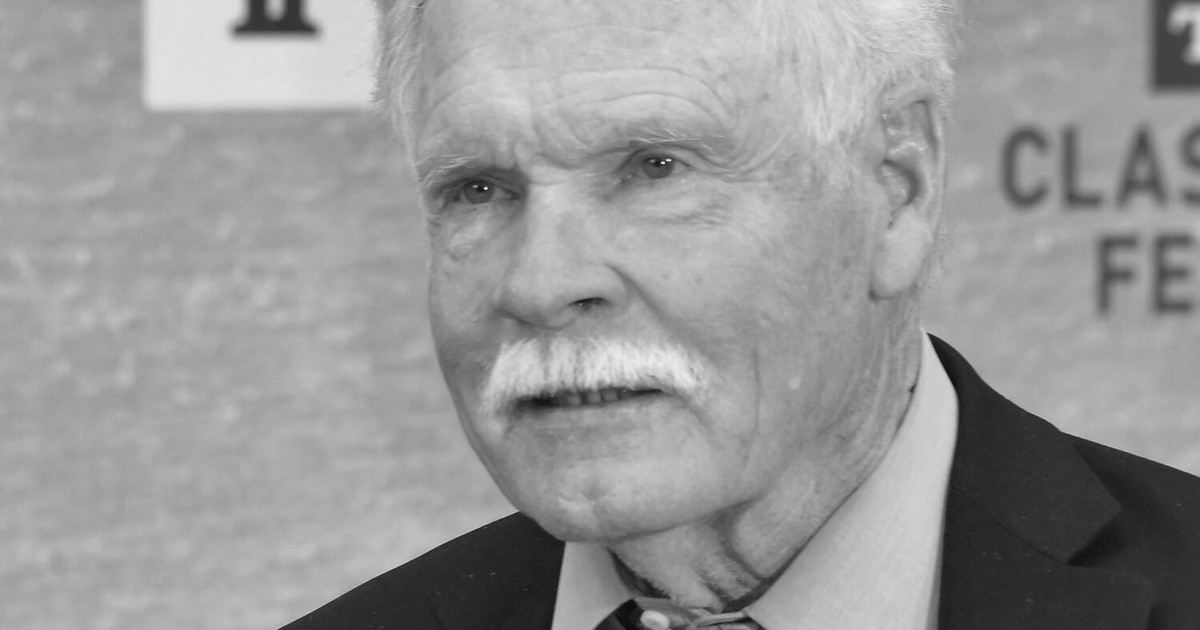
Ted Turner, an entrepreneur from Atlanta, built a media empire. He created, among others: CNN, the first 24/7 news channel. At first, many people thought his idea was crazy. But he saw a huge opportunity in the market. “I worked until 7 p.m., so I completely missed the TV news. And I thought there were plenty of people like me,” Turner said.
Turner was also a famous sailor, philanthropist, activist for the global elimination of nuclear weapons, and conservationist.
He played an important role in reintroducing bison to the American West. He created the cartoon “Captain Planet” to teach children about the environment.
Turner began his media career at the age of 24, taking over his father's billboard company, Turner Outdoor Advertising.
He bought radio stations, then moved into television in 1970, taking over a struggling Atlanta station known as Channel 17. He tried to boost ratings by airing old sitcoms and classic movies, and at one point even hosted “Academy Award Theater” himself.
At that time, Turner wasn't yet interested in the news. Instead, he decided to invest in sports by purchasing the rights to broadcast Atlanta Braves baseball games.
As the channel began to turn a profit, Turner began to think about television on a larger scale. In 1976, he beamed Channel 17's signal to satellite, and the channel became the first cable television superstation, reaching subscribers across the country.
Turner bought the Braves basketball team and then the Atlanta Hawks.
When building Superstation WTBS, he set himself even more ambitious goals – a news channel broadcasting 24 hours a day. Many people thought Turner's idea was crazy. But he saw a huge opportunity in the market.
“I worked until 7 p.m., and when I came home, the news was over,” he once said, referring to the 6:30 p.m. evening news on major television networks. “So I completely missed the TV news. And I thought there were plenty of people like me.”
Turner was sharply critical of broadcast television and the mainstream media. “He believed that one of the reasons for so many of America's problems was that his fellow Americans were so poorly informed,” wrote former CNN journalist Lisa Napoli in her book “Up All Night,” about the founding of CNN. Turner concluded that “there is no better place to promote diversity of opinion than the almighty television. With a news channel, he could potentially help save the world.”
Turner wanted to radically expand the horizon of television news, imagining programs on business, health, sports, and other topics.
On June 1, 1980, CNN – the first 24-hour news channel – was launched and has been on the air ever since.
Turner expanded rapidly, adding a second 24-hour news station, CNN2 (later renamed Headline News and then HLN) in 1982, and CNN International in 1985, broadcasting worldwide. It later added non-news cable channels such as Turner Network Television (TNT), Turner Classic Movies (TCM), and Cartoon Network.
When the Gulf War broke out in 1990, the importance of a 24-hour news channel became obvious. This was the first live coverage of the war – and only on CNN.
In 1996, Turner sold its networks to Time Warner for nearly $7.5 billion. He remained vice president of Time Warner, leading the company's cable television networks.
Time Warner's merger with AOL in 2000 turned out to be one of the biggest failures in the history of corporate mergers – the new company suffered a record loss of $99 billion, and Turner lost a large part of his fortune.
In 1991, Time magazine named Turner Person of the Year.
Source: CNN