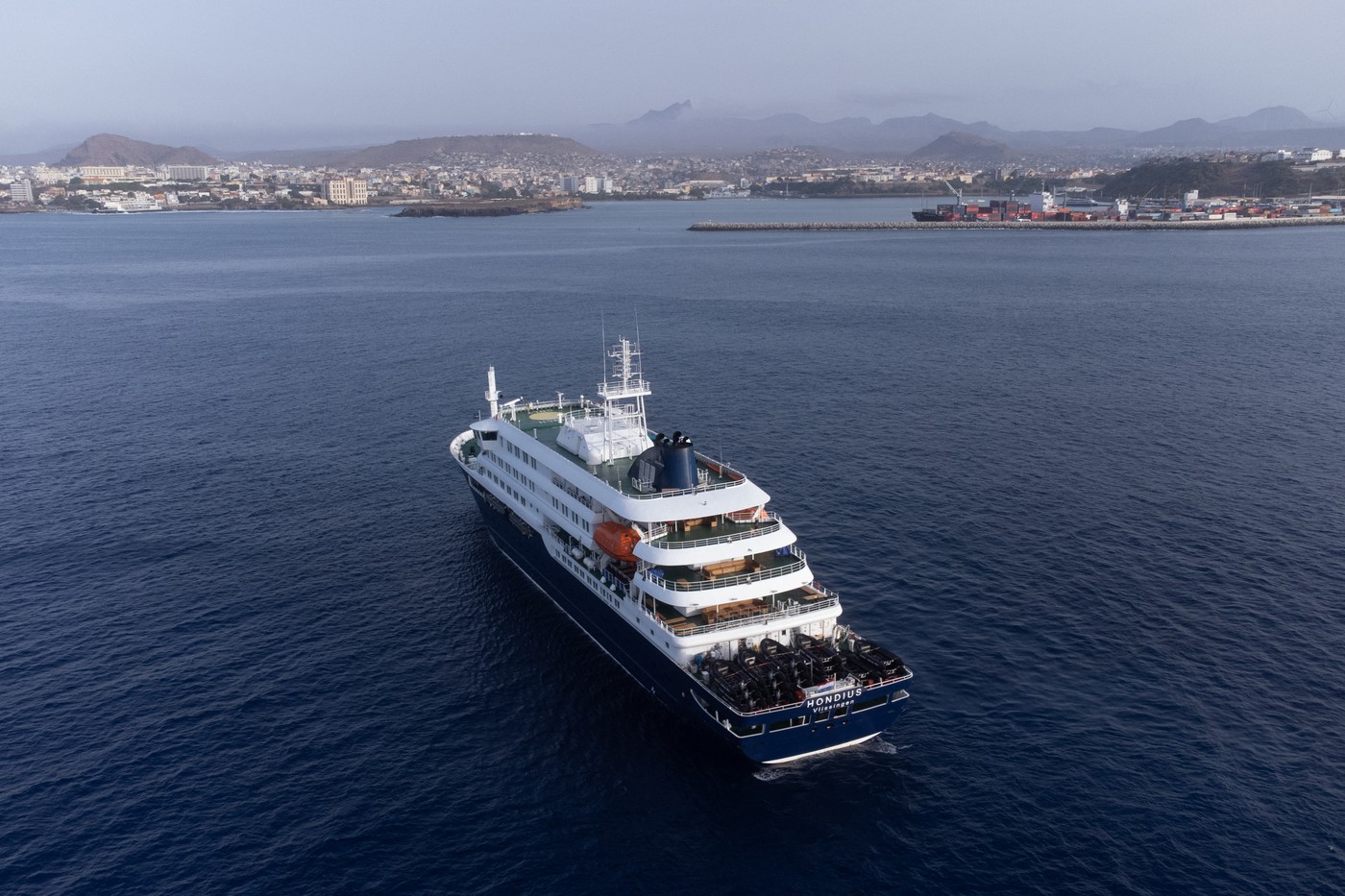
Two tourists on board the MV Hondius cruise ship were infected with a strain of hantavirus that can be transmitted, in rare cases, between people, according to tests done in South Africa, according to Reuters.
The Swiss government said a man who returned to the country after being a passenger on the MV Hondius was infected with the hantavirus and was being treated in Zurich. The government said there was no danger to the general population.
A Dutch couple and a German national who were on the ship have died, while a British national is in intensive care in South Africa. The Netherlands is preparing to evacuate three patients on board.
Since the beginning of the epidemic, the World Health Organization has emphasized that the risk to the general public is low.
Human-to-human transmission is rare
Humans usually become infected with hantavirus through contact with infected rodents or the urine, feces, or saliva of animals. Human-to-human transmission is rare.
However, there has been limited spread among close contacts in previous outbreaks with the Andes strain, which has spread to South America, including Argentina, where the cruise began in March.
Tests by South Africa's National Institute for Communicable Diseases revealed that the Andes strain was the cause of the infection in the 69-year-old Dutch tourist who died in Johannesburg, as well as the British man who is still hospitalized there.
“This is the only known strain that causes human-to-human transmission, but such transmission is very rare and, as previously noted, only occurs through very close contact,” according to a document from South African authorities seen by Reuters.
The World Health Organization's representative in South Africa said the risk of human-to-human transmission was low, despite the confirmation of the Andes strain.
“No, it doesn't change the risk assessment because … it's mainly transmitted when someone comes into contact with an infected rodent and even … human-to-human transmission (only) within very, very close contacts,” Shenaaz El-Halabi told Reuters.
Dozens of people monitored
62 people who came into contact with people carrying the hantavirus have been identified, including flight crew members and medical staff, South Africa's Ministry of Health announced.
They will be monitored until the incubation period is over, and so far none have been diagnosed with hantavirus.
Cape Verde was supposed to be the ship's final destination, but the country off West Africa did not allow the ship to disembark passengers due to the outbreak.
On Tuesday evening, Spain's Ministry of Health said it had been asked by the World Health Organization and the European Union to take over the MV Hondius.
Question marks regarding the berthing of the ship
The MV Hondius ship where the hantavirus outbreak broke out, stranded for several days off the coast of Cape Verde, with almost 150 people on board, was going to Spain, after the Government in Madrid gave the green light to the boat to dock in the Canary Islands.
Spanish public television station TVE reported on Wednesday that the ship will dock on the island of Tenerife, citing sources from the Ministry of Health.
But the leader of the Spanish archipelago, Fernando Clavijo, said he opposed the move and called for an urgent meeting with Prime Minister Pedro Sanchez.
The decision ultimately belongs to the central government, which has priority over the regional authorities.
Cruise ship evacuations
Meanwhile, the Dutch Foreign Ministry said it is coordinating the evacuation of three patients, one of whom is a Dutch national, to the Netherlands, where they will receive medical care.
“All efforts are aimed at achieving this as soon as possible,” the ministry said.
“Exact details regarding the timing and logistics of this operation can only be communicated once they have been finalized,” he added.
The ship's operator, Oceanwide Expeditions, announced the transfer of three passengers from the luxury cruise ship is scheduled for Wednesday morning Cape Verde local time.
Two of these passengers have acute symptoms and will be transferred to medical centers. Oceanwide Expeditions did not specify the nationalities of the sick.
What is hantavirus?
According to the medical journal The Lancet, the name comes from the Hantan River area in South Korea, where the virus was identified in the 1970s.
Hantavirus is a family of viruses that cause two conditions: one that mainly affects the lungs and the other that attacks the kidneys. The former gets the most attention because it has a high mortality rate of about 40%.
Hantavirus pulmonary syndrome, the respiratory condition, is most common in North and South America.
According to the Canadian government, there are approximately 200 cases of hantavirus lung disease worldwide each year.
Symptoms and treatment
According to the US Centers for Disease Control and Prevention, hantavirus usually presents with flu-like symptoms, such as fatigue and fever, one to eight weeks after exposure.
After four to ten days, cough, difficulty breathing, and fluid build-up in the lungs appear.
The CDC states that diagnosis in the first 72 hours after infection is difficult, so symptoms can easily be confused with those of the flu.
There is no specific treatment for hantavirus infection, so treatment focuses on supportive care to treat symptoms, including rest and fluids. Patients may need breathing assistance such as a ventilator.
Experts say exposure to hantavirus can be minimized by removing rodents from areas where people are. It is also recommended to avoid vacuuming or sweeping up dried droppings, which can spread the virus.