May 4: The day George Enescu died, one of the greatest Romanian musicians, noted since childhood for his exceptional talent

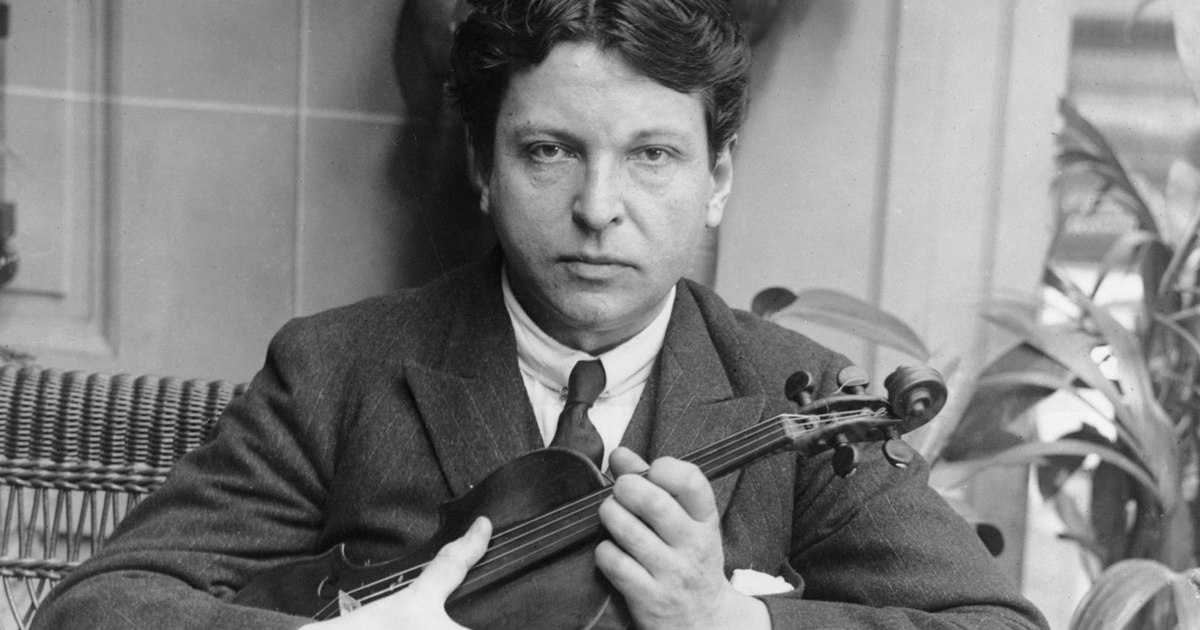
Also on May 4, Theodor Rosetti, the selector Anghel Iordănescu and the actress Audrey Hepburn were born. George Enescu died on the night of May 3 to 4, 1955 and was buried in the famous Père-Lachaise Cemetery.
George Enescu died on the night of May 3 to 4, 1955. PHOTO: archive
1837: Romanian publicist and politician Theodor Rosetti, former prime minister of Romania, was born
Theodor Rosetti (b. 5 May 1837, Iași or Solești – d. 17 July 1923, Bucharest) was a Romanian publicist, jurist and politician, Prime Minister of Romania in the period 1888–1889 and honorary member of the Romanian Academy. Throughout his career, he held the positions of Minister of Finance in 1912 and President of the Romanian Senate in 1913, in the government led by Titu Maiorescu.
One of the outstanding personalities of Romanian political and cultural life in the 19th century, Theodor Rosetti stood out both for his political activity and for his contributions in the legal, journalistic and financial fields. He was one of the founders of the literary society Junimea, having an important role in its consolidation, but also in the modernization of the Romanian banking system.
He studied abroad. After returning to the country, he held many important positions: judge at the Court of Iași, later at the Court of Appeal, and in 1864 he was appointed prefect of Vaslui county. He was also a professor of political economy at the Faculty of Law in Iasi and worked in diplomacy, being a commissioner of the Romanian government in Berlin and a diplomatic agent in Germany. In 1875 he was appointed Minister of Public Works, and later became president of the Court of Cassation.
In 1863, together with intellectuals such as Iacob Negruzzi, PP Carp, Vasile Pogor and Titu Maiorescu, Theodor Rosetti founded the Junimea society, one of the most influential cultural groups in the history of Romania. He is also credited with choosing the name.
1929: Audrey Hepburn, Anglo-Dutch actress, was born
Audrey Hepburn (born May 4, 1929, in Ixelles – died January 20, 1993, in Tolochenaz) was a film actress of Anglo-Dutch origin, awarded the Oscar for Best Actress for her role in the famous film Roman Holiday.
Considered to this day a symbol of feminine sophistication and elegance, Audrey Hepburn is often included in the lists of the most beautiful women of all time, her image being frequently used in advertising campaigns and fashion editorials.

Audrey Hepburn. PHOTO: Profimedia
His influence on fashion remains strong today, with many of his looks becoming classic landmarks in the fashion world. One of the most iconic pieces worn by the actress, the famous black Givenchy dress in the film Breakfast at Tiffany's, was sold at auction in 2006 for over £462,000.
At the time, it was the second highest price paid for a dress worn in a movie, surpassed only by the famous outfit worn by Marilyn Monroe in The Seven Year Itch, which later sold for $4.6 million.
1932: Al Capone is transferred to the federal prison in Atlanta, Georgia to serve his 11-year sentence for tax evasion
On May 4, 1932, Al Capone was escorted under heavy security in a special car of the Dixie Flyer train bound for the Atlanta Penitentiary. His transfer to one of the toughest federal prisons in the United States attracted huge media attention, turning the moment into a true national event.
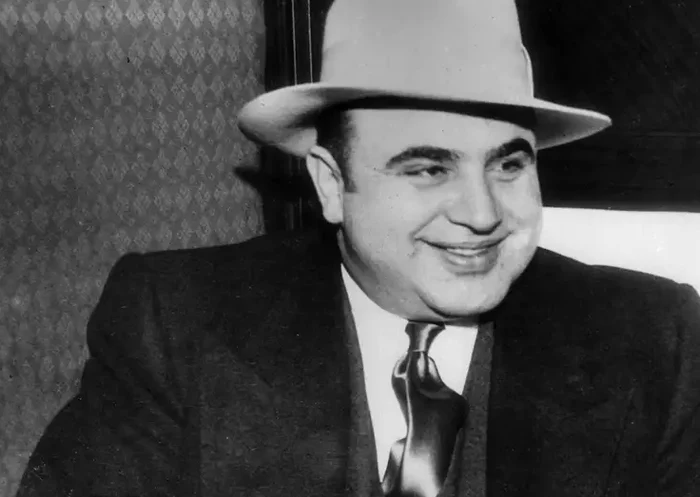
Al Capone. PHOTO: archive
In the morning edition of May 4, The Atlanta Constitution wrote that, once in the penitentiary, Capone would be “the only character of great notoriety” among the inmates, the others being considered petty criminals. Journalists pointed out that the famous gangster would face the oppressive routine of the Atlanta prison, having to follow orders, not give them, as he had been used to in his heyday.
However, the reality behind bars proved different. Before long, Capone was using his influence and financial resources to obtain preferential treatment. He allegedly smuggled money into the penitentiary and enjoyed unusual privileges for an inmate, such as a carpet to decorate his cell, cigars and access to a typewriter.
Moreover, while working in the penitentiary workshop, the gangster is said to have even had disciplinary problems after installing springs in the cell bed for added comfort. After all, the “grim routine” announced by the press was not so severe for him. Capone spent only two years in the penitentiary in Atlanta, being transferred in August 1934 to the famous Alcatraz prison.
April 23: The collectivization process of agriculture in Romania was declared officially completed in 1962
1950: Anghel Iordănescu, former selector of the Romanian national football team, was born
Anghel Iordănescu is considered one of the most valuable players in the history of the Steaua Bucharest club. Evolving as an attacking midfielder, he stood out for his excellent technique, great dribbling ability and many goals scored. He was also valued for his game vision and ability to anticipate opponents' moves.

Anghel Iordanescu. PHOTO: archive
His entire career in Romanian football was linked exclusively to Steaua Bucharest, a club he joined as a child, in 1962, when he was only 12 years old. After six years of training in the junior centre, he made his first team debut in 1968 in Division A.
During his activity in the first league, Iordănescu made 317 appearances and scored 156 goals, a performance that established him as one of the most important scorers in the history of the Bucharest formation.
1955: George Enescu, Romanian composer, violinist, pianist and conductor, died
George Enescu was one of the greatest Romanian musicians, noted since childhood for his exceptional talent. He started playing the violin at only 4 years old, and his first attempts at composition date back to when he was 5-6 years old. He began his musical training under the guidance of professor Eduard Caudella, and at only 8 years old he was already making his debut as a violinist, the Viennese press dubbing him the “Romanian Mozart”.
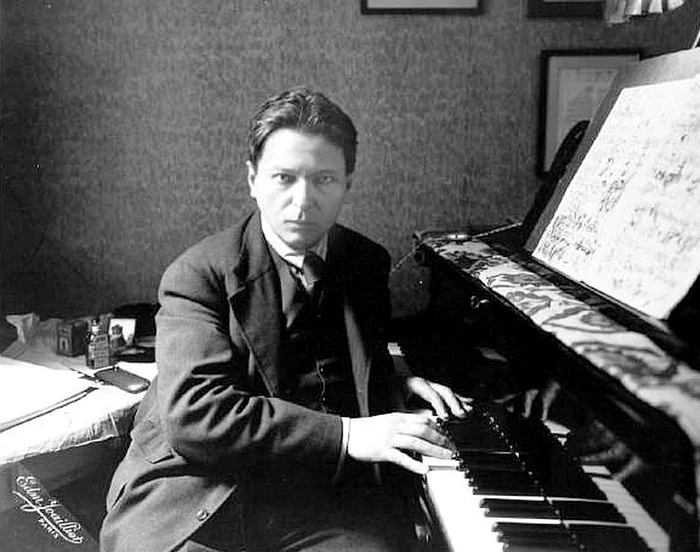
George Enescu. PHOTO: Wikimedia
Between 1888 and 1894 he studied at the Vienna Conservatory, and later continued his training at the Paris Conservatory, where he had teachers from some of the greatest musicians of the time. In the early years of the 20th century, he composed works that became emblematic, including the Romanian Rhapsody and his first symphony.
His artistic activity took place between Bucharest and Paris, supporting international tours and intensively promoting Romanian music. In 1913 he founded a national composition competition designed to support young talent, and in 1936 his monumental work Oedipus premiered in Paris, enjoying remarkable success.
After the establishment of the communist regime in Romania, Enescu permanently settled in Paris. He died on the night of May 3-4, 1955 and was buried in the famous Cimetière du Père-Lachaise, leaving behind an essential legacy for universal music.
1959: The first Grammy Awards ceremony takes place
The first Grammy Awards gala took place on May 4, 1959, being hosted by the Beverly Hilton Hotels in Los Angeles and New York, on the same day, according to www.grammy.com. The event marked the beginning of one of the most prestigious competitions in the international music industry.
The ceremony was presented by Mort Sahl, considered one of the pioneers of modern stand-up comedy. Among the big winners of the night were Count Basie, Domenico Modugno and Henry Mancini, each awarded two trophies, while Ella Fitzgerald and Ross Bagdasarian took home three awards each.
April 26: The day the Chernobyl nuclear disaster took place
Although Frank Sinatra led the nominations, being nominated in six categories, the artist won only one award, for the best album cover, with Only the Lonely. The distinction for Album of the Year went to the material The Music from Peter Gunn, and the title of Song of the Year was awarded to the song Nel Blu Dipinto di Blu (Flying).
The origins of the Grammy Awards date back to the 1950s, when, in the context of the launch of the Hollywood Walk of Fame project, the idea of creating a distinction dedicated exclusively to outstanding performances in the American music industry arose.
2025: Presidential elections in Romania: In the first round, George Simion, the far-right leader of the Alliance for the Union of Romanians, obtained 40.96%
The presidential elections in Romania were held on May 4, 2025, with the first round being followed by the second round organized on May 18. In the electoral final, Nicușor Dan and George Simion qualified, the victory going to Nicușor Dan. He officially began his mandate as the sixth president of Romania on May 26, 2025.
The vote was called in January 2025, after the cancellation of the 2024 presidential elections, a decision motivated by suspicions of possible external interference in favor of Călin Georgescu, the winner of the first round at that time. The election campaign was marked by political tensions and protests, and on March 7, Georgescu was banned from running due to several criminal investigations. Following this decision, the leader of the AUR party, George Simion, announced his entry into the electoral race.

Nicusor Dan and George Simion. PHOTO: Profimedia
In the first round, George Simion obtained 40.96% of the votes, ranking first, while Nicușor Dan accumulated 20.99%, thus qualifying for the decisive round. Following the final showdown on May 18, 2025, Nicușor Dan won the elections with 53.6% of the votes, compared to 46.4% for his opponent.
After the announcement of the results, George Simion officially contested the vote at the Constitutional Court of Romania (CCR), citing alleged electoral fraud. However, the appeal was rejected, and the validation of Nicușor Dan's mandate confirmed the election result.