Analyst Hari Bucur-Marcu's harsh verdict: “There is no diplomatic solution for Iran.” What follows after the expiration of the ultimatum from the White House

Security analyst Hari Bucur-Marcu claims that the current conflict with Iran does not, in reality, have a diplomatic solution. In the final stages of the confrontation, the stake is simple: accept the American terms or resume strikes on a much larger scale.
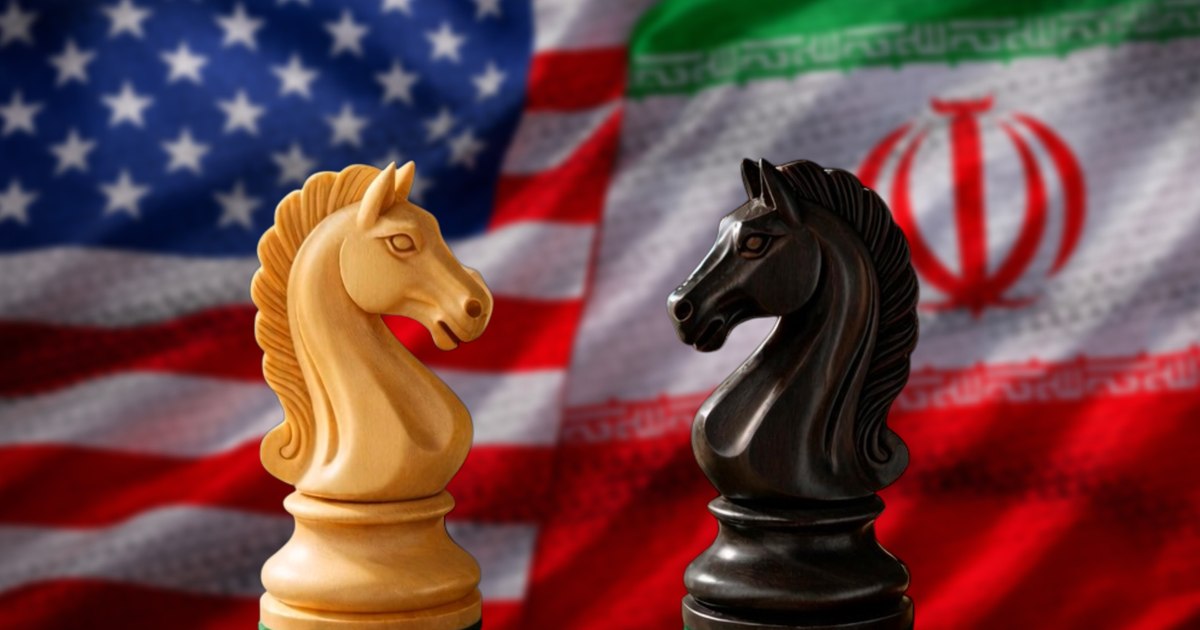
Negotiations between the US and Iran have reached an impasse. PHOTO: Shutterstock
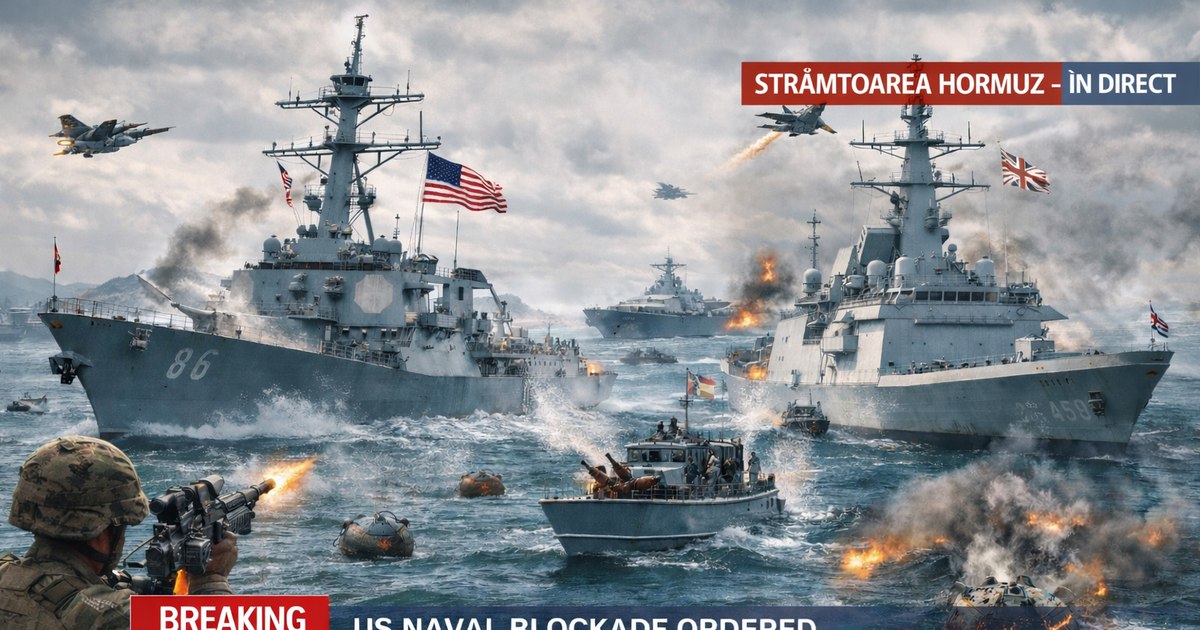
The situation in Iran remains tense, although the US officially claims that hostilities have ended after the April ceasefire. The conflict began on February 28, 2026 with US-Israeli strikes, and today a fragile balance persists: there are no more direct attacks, but the US naval blockade and regional tensions continue.
A key moment is the expiration of the 60-day deadline set by the War Powers Act, which requires the US president to seek congressional approval to continue the war. That deadline was reached on May 1, 2026, but the Trump administration has refused to seek authorization, arguing that the armistice “stops” or “resets” that deadline.
The decision is hotly contested: Democrats and legal experts believe that the law does not allow for such an interpretation and that the US is de facto continuing military operations through blockade and deployment of troops. Furthermore, Congress remains divided, and attempts to limit or stop the conflict have been politically blocked.
In parallel, there are peace negotiations, but without concrete results, and the risk of the conflict resuming remains high.
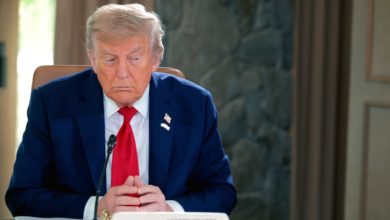
Donald Trump said on Saturday he would consider a new peace proposal from Tehran, but expressed skepticism about its chances, saying Iran had not yet “paid a big enough price”.
Two semi-official Iranian news agencies, Tasnim and Fars, considered close to the Revolutionary Guards, reported that Iran had sent a new 14-point proposal to the United States through Pakistan.
“I'll tell you about her later”Trump said Saturday, referring to the proposal, before boarding Air Force One, according to The Guardian. He added that “I will receive the exact wording”.
Shortly after the press statements, Trump posted on social media about the new proposal, saying that “he can't imagine that would be acceptable, given that they have yet to pay a high enough price for what they have done to humanity and the world over the last 47 years.”
Trump also rejected an earlier proposal by Iran last week. However, a truce in the war struck by the United States and Israel in late February has been in effect since April 8, after a failed first round of peace talks held in Pakistan.
Security analyst Hari Bucur-Marcu believes that the war between the United States and Iran has entered a decisive stage, where negotiations are, in fact, only a form of pressure. “The negotiations that the Americans are conducting with the Iranians are conducted like this: Iran agrees to give the Americans what the Americans could anyway get through the war, but without suffering the destruction that will be caused by the continuation of the war“, he explains, summarizing the essence of Washington's strategy.
From this perspective, the idea of a real diplomatic solution is, in his opinion, illusory. “There is no diplomatic solution to the conflict”states Bucur-Marcu emphatically, arguing that the fundamental difference between the two parties does not relate to negotiable details, but to incompatible objectives.
What do Americans want?
According to the analyst, the US objectives have been “very transparent” from the beginning and boil down to a few essential points. First and foremost is Iran's complete abandonment of its military nuclear program. “Complete future renunciation of Iran's nuclear weapons. Give full assurances that it will never go nuclear”he points out.
This involves not just limiting the program, but eliminating the technical capability to produce nuclear weapons. “In order not to go nuclear, they must not enrich uranium more than 3-5%”explains Bucur-Marcu, showing that the current threshold of 60% is already extremely dangerous.
The second objective is related to military infrastructure: “nuclear armament also includes medium- and long-range missiles”and these capabilities must be removed. For the most part, the analyst claims, this has already happened: “those factories have already been 80% destroyed.”
The third objective concerns Iran's foreign policy: “renouncing the sponsorship of international terrorism”including groups in the region such as Hezbollah or Hamas. Bucur-Marcu believes that this point has already been partially reached: “This was solved by the fact that Iran no longer has money for these groups“.
The Enriched Uranium Problem
The central point of the dispute, however, remains enriched uranium. The analyst is categorical: it will not remain under Iranian control. “There is no way that uranium is going to stay in Iran's basement“, he says.
Iran proposes new round of talks with US as Trump claims 'the war is already won'
Moreover, the Americans are willing to intervene directly to recover it: “the Americans are willing to dig in there and get it”. They will not be able to do that if there is a danger of being attacked.
Iran invokes the civilian use of that uranium, but the argument is rejected by Bucur-Marcu: “the Americans offered to give them uranium for civilian purposes”. He explains that most states with nuclear power plants do not produce the fuel themselves: “there are only a few countries in the world that produce this nuclear fuel”.
In addition, the American offer is generous: “guarantee to give them all the uranium they need for civilian purposes”. Under these conditions, the analyst insists, Iran's desire to continue enrichment can only have a military explanation.
“He insists on the model of North Korea, which claims that the existence of the state depends on the nuclear program”he states, but with an essential difference: “Iran has clearly promised that if it has a nuclear weapon it will use it, while North Korea says it will defend itself with itThis statement completely changes the logic of deterrence and makes, in his opinion, any compromise impossible.
Why a diplomatic solution is not possible
Bucur-Marcu's central argument is that Iran has, in reality, no options. “They have no options. The Iranians have no options”he says directly.
On the one hand, the regime cannot accept American demands without losing its instruments of power. On the other hand, refusal inevitably leads to escalation. “If the Iranians don't agree to what the Americans want, they will continue to be hit.”the analyst explains.
Furthermore, he emphasizes Iran's international isolation: “it has isolated itself internationally and in the region, so they have no one to talk to”. Even potential partners are limited: “the only ones who listen to them anymore are their neighbors in Pakistan.”
Another major obstacle is the lack of a credible interlocutor inside Iran. “They tried with different Iranians to discuss this matter, none of them had the courage to assume a takeover of power and a fulfillment of US demands on the model of Venezuela“, states Bucur-Marcu, suggesting that there is no faction willing to seriously negotiate with the US.
What's next
Regarding the evolution of the conflict, the analyst outlines a clear scenario: the resumption of strikes is only a matter of time. “The US will also reject these latest proposals made on Saturday and they will be asked if they are able to come up with other proposals. They will probably say no and then they will be attacked“, he explains.
Besides, preparations are already made. “There's a whole list of targets to hit next”says Bucur-Marcu, adding that in the meantime the Americans have identified new targets, including missile depots.
What do Americans think about the war that Donald Trump claims to have won in Iran?
US military capability grew significantly during the hiatus. “Now, with three aircraft carriers in the area, it could reach 15,000 departures per day. Before, there were 5-6,000 exits per day“, he states. The consequence would be devastating: “in half a day it would have pretty much hit everything the US intends to hit“.
In this scenario, the goals would be achieved quickly: “if they strike one more time and where that enriched uranium is, they have achieved their objectives.”
“US hasn't declared war since 1940s. President decides, Congress declares”
Bucur-Marcu believes that Iran is only trying to gain time, without real prospects of success. “I stretch it out in vain hope”he says, suggesting that leaders in Tehran are banking on political change in the US.
However, this strategy is, in his opinion, wrong: “they are fooling the American Democrats that they have an ability to get Trump to stop the war which is false“.
Bucur-Marcu argues that the War Powers Act refers only to the official declaration of war, which must be carried out by Congress. Starting war, he says, is the prerogative of the US president. “The US has not declared war since the 40s. Neither in Vietnam, nor in Iraq, nor in Afghanistan, nor in Venezuela has war been declared.”
Meanwhile, the costs to Iran are steadily rising: “they have no future. They are just prolonging it and the destruction will be greater” In contrast, the US benefits economically and strategically from this extension – being able to sell oil for over $100 a barrel. In addition, the coup de grace would be persuading China to replace Iranian oil with American oil.
Hari Bucur-Marcu's analysis describes a conflict in which the outcome is, for the most part, already decided, and negotiations are only an intermediate stage. The United States does not seem willing to compromise. In the absence of a capitulation on the issue of the nuclear program, the most likely scenario remains the rapid resumption of strikes and the military completion of the objectives. In this context, the idea of a diplomatic solution is practically non-existent, concludes the analyst.