ROD plot for PLN 1,000. zloty? It's possible. But the price doesn't come out of nowhere

If you're lucky, you'll find a plot of land for PLN 1,000. zloty. However, don't expect that there will be everything you need for relaxation. Bah even with much higher amounts – in the order of tens of thousands of zlotys – we are often talking about ruins without basic amenities. And yet, Poles are drawn to allotment plots.
Iwona and Magdalena tell us what their purchases of plots were like, what was included and what was missing, and how they evaluate their decisions over time.
Read also in BUSINESS INSIDER
Family Allotment Gardens are coming back into favor — and with great force. In times of rising apartment prices, limited space and living in apartment blocks, more and more people are looking even a substitute for a private garden. For some it is a way to relax, for others it is a return to the lifestyle they know from childhood. There are specific stories behind this trend. Often very different, although they have one thing in common: the need for contact with nature.
Iwona Chwieduk has been living with her family in the Bemowo district of Warsaw for many years. A block of flats, a housing estate, everyday urban life – he knows all this very well. But her point of reference is completely different.
— I grew up in a house with a large yard and a vegetable garden. It was a completely different world, he says. — My husband spent his entire life in a block of flats, so for him it was the norm. I felt it missing this piece of land.
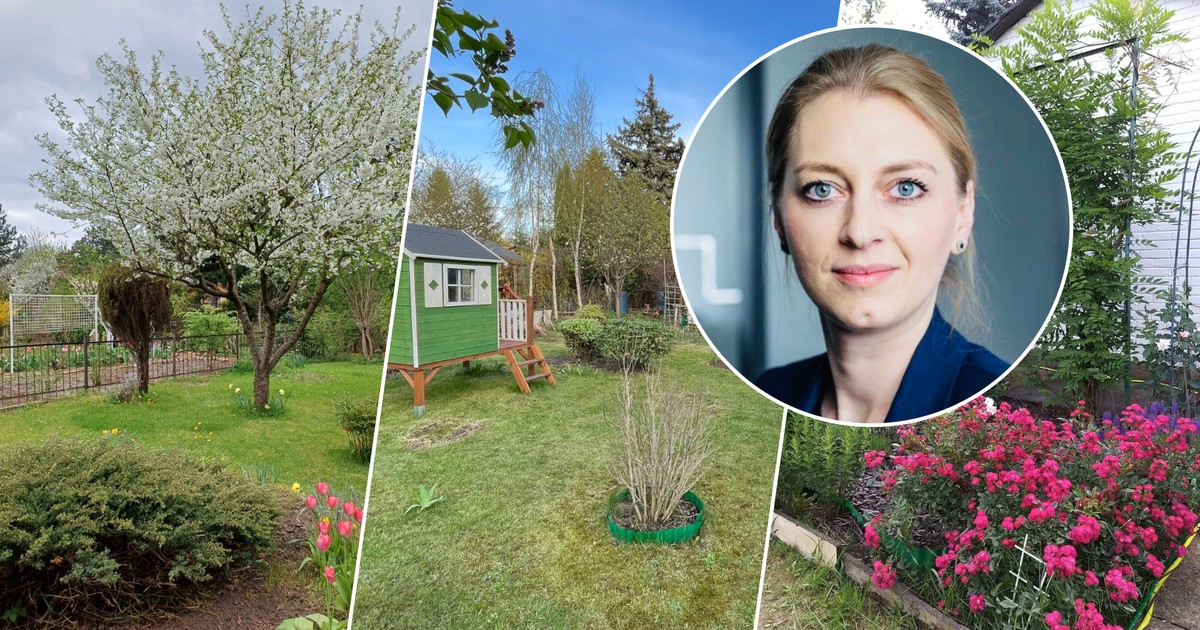
Iwona's ROD plot
|
Iwona Chwieduk
Read also: The labor market and housing prices determine where Poles live. New data
The decision to purchase the ROD plot had been brewing for a long time. — We wanted to have a place for children. So they can run on the grass and play outdoorsnot only on the playground between the blocks – he explains.
When they came across an offer in Warsaw's Targówek, they decided quickly. — We paid 45 thousand. zloty. This is not little, but looking at the market – prices vary greatly. You can find something cheaper, but there are also plots at the same price as apartments for renovation in small towns, he explains.
The first impact with reality came quickly. — This is absolutely no substitute for home. It's a completely different story, emphasizes Iwona. — Especially if the plot is in poorer condition, like ours.
He describes it without embellishment: – The cottage was actually a junkyard. There was no running water fit for drinking, there is no normal toilet — anyway, such things are illegal. The comfort of life is very limited.
And yet, something attracts them there.
— It's more of a base than a place to live. We go there to have a barbecue, dig in the dirt, and sit outdoors. This is our refuge between blocks of flats – says.
Iwona does not idealize the allotment reality. — Rest is different because there is always something to do. If not mowing, then planting, if not planting, then repairs.
But this “doing” has its value.
– This a piece of space where you can get your hands dirty and reset your head. This is not the case in the city, he argues.
They put a lot of work into bringing the plot into usable condition. — In the beginning, there wasn't even a gazebo. We've only had it recently. Now we are renovating the inside of the house, because it was no longer suitable for anything.
The changes are gradual. — We want you to be able to invite your friends and hang out normally. For now, it's a process, he says.
He also mentions about formalities – which in their case were surprisingly simple.
— They lasted one day. We transferred the right of use to the notary. The owner was well prepared and had all the documents. Thanks to this there were no difficulties – he recalls.
Did the plot make their dreams come true? Iwona answers without hesitation: – Partly yes. Especially when it comes to the garden. But it won't replace home.
And he adds sincerely: There is less privacy and freedom. The plots are next to each other, separated by a grid. This is not your own property. But… there is a piece of land. You can plant vegetables and flowers. And that makes a difference.
“It would be difficult for me without it”
Magdalena's story begins somewhere completely different – in the Podlasie countryside.
— I have lived in a house with a large yard all my life. The land was something natural, everyday – he says.
Moving to the city was a big change. — Suddenly I found myself in an apartment in a block of flats. No garden, no space. It was a shock.
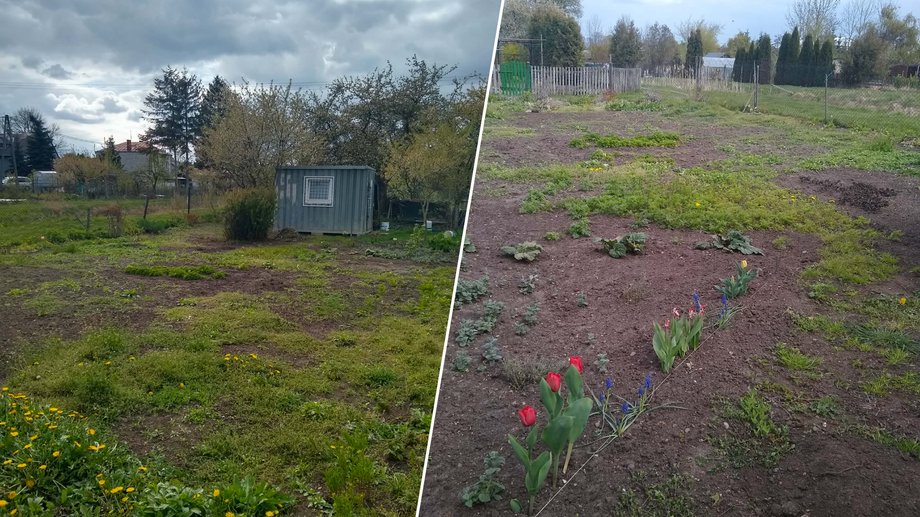
Magdalena's undeveloped plot
|
Magdalena
See also: An important change in the law for property owners. It's about entering without consent
What she lacked wasn't so much a place to rest as mere contact with the ground. — It wasn't about lying on the grass. The point was that to grow something, to plant something, to have your hands in the ground – he explains.
That's why they decided on the ROD plot – although completely different than Iwona's.
— Ours cost a symbolic PLN 1,000. zloty. But there was nothing there either. Absolutely nothing – says. — No plantings, no infrastructure.
The conditions are very harsh. — We don't have electricity there. We don't have water. And there's no way to even connect them. Some people have water tanks, we sometimes bring it from the ditch. Or we bring it.
The plot is 220 square meters and requires constant work. — We only started doing something last year. Now we are building a fence, says Magdalena.
This is not a place to relax in the classical sense. — We don't have a house there, we don't do barbecues. That's not the point.
For Magdalena, the plot has a completely different meaning. For her, it's just a piece of land where you can grow your vegetables and plants. “This is what I missed the most,” he says.
It emphasizes the difference between life in the countryside and a plot of land. — In the countryside you have a garden every day. Here you have to go and plan. It's a completely different experience.
And yet – it works. — You can break away. Go, sit, do something. It gives you peace of mind – says.
It turned out to be one of the biggest surprises for her community of allotment gardeners. — The atmosphere is very family-like. People talk, help each other, share seedlings. There is no indifference, as in the blocks of flats – he assures.
And he adds: – This is more than just a plot of land. It's a small environment where people know each other.
For Magdalena, ROD is not just a place – it a way to retain part of your identity. — After moving to the city, it would be difficult for me without it. It allows me not to lose who I was.
ROD plots – what are you actually buying?
Although colloquial language refers to “purchasing a ROD plot”, land is not actually purchased. This is one of the most important things to understand.
In practice you buy the right to lease the plot and the ownership of the plots — i.e. gazebos, plants, installations. The land itself usually belongs to the commune or the State Treasury, and the gardens are managed by the Polish Allotment Gardeners Association.
The most common procedure looks like this:
- signing an agreement for the transfer of rights and obligations,
- certification of signatures by a notary,
- submitting an application to the ROD management board for approval of the transaction.
The board has up to two months to make a decision – and this is a crucial step.
Before signing the contract, it is worth checking:
- current user's lease agreement,
- no arrears towards the garden,
- a detailed list and valuation of applications.
Costs are not only removable. They come:
- PCC tax (1% on lease rights, 2% on registrations),
- garden fees (entry fee, investment fee),
- ongoing maintenance costs.
You also have to remember on restrictions: prohibition of permanent residence, business activity and strict development rules.
You can read more about ROD plots in our analysis: ROD plots without secrets. How to buy, how much it costs and what to watch out for
For some, ROD plots are a substitute for a garden, for others – an attempt to preserve the old lifestyle. Iwona talks about “breath from the blocks”, and Magdalena – about “a piece of herself”.
In both cases, it's about more than land. It's about space, which is often lacking in the city — and which cannot be purchased in the standard sense.