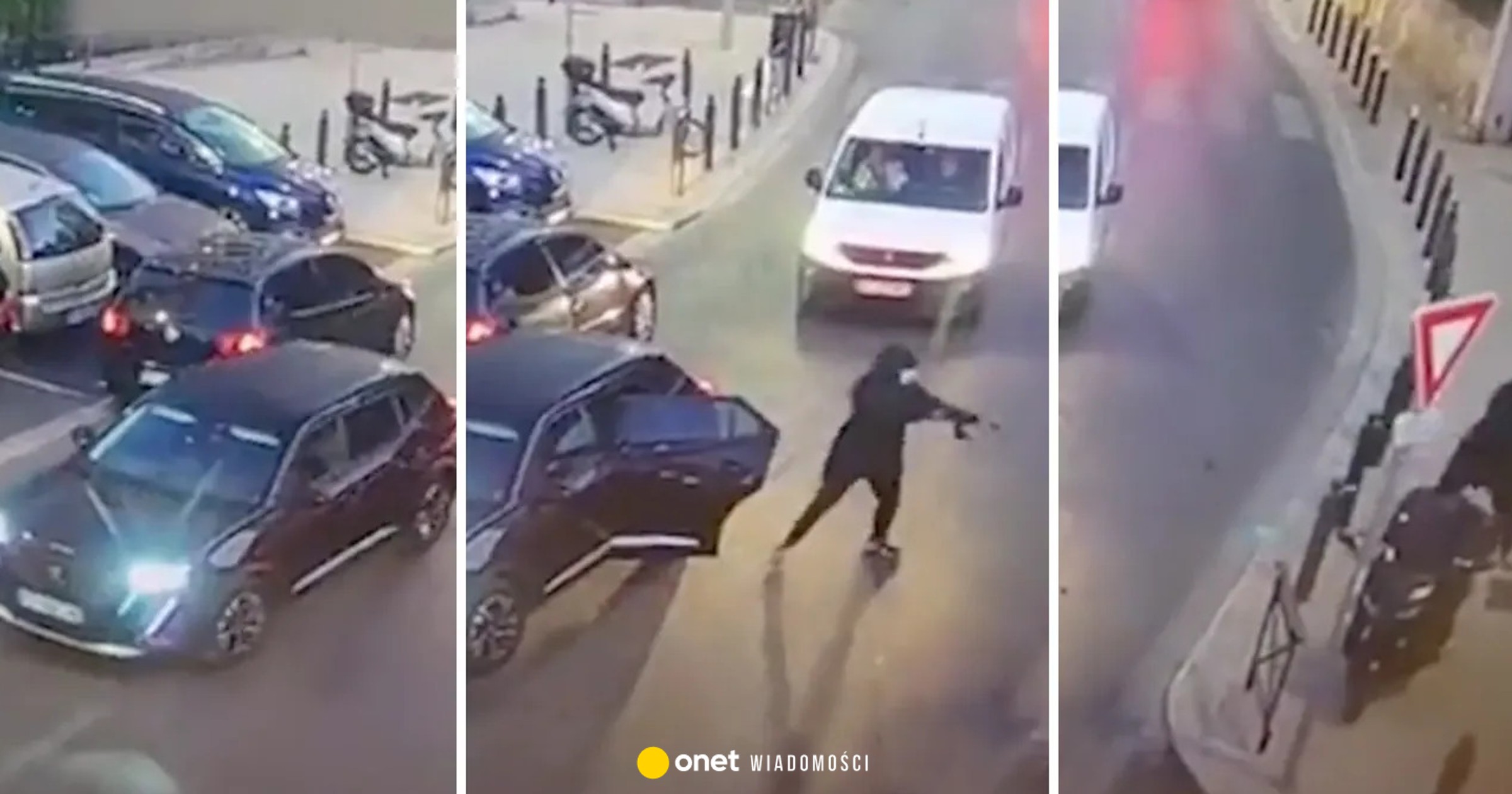
The assassination order reaches a 15-year-old on Snapchat, an application where young people usually share photos and videos. In August 2025, the Dutchman receives a message: “they are looking for reliable people to work in Germany.” But he must decide quickly – a car will arrive that same evening to take him there. Salary: EUR 3,000 (PLN 12.7 thousand).
Gangsters across Europe are increasingly recruiting children and young people to commit the most serious crimes. Europol goes on the offensive. The European police agency is significantly expanding its investigations and relying on specialized units to stop this trend. At the same time, the agency is investigating a second phenomenon similar to organized crime – sadistic networks on the Internet. Their users “hunt” children and teenagers to humiliate them and, in the worst case, lead to suicide.
Europol representatives told Welt Am Sonntag that they are currently investigating approximately 1,400 people for commission crimes. They have already arrested 280 people – including about 100 minors. All of them were charged with murder or serious acts of violence. Perpetrators often recruit their helpers on closed discussion forums and even on gaming platforms.
A 15-year-old Dutchman also accepts orders via Snapchat. The indictment will later include information that he was in a “difficult family and financial situation.” His 18-year-old friend joins him. The action begins that same evening – a 20-year-old Dutchman takes them to the Rhine-Main region (in Hesse, Germany), supplies them with the materials needed to create a bomb and helps in its construction.
Early in the morning of August 5, he drops the 15-year-old off in front of a café in Frankfurt-Bockenheim and drives away. A teenager throws an explosive through the open door of Omonia. The cafe immediately bursts into flames. The owner reacts with presence of mind – he kicks the bomb into a corner and the four guys run outside.
Police arrest the 15-year-old boy shortly afterwards near the scene. His 18-year-old accomplice is arrested the same day in Taunusstein as he prepares another explosive device. At the end of March, the Regional Court in Frankfurt sentences the 15-year-old to 4 years in prison in a juvenile correctional facility. The proceedings against the 18-year-old are still pending before the State Court in Wiesbaden.
A terrifyingly simple model
At the center of Europol's offensive is Operational Task Force GRIMM. For a year now, it has been fighting the “customized violence” business model. — Children are ideal soldiers for criminal networks, says unit chief Andy Kraag, Europol's expert on organized crime, in an interview for “Welt Am Sonntag”. — This phenomenon is now spreading like wildfire across Europe.
Eleven countries, including Germany, France, Sweden and Great Britain, participate in the work of the special unit based in The Hague.
The article continues below the video
In the case of the arson attacks in Hesse, investigators assume that the actions were caused by a dispute between two drug gangs – the bombs were probably a warning signal. Groups deliberately use teenagers for such orders: susceptible to influence, cheap and low-problematic. If caught, they won't betray – they know almost nothing about their clients. – But it is more important to focus on the people behind all this, notes Kraag. Last year, investigators managed to arrest 180 such people.
Their operating model is terrifyingly simple and it works all over the world. Recruiters, often not much older than their target group, present themselves as influencers on social media. They speak the language of youth and hide violence under slogans such as “challenge”, “mission” or “competition”. The people behind it all, often based abroad, run operations remotely. A typical scenario is as follows – the mastermind of the operation is in Dubai, the recruiters are in the Netherlands, the perpetrators travel to Germany to carry out the attacks.
A tool of geopolitics
Teenagers are most often attracted to this form of action by money, recognition or pressure. Logisticians take care of the rest – providing transportation, housing, clothing and weapons. At the scene of the incident, the teenager must film the action – this is proof that he performed it. The videos then serve as a deterrent and recruitment tool. After all, the perpetrator becomes redundant. Many of them quickly fall into the hands of law enforcement agencies because they have no escape plan in a foreign country.
These mechanisms resemble the actions of perpetrators who intentionally manipulate children online. In parallel to the phenomenon of organized crime, Europol investigators are increasingly looking into sadistic Internet networks. In these groups, minors are systematically manipulated, exploited and, in extreme cases, driven to commit suicide. Investigators estimate that the scene numbered approximately 10,000. active users. Thousands of cases of self-harm and numerous suicides are associated with so-called Com networks, which also include groups such as “764” (a worldwide pedophile network).
One of the alleged leaders of this sadistic network is Shahriar J. The 21-year-old resident of Hamburg is accused of over 200 crimes, including murder and attempted murder. A German-Iranian man operating under the pseudonym “White Tiger” allegedly deliberately manipulated and exploited children and young people from different continents on Internet forums. According to the indictment, he first gained their trust, then blackmailed them with intimate photos and forced them to perform increasingly extreme acts of self-harm in front of the camera – in some cases even to the point of suicide.
This case shows how unscrupulous the perpetrators operating in these networks are. Investigators fear that structures exploiting children and young people go much further. — This system works well against organized crime. This doesn't go unnoticed, says Kraag. Europol is currently investigating whether state actors such as Russia are also deliberately using the 'violence on demand' business model to achieve their own goals.
It is already known that Swedish drug gangs are used by Iranian secret services, for example during attacks on Israeli outposts in Scandinavia. Security communities talk about a new dimension of threat — criminal networks are becoming a tool for pursuing geopolitical interests.
I’m Ashley Davis as an editor, I’m committed to upholding the highest standards of integrity and accuracy in every piece we publish. My work is driven by curiosity, a passion for truth, and a belief that journalism plays a crucial role in shaping public discourse. I strive to tell stories that not only inform but also inspire action and conversation.