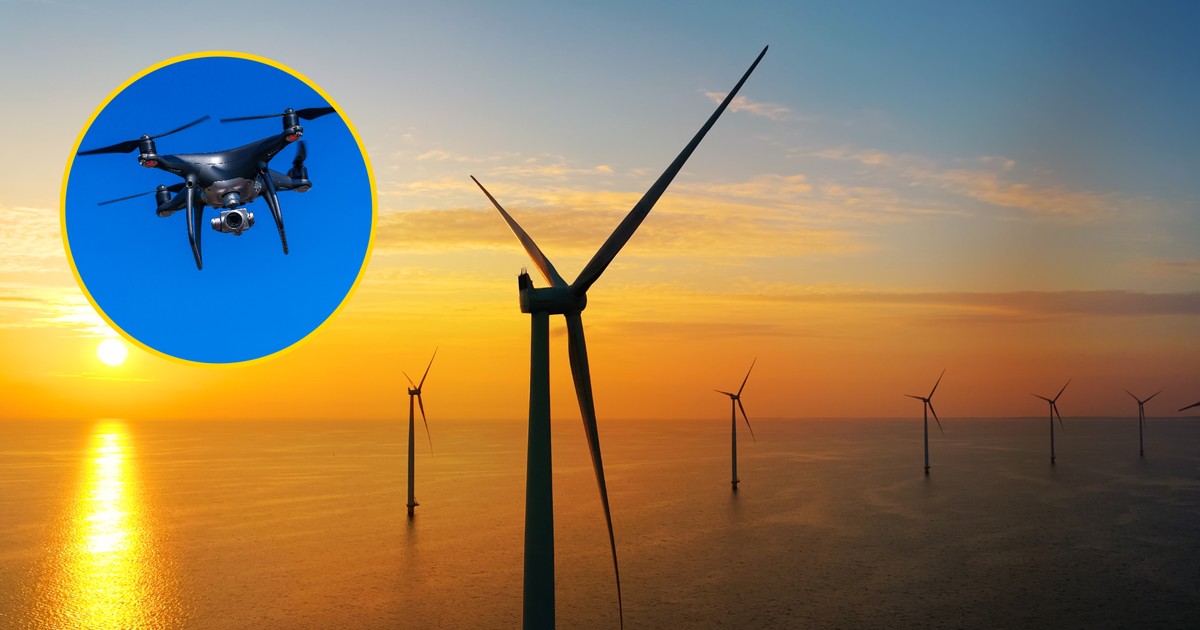
After years of preparation, Poland is today one step away from the actual start of operation of new, large-scale energy sources – offshore wind farms. Electricity from the first operating farm, Baltic Power (investment of Orlen and Canadian Northland Power), will flow this year, and in 2027 and 2028 it will be joined by further projects of PGE Baltica and Denmark's Ørsted as well as Polenergia and Norway's Equinor.
The total capacity in Polish offshore wind energy is expected to reach 5.9 GW by 2030, which is more than half of the amount currently installed in onshore wind energy in Poland.. Last year, in the first competitive auction for support, the construction of another 3.4 GW was contracted in the following years.
Read also: Dominika Kulczyk's company is expanding at sea. Electricity from the first windmills will flow in two years
Offshore wind farms are critical infrastructure
Like the rest of the infrastructure in the Baltic Sea, including underwater telecommunications cables, offshore wind farms are vulnerable to hybrid attacks by Russia; especially since one of the functions of offshore is to strengthen energy independence, which the Kremlin does not like. The wind industry is aware of the problem, as is the Ministry of National Defense and NATO, which is paying more and more attention to the Baltic Sea.
Last year, we wrote that the Alliance constantly monitors the situation in the water area, using, among others, probes and drones, and is in contact with infrastructure operators. According to NATO representatives, in addition to physical provocations from Russia, China, which resorts to cyber attacks, may also pose a threat to the installation.
Offshore wind farms are today considered an element of critical infrastructure, although, as Klaudia Maciata, an offshore expert from the Gdańsk University of Technology, states in the “Internal Security Review” published by the Internal Security Agency, Polish law still lacks a clear definition of the responsibility of individual institutions for the security of these facilities.
The specialist recommends, among others: statutory clarification of the status of offshore wind farms as critical infrastructure, developing a national strategy for the protection of offshore infrastructure, including farms in regular defense exercises, integrating farm operators with the crisis management system, or using radars or acoustic sensors to detect threats.
Offshore wind farm
|
Jelle Soens / Shutterstock
Offshore industry in Europe. Denmark has the most electricity
According to February data from the industry organization Wind Europe for 2025, offshore wind farms in the territorial waters of the Old Continent had 39 GW of installed capacity, of which 21.5 GW was accounted for by European Union member states.
Mostly, because 9.6 GW in offshore Germany has followed by: the Netherlands (4.7 GW) and Denmark (2.6 GW). Across the EU, offshore wind farms accounted for 3%. electricity production (together with onshore wind farms – 19%), while at the national level, the most electricity from offshore wind was obtained by Denmark (24% of the mix), Belgium (8%) and Germany (6%).
This is approximately the current scale of development of offshore wind energy, although Wind Europe predicts that by 2030, the European capacity installed in this technology will increase from 39 GW to 73 GW, including the EU capacity – from 21.5 GW to 40 GW. Security issues will therefore become even more important.
Offshore wind farms. “Protection cannot be optional”
Wind Europe looks at them in a new study published in April. It refers, among others, to: to the conclusions of the summit of the North Sea countries, which took place in Hamburg in January. The participants agreed that “protecting offshore wind farms can no longer be optional“And although the Hamburg talks concerned one area of water where offshore wind energy is most developed today, the conclusions drawn then can also be extended to other areas, including the Baltic Sea.
According to the summit's conclusions, the security of all maritime infrastructure should be based on close cooperation between governments and businesses responsible for their projects. This is about increased supervision, more effective and faster detection of threats, early warning, faster reporting of disturbing incidents and the ability to repair damage.
In its set of recommendations, Wind Europe stipulates that: it is not about the militarization of offshore installations — these still belong to civil infrastructure, but they must remain “sensitive” to all unusual behavior that – e.g. due to the destruction of cables or transformer stations – could cut off farms from energy consumers.
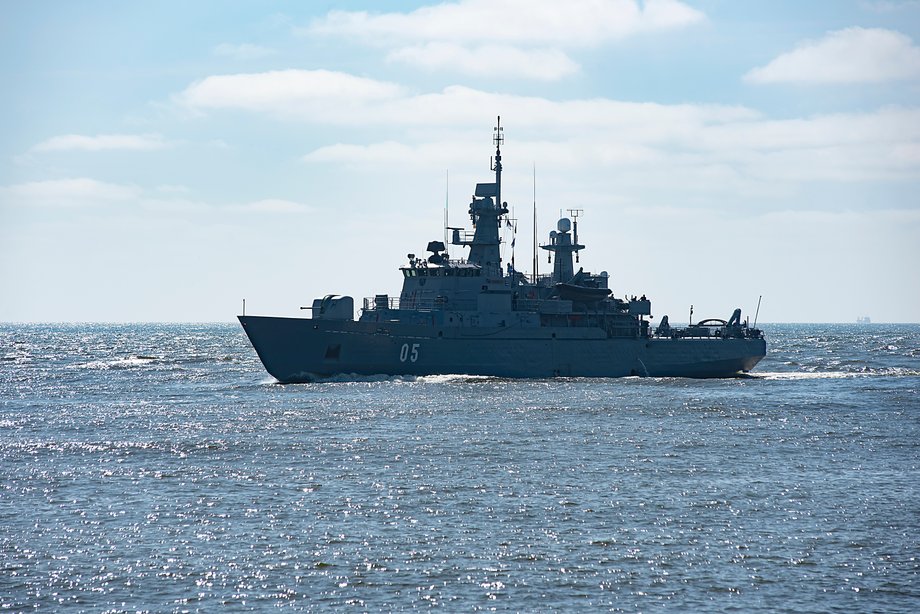
NATO ship in the Baltic Sea
|
Vytautas Kielaitis / Shutterstock
Deterring opponents
The organization's experts emphasize that reliable monitoring and recording fulfill one important function in the fight against hybrid threats – they confirm the occurrence of incidents, so the opponent cannot deny them and explain unusual events (such as cable damage) by chance or coincidence.
According to Wind Europe, the transparency achieved in this way can in itself have a deterrent effect and discourage further provocations. Operators, i.e. installation owners and state services, can share competences – the former would monitor the situation in their own areas, thus strengthening the public response system.
Wind Europe states that this type of activity of energy producers should be financed to some extent from public funds. The state should reward those activities that contribute to general safety, including, for example, strengthening the response capabilities of the coast guard or intelligence potential, while the owners themselves would finance the direct protection of individual farms (although with possible public co-financing).
In this context, the organization also writes about: dual use of devices (dual use), which can simultaneously serve both the owners themselves and broader security systems, including systems managed by NATO.
“Security is not a space of competition”
However, since, according to the decisions of the Hamburg summit, the protection of offshore wind farms is not to be optional, the related requirements – such as attaching appropriate detection systems to installations – should, according to Wind Europe, be mandatory at the stage of permit procedures.
The organization emphasizes that this is a better solution than voluntary bonuses in non-price criteria to be used in auction proceedings (to put it simply – operators applying for public support in the form of contracts for difference for energy sales are to have a better chance if they meet optional requirements related to, for example, a high share of local suppliers or a lower carbon footprint). “Safety is an imperative, not a competitive space,” says Wind Europe.
The organization also reminds that the offshore market will develop. A total of 300 GW of power is to be developed in the North Sea alone by 2050, Poland is the new European leader in the industry, and the development of farms in the Mediterranean Sea will also allow Southern Europe to benefit from the potential of this technology.
Demand for electricity in Europe will grow with the decarbonization of industry, transport and heating, and large volumes of clean electricity are also needed to produce new fuels – green hydrogen and synthetic fuels. “The resilience of these resources (offshore wind farms – editor's note) is therefore closely linked to the broader strategic resilience and energy independence of Europe,” Wind Europe emphasizes in its analysis.