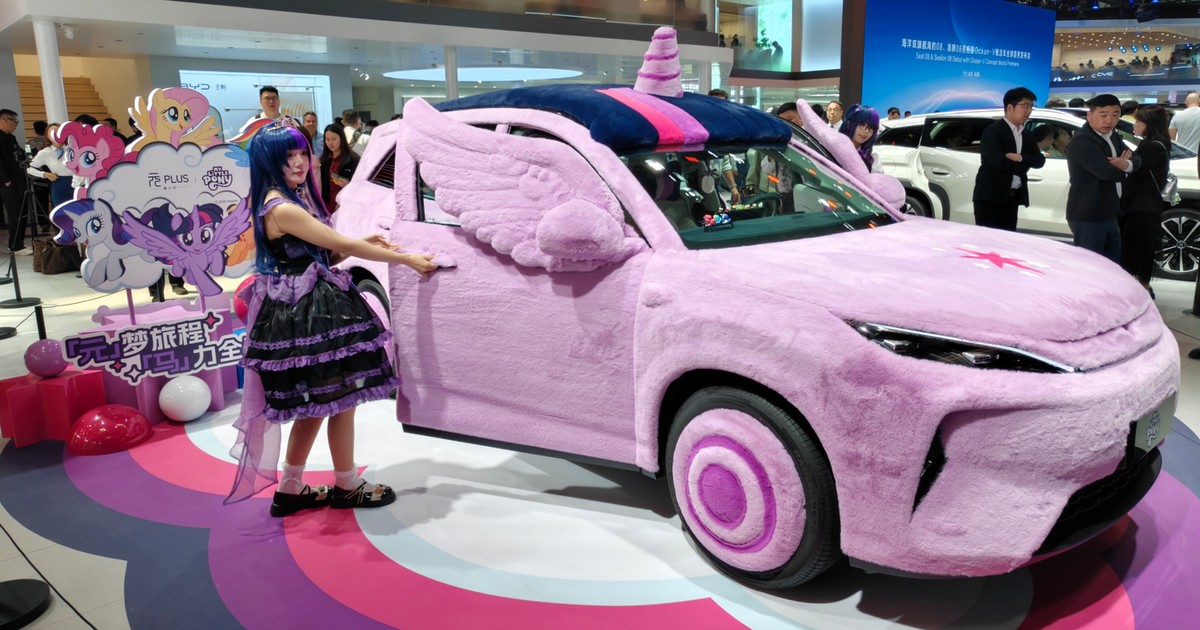
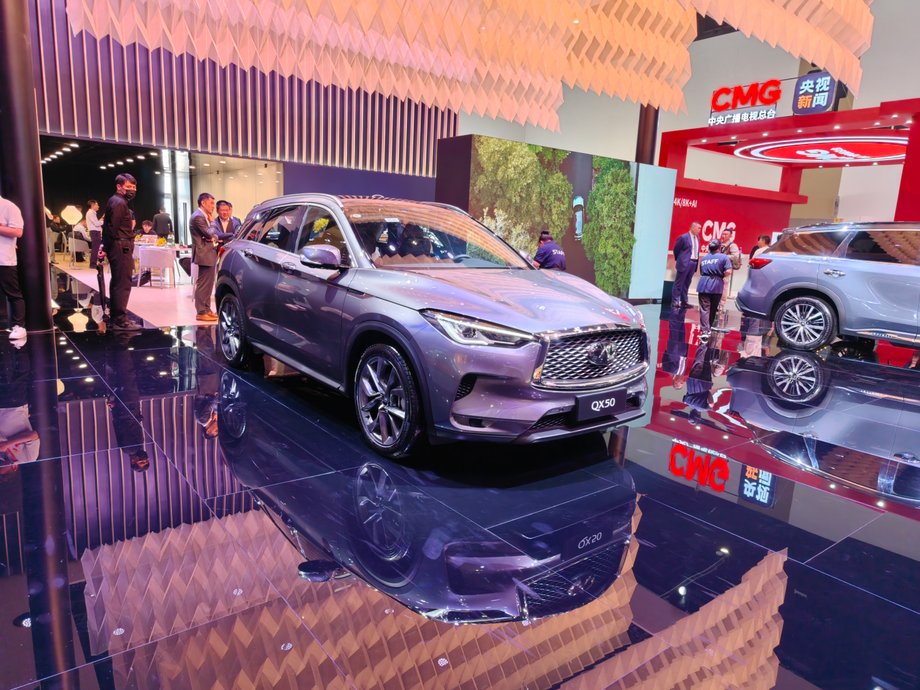
This was not an ordinary fair. The exhibition area exceeded 380,000. m, and visitors could see 1,451 vehicles, including 181 world premieres and 71 concept cars. The stands of Chinese producers occupied huge halls, including: the Chery group (it was at their invitation that we were there), which showed over 50 cars under the Chery, Exeed, Omoda, Jaecoo, Lepas and iCAR brands.
It was there, at the central Chery stand, that I came face to face with a car that will soon conquer the Polish market just like large Chinese SUVs do today. This is Omoda 4, a compact crossover designed for the younger generation, who expect a car not only for transport, but also for emotions and technology at the highest level. The car immediately catches the eye with its sharp body lines.
The automotive tiger shows its teeth
Auto China 2026 was not just a car show. It was a demonstration of the strength of the entire Chinese automotive industry – an industry that has undergone a revolution in recent years. The Chinese are no longer chasing Europe or Japan. They are setting new standards in electrification, artificial intelligence and the speed of innovation. Paradoxically, in this case, models intended for the European market, such as the above-mentioned Omoda 4, become a certain obstacle. Without EU certificates and additional taxes, China shows how modern and cheap cars can really be.
Auto China 2026
|
Bartłomiej Sieja / Business Insider
What I saw on site confirmed my belief that the successes of brands such as Omoda, Jaecoo, Chery and BYD, which are slowly gaining popularity in our country, are just the beginning. Chinese automotive industry does not enter the European market to occupy a niche. She is preparing for a real flood – in terms of price, technology and design. And I don't want to put the Chinese automotive industry on a pedestal, because competition from all over the world will be good for the industry. However, I am stating a fact – the event horizon has been exceeded and we are heading irreversibly towards “Made in China” motoring.
From cheap solutions to global leader
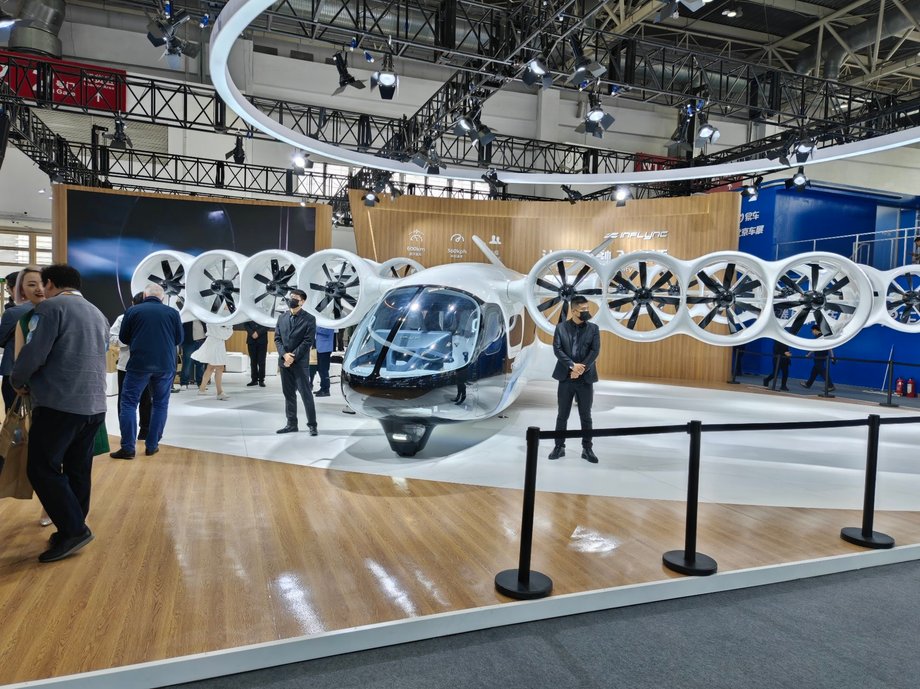
The Chinese automotive industry is no longer just a supplier of cheap cars for developing markets. It is a powerful, dynamic industry that, within a dozen or so years, has moved from copying Western solutions to setting global standards. At Auto China 2026, the scale of this phenomenon was striking at every step. More than 1,450 vehicles appeared in the exhibition halls, and Chinese manufacturers – both giants and smaller brands – occupied huge spaces, demonstrating self-confidence and technological capabilities.
Auto China 2026
|
Bartłomiej Sieja / Business Insider
There are currently over 130 active brands producing passenger cars in the Middle Kingdom. This number includes not only well-known names such as BYD, Chery and Geely, but also dozens of sub-brands of large groups and start-ups specializing exclusively in electric and autonomous vehicles. Such diversity results from hypercompetition in the world's largest car market. The internal fight for customers forces manufacturers to lower prices, accelerate innovation and offer more and more equipment in lower price segments. The average price of a new electric car in China is around PLN 30,000-40,000. PLN, while in Europe or the United States it is still two or even three times higher.
The result of this competition is a rapid pace of development. The Chinese introduce new models every 18-24 months, new facelift versions are released every year, and production cycles are much shorter than in traditional European or Japanese companies. Chery representatives themselves informed me that in China, cars are currently not thought of differently than smartphones. If the new iPhone can be basically the same every year, but still new, cars can also be designed this way. A Stelvio that differs after eight years in details such as LED lamps? This won't work in China. New lamps, door handles, a redesigned dashboard and new seat trim – these types of changes will be introduced every year.
Auto China 2026
|
Bartłomiej Sieja / Business Insider
China has been the largest car exporter in the world for several years. In 2025, they exported a record 7.1 million vehicles, and this trend continues in 2026. The leaders are brands such as Chery (over 1.3 million cars exported annually) and BYD, which are growing dynamically. In Europe, the share of Chinese brands has already exceeded 10% in some months, and in Poland there are double-digit sales increases. Models from China are no longer exotic.
The new axis of the automotive world
Standing among hundreds of premieres at Auto China 2026, it was hard to shake the impression that Europe was no longer the center of the automotive world. The center is moving to the East, and we are only just beginning to feel the effects of this change.
If anyone wanted to see in one place where the entire global automotive industry is heading, Auto China 2026 was the perfect place. The fair did not resemble classic car showrooms, where brands present several new products and many concepts. Here, Chinese manufacturers showed production-ready models that could hit the roads tomorrow. Three big trends dominated and were present at almost every stand – from Chery, through GWM, Xpeng and BAIC, to the European giants who had to play by Chinese rules.
Auto China 2026
|
Bartłomiej Sieja / Business Insider
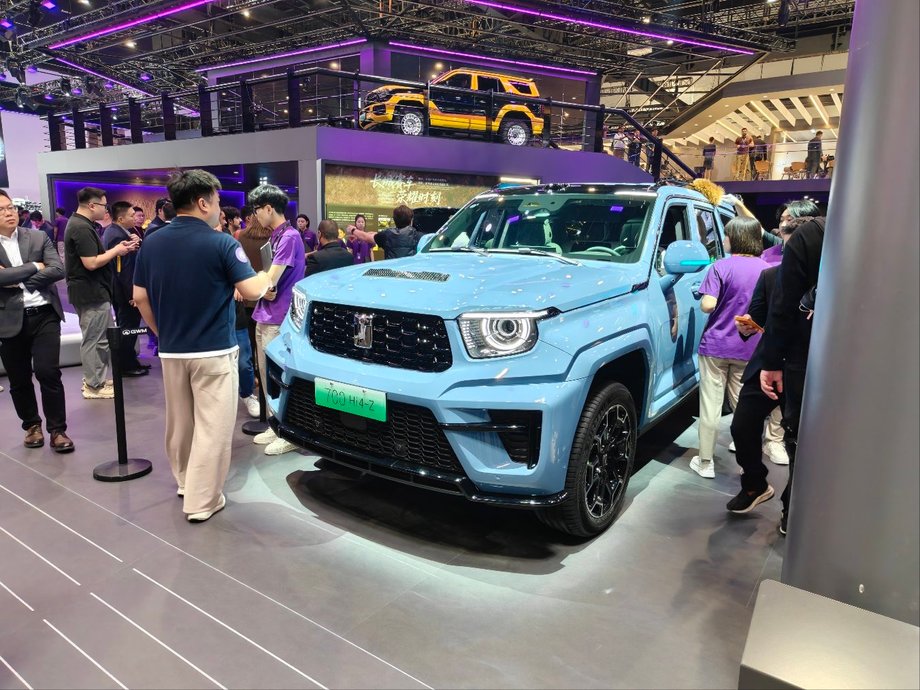
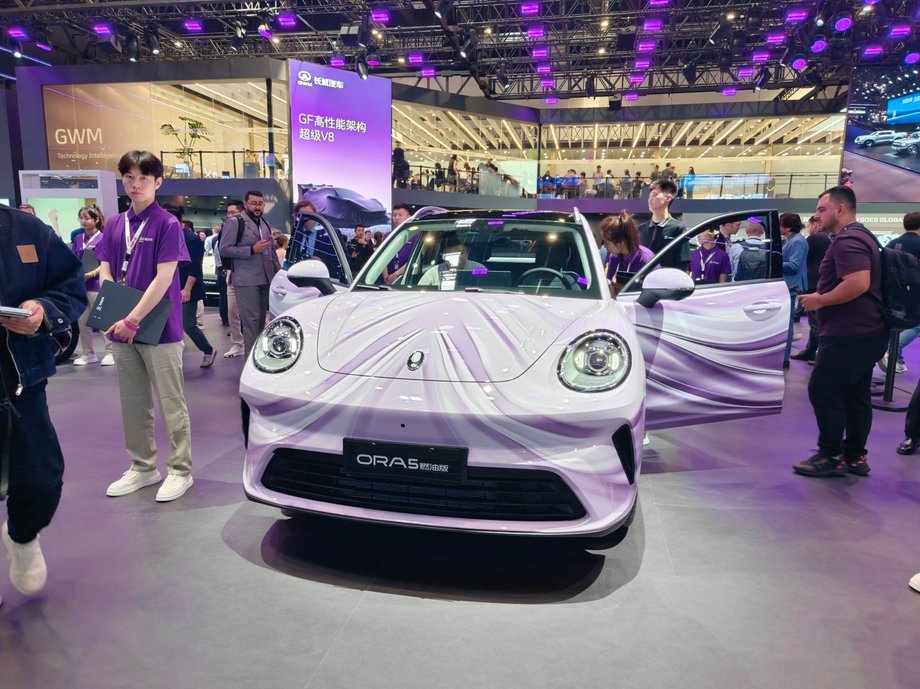
The first and strongest trend is multi-powertrain, i.e. the ability to choose a drive within one platform. The Chinese are no longer betting everything on clean electricity. Instead, they offer the customer flexibility: a classic combustion engine, a hybrid, a plug-in hybrid, a pure electric or even a hydrogen fuel cell version. The best example was the GWM One platform from Great Wall Motor. At the group's huge stand, where almost sixty cars were exhibited, models such as Ora 5 (soon to be available in Poland) – an urban crossover available in petrol, hybrid and fully electric versions – debuted. Next to it was the luxurious off-road Tank 700 and the GWM P300 pickup truck, and the whole thing showed that the Chinese are not giving up on combustion engines, but are learning to combine them with electricity in a way that gives a range of even over 1,000 km. km with very low fuel consumption.
Similarly, Xpeng showed its flagship GX as a six-seater SUV that can be either a pure electric car or an EREV, i.e. a hybrid with an additional combustion engine acting as a power generator. Thanks to this, the car offers a range of 1,600 km – a value that is still dreamed of in Europe.
Auto China 2026
|
Bartłomiej Sieja / Business Insider
The second trend that could be felt at every step is AI and autonomous driving at a completely new level. The Chinese no longer talk about “advanced cruise control”. They are talking about a system that physically understands the surroundings, predicts the behavior of other drivers and can take full control of the car. Xpeng demonstrated this best. Their GX was powered by four of their own Turing AI chips with 3,000 TOPS of power – as much as we saw in supercomputers just a few years ago.
In addition, they showed the concept of “Land Aircraft Carrier” – a vehicle from which a flying drone can be launched, and the whole thing acts as a mobile command center. There was also a BAIC accent. Their Arcfox and Stelato sub-brands presented V9, S3 and S9 models with ultra-fast charging and ADAS systems that work with Huawei technology. These weren't laboratory demonstrations – these were cars ready for mass production.
Auto China 2026
|
Bartłomiej Sieja / Business Insider
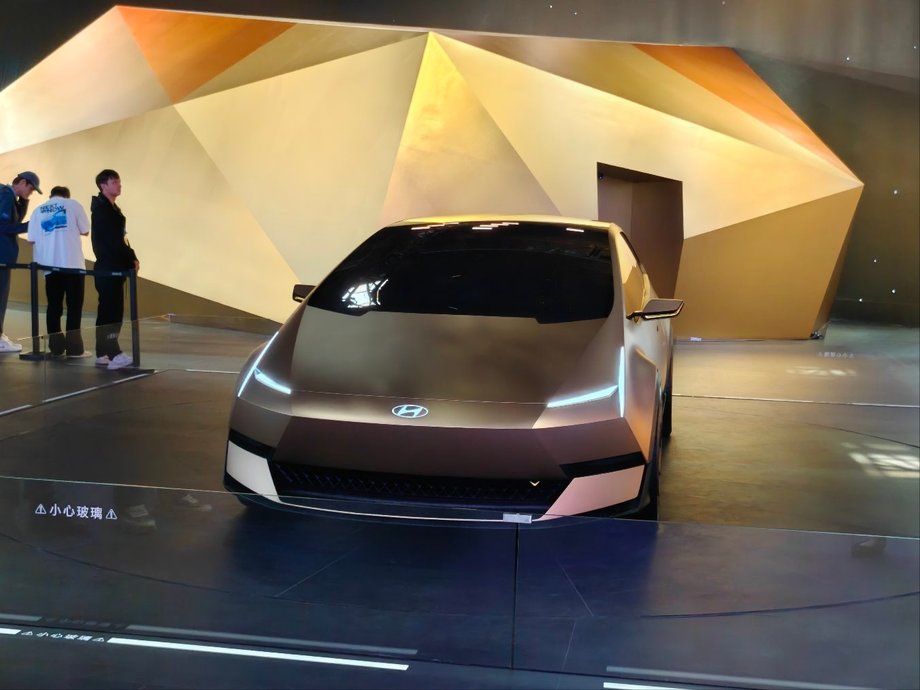
The third trend is futuristic design combined with global brands. Chinese cars, although most of them still look as if they came from one factory where the designer focused on European styling, are starting to struggle with being “clones” of themselves. Now they have their own bold lines – sharp edges, LEDs resembling sword blades and details that are associated with computer games rather than classic cars. Omoda 4, which I spent the most time on, is the best example of this.
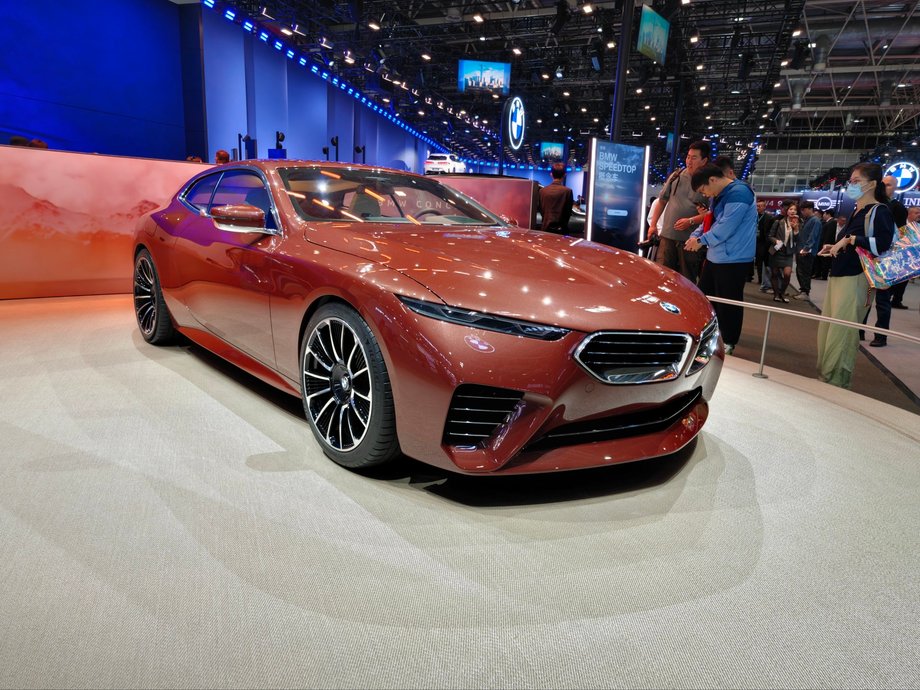
But not only Chery. Europeans who came to Beijing had to adapt to these rules. BMW showed the Neue Klasse in iX3 LWB and i3 LWB versions – longer wheelbases created especially for the Chinese market, with ADAS systems from Momenta and HarmonyOS software. Mercedes-Benz presented the electric GLC L in five- and six-seater versions, as well as the new S-Class and Maybach with Chinese artificial intelligence systems.
Auto China 2026
|
Bartłomiej Sieja / Business Insider
The Volkswagen Group went even further – ID UNYX 09 was created in cooperation with Xpeng in just 24 months, and Audi presented E7X as a new Chinese sub-brand. Peugeot from Stellantis presented concepts 6 and 8 – large sedans and SUVs dedicated exclusively to China.
All this shows one clear direction: the Chinese are not only catching up with Europe – they are setting the pace. They dictate what the batteries should look like, how quickly they should charge and how deep the artificial intelligence should go in everyday driving. European premium brands, instead of fighting this trend, are starting to cooperate with it so as not to disappear from the world's largest market. Standing among all these premieres, I had the impression that I was watching the beginning of a new era of motoring.
Time to flood – is Europe ready?
What we see in Poland today – growing interest in Omoda, Jaecoo, Chery and BYD – is just a prelude. The Chinese do not want to take a small piece of the market. They are preparing to dominate him.
Advanced hybrids, AI systems, futuristic design and flexible multi-powertrain platforms are not the future – they are the present, which Chinese engineers are already packing into production cars. European premium brands such as BMW, Mercedes and Volkswagen came to Auto China 2026 not to dictate terms, but to adapt to Chinese rules and operate according to Chinese rules – cooperating with local software providers and adapting their models to the requirements of the world's largest market.
Auto China 2026
|
Bartłomiej Sieja / Business Insider
In Poland, this process has already started. Dealer networks are growing, service is expanding, and drivers are realizing that Chinese cars are no longer a compromise, but a real, often more attractive proposition. Omoda 4, Ora 5 from GWM, further Jaecoo hybrids and Xpeng models are just the first teasers. The rest will follow – hundreds of models with technologies that seemed like science fiction not long ago. Experts estimate that at the current rate, Chinese brands may achieve 15-25 percent. share in the European market within four to five years. Some say as much as 30 percent within a decade.T
o it is not a passing fad or the effect of low prices. It is a systematic, state-supported technological, price and image offensive. Chinese automotive industry is now ready for Europe. The question is: are we ready for it?