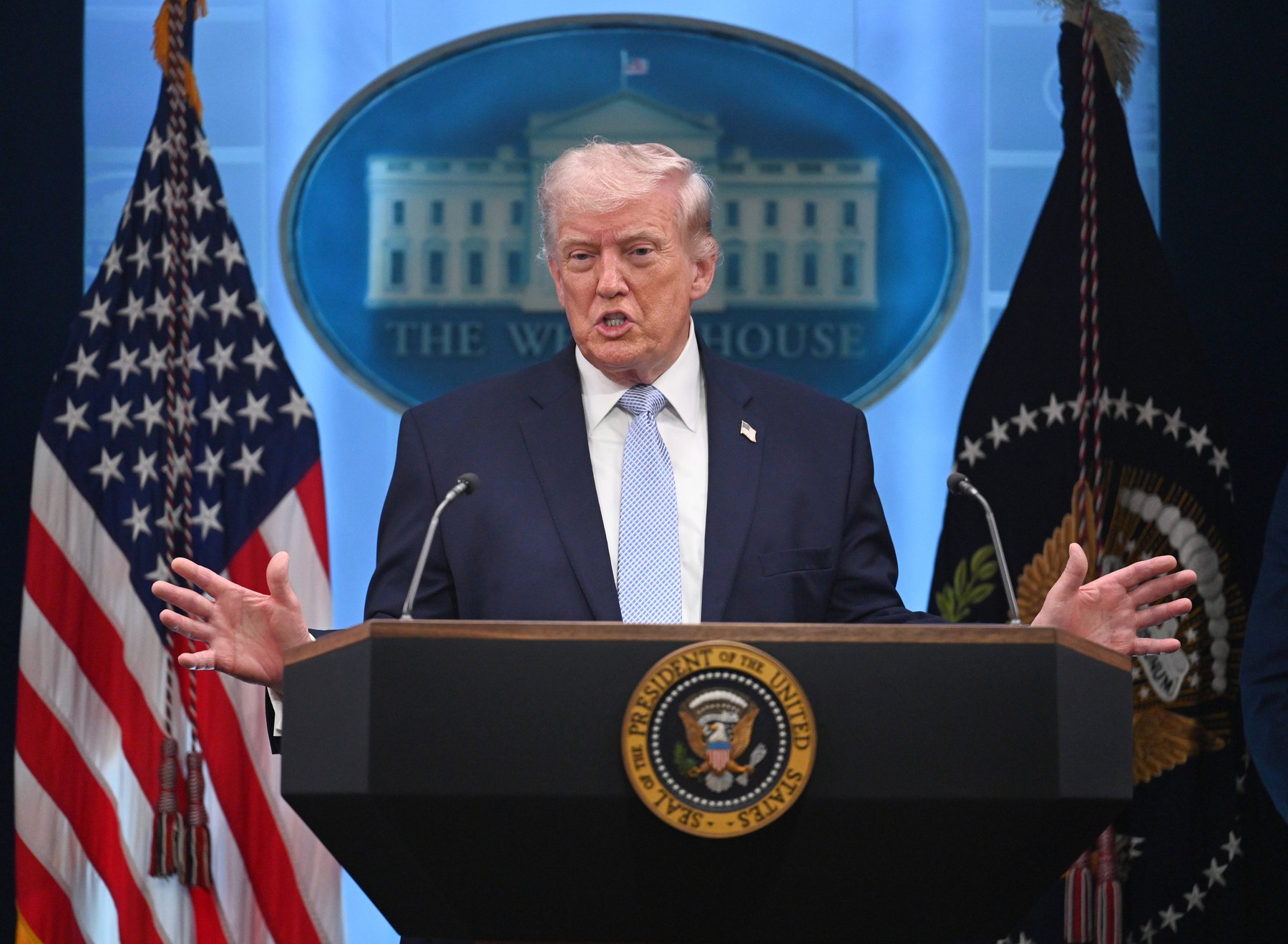
US President Donald Trump said on Friday that he was not satisfied with Iran's new proposals for talks aimed at ending the war and cast doubt on the prospects of an eventual agreement between Washington and Tehran, according to CNN, Reuters and AFP.
The US leader told reporters at the White House that the Iranians “want to make a deal”.
“Right now I'm not satisfied with what they're offering,” Donald Trump said.
He did not specify exactly what he found objectionable in Iran's new proposals, but went on to suggest that Tehran may never reach a negotiated settlement to end hostilities.
“They've made progress, but I'm not sure if they'll ever get there,” Trump said on the South Lawn of the White House.
Trump: Iran's leadership, very disorganized
The US president claims there is “enormous discord” between Iran's leaders.
“The management is very disorganized,” he said. “There are about two or three groups, maybe even four, a very fragmented leadership. That said, they all want to come to an agreement, but it's total chaos out there.”
Iranian media and a Pakistani official announced on Friday that Tehran had submitted its latest proposals for negotiations with the United States, according to Reuters. The respective official, involved in the Pakistani mediation effort between the two camps, stated that Islamabad forwarded the Iranian offer to Washington.
Neither the official nor the Iranian news agency IRNA provided details on the content of the proposals.
“We do not provide details of private diplomatic conversations. President Trump has been clear that Iran can never have a nuclear weapon, and negotiations continue to ensure the short-term and long-term national security of the United States,” White House spokeswoman Anna Kelly said, as quoted by CBS News.
Pakistani mediators are optimistic
CBS News reported Friday that mediators confirmed reports in Iranian media that Tehran had proposed holding a second round of direct talks. Pakistani officials expressed optimism about the prospects for a deal before the Iranian side sent a new offer to Washington.
US President Donald Trump had said on Wednesday that the negotiations were being conducted “over the phone” and that his response to any proposal from Tehran would depend on how far the Iranian side would go in curbing its nuclear program.
Iran's previous proposal, rejected by Trump, called for opening the Strait of Hormuz first and dealing with nuclear issues later. Tehran wanted the US naval blockade lifted before making any concessions on enriched uranium.
The closure of the Strait of Hormuz caused unprecedented disruption in energy markets, blocking a fifth of the world's oil and gas supplies and sending oil prices soaring, Reuters wrote.
A ceasefire went into effect on April 8, but reports that President Trump was to be briefed on plans for further military strikes pushed global oil prices to a four-year high at one point on Thursday.
Trump ignores deadline in War Powers Act
Many congressmen believe that Friday, May 1, expires the 60 days in which US military force can be used without obtaining a declaration of war from Congress – which was notified by the president of the start of hostilities on March 2.
On Friday, Donald Trump slammed the War Powers Resolution, a 1973 law, saying it was “completely unconstitutional.”
“They consider it totally unconstitutional,” Trump told reporters. “It's never been used before. Why should we do any different?” the president added.
Pentagon chief Pete Hegseth had said the truce represented a pause in the war, meaning the administration had not reached the 60-day mark.
“We are always in contact with Congress, but no one has tried to get it in the past,” President Trump said. “No one has ever asked for it,” he added.
Scandal with European leaders
Trump is unhappy that European leaders do not support him in the conflict with Iran, so he announced that he may withdraw some of the American soldiers stationed in Spain and Italy.
The White House leader is now reviewing the presence of the US military in Europe amid these misunderstandings about the war. On Thursday, right from the Oval Office, he criticized German Chancellor Friedrich Merz again, pointing out that they do not agree at all on the strategy towards Tehran.
At the same time, the US is pressuring other countries to form a coalition to protect oil shipping through the Strait of Hormuz. In response, Iranian President Masoud Pezeshkian again charged that the US blockade of his ports is already an ongoing military action against his country.