For years, the Windows laptop market has operated in an arrangement that has benefited manufacturers and disadvantaged customers. If someone wanted to buy a cheap portable computer, they had to accept a list of sacrifices in advance: bad screen, weak battery, plastic casing with cracking hinges, mediocre keyboard, etc. In addition, there was Windows itself, which after the first launch increasingly resembles a platform for selling services rather than a neutral working environment. Of course, from time to time, for example during various sales, it was possible to find an exception to this rule. The problem is that the exception has too often been presented as a success for the entire category.
And in these circumstances, Apple enters the scene – all in bright yellow, pink or indigo. It presents the MacBook Neo and suddenly it turns out that the world of cheaper laptops can function completely differently than we have been accustomed to over the years. Of course, this is still not perfect equipment. It has 8 GB of memory, a modest 256 GB of data, does not spoil you with ports, and some of the convenient extras are available only in the more expensive configuration. But even after these cuts MacBook Neo looks like a computer built for humans, not spreadsheets.
MacBook Neo – a budget laptop, but made like premium equipment.
Reactions? Admiration from the media, popularity among customers, which apparently exceeded Apple's expectations, and disbelief from the competition creating laptops with Windows. The statement of an ASUS representative during a conversation with investors was particularly loud called the MacBook Neo a “shock” to the PC market and admitted that there is an ongoing discussion throughout the ecosystem on how to compete with it.
Apple issues a suspended sentence to the Windows ecosystem
However, this one very much at the moment Apple's inconvenient new product, which forces the PC market to change, may be good for it. The creators of Windows and laptops have needed a brutal shake-up for a long time, because they forgot that the reputation of the ecosystem is not spoiled by the most expensive, refined computers shown at premieres. It is mainly spoiled by the machines that the mass customer actually buys. And this mass customer of budget Windows hardware has been increasingly fed up with it for a long time.
What also works to the advantage of Microsoft and the company is the fact that In addition to the warning nudge, Apple gave the competition time to correct its course. Everything indicates that the company underestimated the demand for the MacBook Neo. Shortly after the start of sales, there were delivery delays and then information that the April batch of devices was sold out. In Poland, the official Apple store for this laptop states that delivery will take place within 2-3 weeks – although it is quite widely available in popular Polish electronics stores.
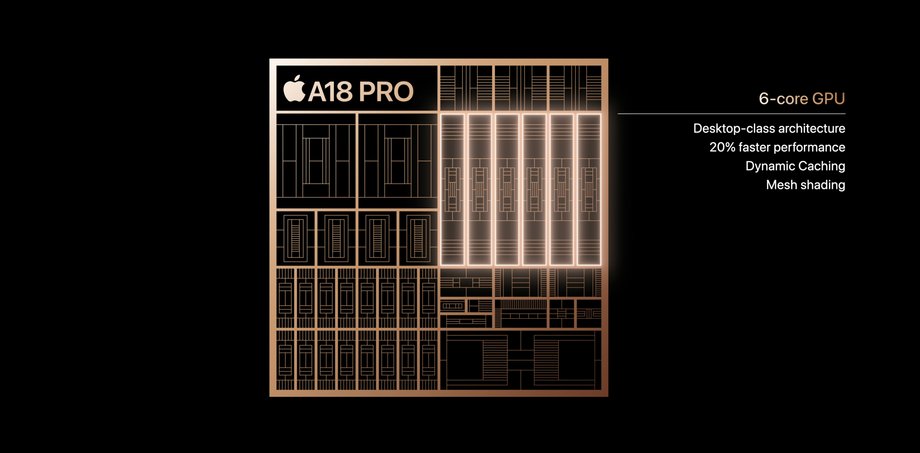
MacBook Neo is powered by the A18 Pro processor from iPhone 16 Pro, in which one of the GPU cores has been deactivated. It remains a mystery how many such processors Apple has at its disposal and, therefore, how many MacBook Neo it will be able to produce.
Rumors say that the problem may be the supply of specific processors, to which the MacBook Neo owes its low price. Apple installs in this equipment A18 Pro systems from the previous, no longer produced generation of iPhone Pro, in which part of the graphics system was deactivated – most likely to be able to use not fully functional chips that could not be installed in iPhones. For natural reasons, the supply of such processors is limited and it is unclear whether Apple will want to produce these processors on a large scale just for the MacBook Neo.
But will Windows draw conclusions and be able to make changes?
The question is: Will the Windows ecosystem really take the situation seriously? And if so, is he able to respond appropriately to it?
The answer should certainly not be limited to another presentation about AI and more slogans about the new era of personal computers. Users have shown that it simply does not work for most of them, and for many of them it does the opposite, as evidenced by the growing popularity of the term Microslop. The answer should be much more down to earth. Better screens in cheap laptops. Better build quality. Fewer absurd savings in places the user sees every day. A more sensible battery. Less equipment that is explained by price from the first contact.
The problem is that the answer to the MacBook Neo will not be simple for the industry. Apple has the advantage of vertical integration, scale and control over its own hardware and software. Manufacturers of Windows laptops do not have such comfort, so a full response to Apple's new product will require more fundamental changes in the functioning of the entire ecosystem. But the end customer doesn't care. He doesn't buy excuses. I'm buying a computer. AND After the premiere of Neo, it will be much more difficult to convince him that nothing better can be done at this price.