Putin's reaction, after the series of 3 consecutive attacks that took the Black Sea refinery out of action. “Increasingly frequent”

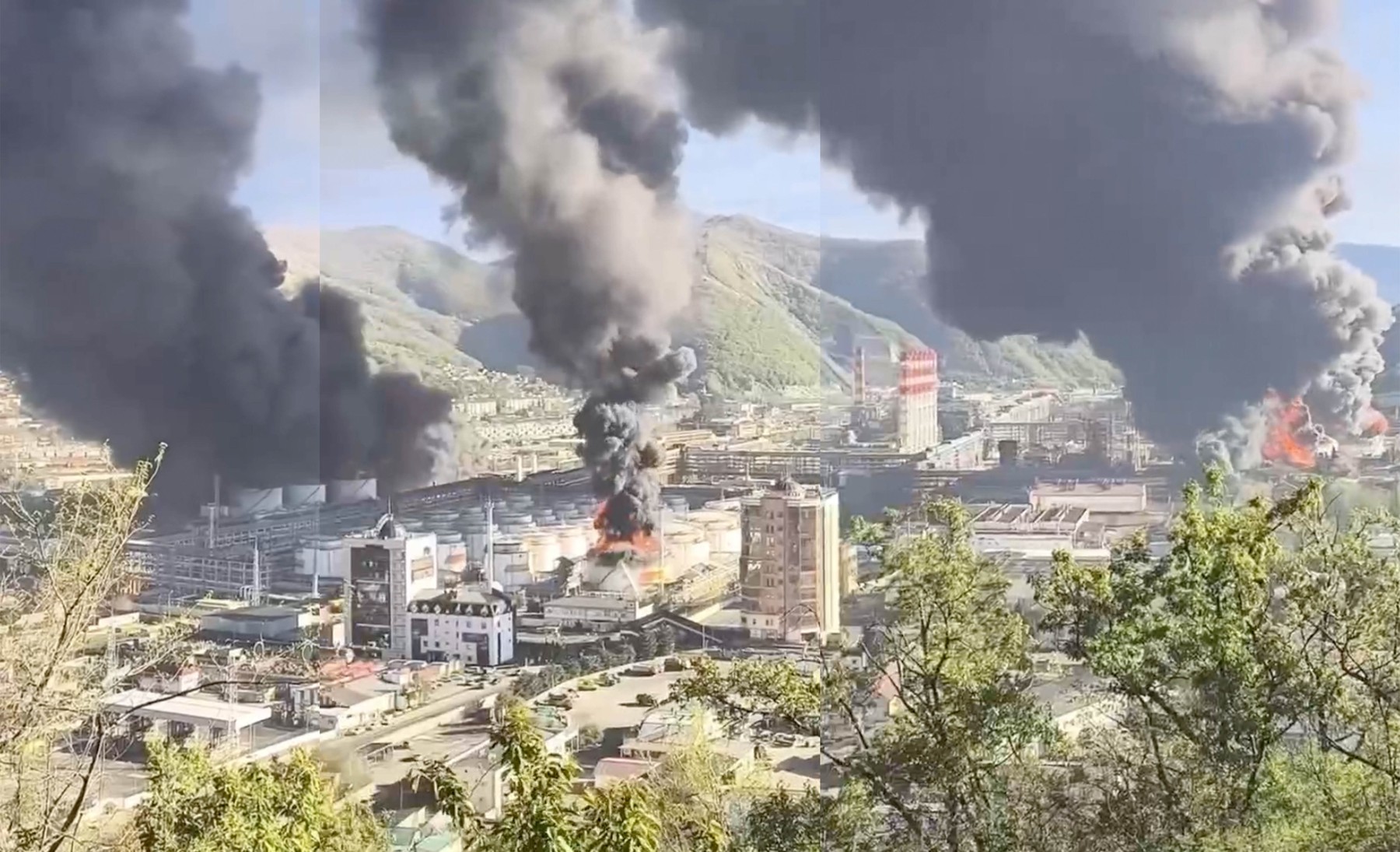
A Ukrainian drone strike caused a massive fire at an oil refinery in the city of Tuapse on Tuesday, Russian officials said, in what President Vladimir Putin described as evidence of Ukraine's intensification of attacks on civilian targets, Reuters writes.
This was the third attack on the Black Sea port of Tuapse in less than two weeks.
Ukraine's military confirmed it carried out the bombing, the latest in a stepped-up series of strikes aimed at disrupting Russia's oil industry and cutting revenues that help Moscow finance its war in Ukraine.
In his remarks broadcast on Russian television, Putin said: “Drone attacks against civilian infrastructure are becoming more and more frequent.”
“The most recent example is the attacks on energy facilities in Tuapse, which could have serious environmental consequences,” the Kremlin leader added.
Putin finally notices smoke over Tuapse: “strikes on energy facilities may cause serious environmental consequences.”
This is YOUR war, Vladimir. The consequences are yours too. pic.twitter.com/u9L86JycFr
— Maria Avdeeva (@maria_avdv) April 28, 2026
According to Putin, the regional governor reported that there were no major threats. “It seems that there are no serious dangers, and people manage to cope with the challenges they face on the ground,” the Russian president said.
Earlier, Putin had ordered Emergencies Minister Alexander Kurenkov to travel to Tuapse to oversee firefighting efforts and manage the aftermath of the incident.
Regional authorities have declared a state of emergency in Tuapse. This is another reminder that the war must be brought back to Russia, including to the places and infrastructure that help finance it. pic.twitter.com/vLNHhwbt5r
— Denys from Ukraine (@GlushkoDenys) April 28, 2026
The Kremlin has accused Ukraine of exacerbating the global crude oil crisis by attacking storage facilities containing oil destined for export.
Ukraine's foreign ministry did not immediately respond to Reuters' request for comment on Moscow's accusations. In the past, President Volodymyr Zelensky has said that Russian exports are not important enough to influence prices on the world market.
The images published online show the black cloud of dense smoke rising from the direction of the refinery in Tuapse. Russia's consumer protection authority advised the population to stay indoors and keep windows closed.
Good morning in Tuapse. 😂😂😂
Local Russian orcs report that the situation has worsened following last night's Ukrainian attacks.
As a reminder, the fire in the port of Tuapse could not be extinguished for days after the last attack. pic.twitter.com/yb6SFBDKhb
— Jürgen Nauditt 🇩🇪🇺🇦 (@jurgen_nauditt) April 28, 2026
A previous attack on April 20 rained “black” oil on the Black Sea port city, which is also a popular seaside resort, leaving behind an oily residue.
The refinery halted production on April 16 due to drone damage to the port, which made it impossible to ship production, industry sources told the international news agency. At least three people were killed in the attacks, officials said, and one resulted in an oil spill into the sea.
The head of the Tuapse district, Serghei Boiko, ordered residents near the refinery to evacuate and take refuge in a school on Tuesday.
Anger after the attack, expressed by some locals
On social media, some residents of Tuapse demanded an explanation as to why air defenses were not strengthened to prevent this third attack in a row. Others complained that Moscow was indifferent to their plight.
Kremlin spokesman Dmitry Peskov said authorities were “working intensively” to combat Ukrainian drone attacks.
Ukraine has stepped up its attacks on Russian energy targets since March as US-brokered peace talks have stalled and Washington is now mainly focused on the war with Iran.
The Tuapse refinery has an annual production capacity of approximately 12 million metric tons, or 240,000 barrels per day, producing naphtha, diesel and fuel oil.