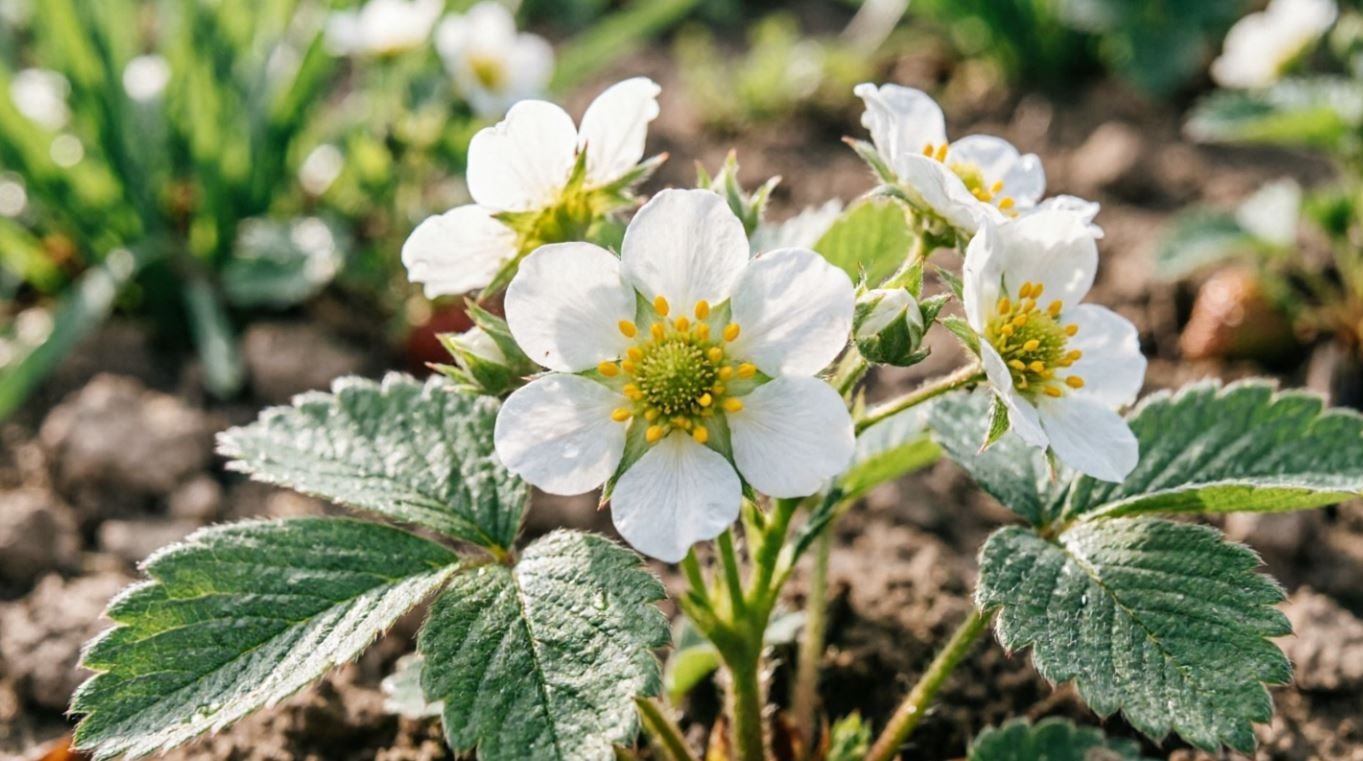
Sharp cold snaps in mid- and late spring are typical for our latitudes. To prevent return frosts from destroying strawberries, it is important to know how and with what to cover the berry bushes. The most reliable method is spunbond, as the author of the Zen channel “GumiZel (GumiTsel) fertilizer, home, garden, vegetable garden” (18+) recalled.
The ideal option is white spunbond with a density of 30–42 g/m². This material easily allows moisture, air, and sun rays to pass through, but at the same time retains heat well at the soil surface.
Late in the evening, cover the beds in two layers at once so that the plants can survive temperatures down to -5…-6°C. Don't forget about the arcs, otherwise the fabric will lie tightly on the flowers, and this is undesirable. If the temperature exceeds 0 °C in the morning, the spunbond can be removed.
Such a shelter has other advantages – for example, it is more difficult for weeds to grow under it, and it protects plants well from rainfall, cold fogs and insect pests.
One of the biggest mistakes is covering strawberries with plastic. The condensation that appears will freeze, and the strawberries may die altogether.
Features and nuances
Under no circumstances rely on the average air temperature. It can be much higher than the soil temperature. If at the end of April – beginning of May the forecasts promise +2…+3°C at night, it means that the soil will freeze to at least -2°C, so you can’t do without spunbond.
If you see blackened flowers in the morning, give them a chance – wait at least a few days. Sometimes even such flowers produce ovaries. If the central flower has completely turned black, but the side flowers are still alive, the bush will bear fruit, but with a slight delay.